Business
Senate summons ministers, begins probe into failed $30m Safe School project as abductions surge
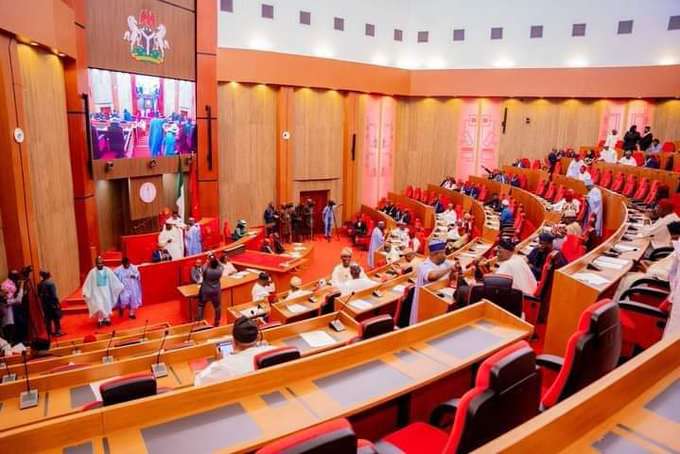
The Senate on Wednesday escalated its investigation into the collapse of the Safe School Initiative, summoning top government officials to explain why the $30m programme, launched to protect Nigerian students, has failed spectacularly in the face of worsening school attacks.
The Finance Minister and Coordinating Minister for the Economy, Wale Edun; Minister of Education, Tunji Alausa, and the Minister of Defence, Gen. Christopher Musa, were all directed to appear before the Senate’s ad hoc committee on the Safe School Initiative next Tuesday.
The committee, chaired by Senator Orji Uzor Kalu (Abia North), issued the summons after adopting its work plan during its inaugural sitting.
The Safe School Initiative was introduced in 2014 at the height of Boko Haram attacks on schools and was expected to strengthen security around learning centres nationwide. Yet, more than a decade later, and despite millions of dollars and billions of naira invested, schools remain exposed, while abductions continue to rise.
Speaking after the committee’s inauguration, Kalu said the Senate was determined to uncover how the initiative collapsed despite significant domestic and global support.
“It is unacceptable that our schools remain soft targets for terrorists and kidnappers,” Kalu said, revealing that over 1,680 students had been kidnapped and 180 schools attacked since 2014.
He vowed that lawmakers would meticulously trace how funds were spent.
“We will track every naira and every dollar allocated to the Safe School Initiative, including the $30m mobilised between 2014 and 2021 and the recent N144bn released by the federal government.
“Nigerians deserve to know why, despite enormous investment, our children are still unsafe.”
Kalu said the committee’s work would include a full financial and operational audit, engaging federal ministries, state governments, security agencies and civil society actors.
He stressed that the investigation was not a witch-hunt but a necessary step to restore accountability.
“The committee owes Nigerian parents the responsibility to ensure their children can pursue education without fear,” he added.
The Senate will also review the deployment of security personnel to schools, assess early-warning systems, examine emergency-response strategies and evaluate infrastructure improvements in high-risk locations. Partnerships with international donors and private-sector contributors will also come under scrutiny.
Apart from ministers and security chiefs, school proprietors, community leaders and other stakeholders will testify before the panel.
The renewed legislative pressure follows nationwide outrage triggered by two major attacks: the abduction of 25 female students from Government Girls’ Comprehensive Secondary School, Maga, in Kebbi State, and the kidnapping of more than 200 pupils from St Mary Catholic School in Niger State.
Both incidents have reignited public anger over why, 10 years on, the Safe School Initiative has failed to deliver its fundamental promise, ensuring Nigerian children can learn without fear of abduction or violence.