Business
Tariff hike sparks consumer revolt as MTN faces data service backlash
By Temi Salako
MTN Nigeria’s “Data on Trial” public hearing took an unexpected turn on Friday, June 6, as subscribers, digital creators, journalists and consumer advocates openly challenged the telecom giant over worsening service quality despite higher costs.

Held at the company’s Ikoyi headquarters, the event drew customers armed with screenshots of disappearing data balances, records of unstable connections and complaints that have increasingly defined consumer frustration in Nigeria’s digital economy: paying more for declining service.
The backlash follows the Nigerian Communications Commission’s (NCC) approval of a 50 per cent tariff increase across the telecommunications industry in January 2025, the first adjustment in twelve years. Voice call rates rose from N11 to N15.40 per minute, while the cost of one gigabyte of data increased from N1,000 to N1,400.
Telecom operators subsequently implemented additional bundle price increases ranging between 40 and 50 per cent. While the NCC defended the adjustment as necessary to sustain operators amid naira depreciation and rising operating costs, consumers have continued to question the value received, arguing that service quality has failed to improve despite the higher tariffs.
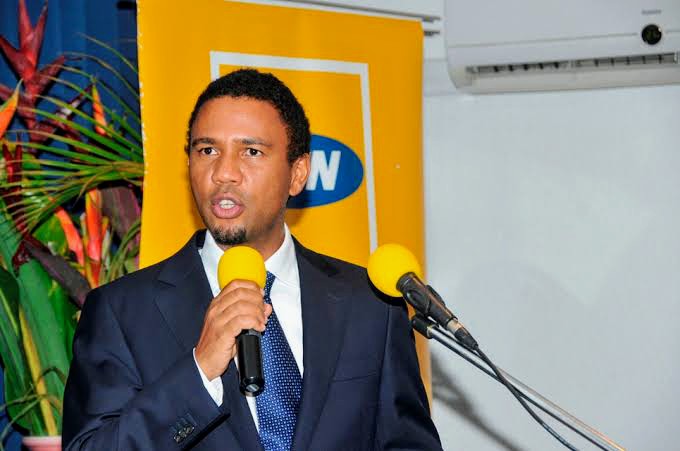
Seventeen months on, MTN Nigeria’s chief executive Karl Toriola sat before that Friday audience alongside chief technical officer Yahaya Ibrahim and chief customer relations officer Ugonwa Nwoye, pledging N1 trillion in network expansion before the year’s end and promising a self-service data portal within the MTN app by late June. The company also engaged KPMG to independently verify the billing systems and diagnostic tools on display, a gesture designed to strip the session of any appearance of a pre-cooked corporate defence.
The prosecution panel, drawn through public voting via independent media platforms, pushed hard. MTN’s General Manager for Network Quality, Mike Ndukwe, dismissed the possibility of arbitrary deductions, insisting the company’s billing infrastructure does not permit unexplained charges. Toriola offered internal case studies: a senior executive whose data vanished nightly due to a WhatsApp backup running between 126GB and 156GB; a general manager whose router drained allocations while children streamed high-definition content around the clock. The implied argument was careful but pointed: much of what Nigerians call “sapping” is, in MTN’s telling, a literacy problem rather than a billing one.
That framing did not land cleanly. NCC data shows Nigerians consumed over 1.42 million terabytes of data in March 2026 alone, a figure that sits alongside the commission’s own count of more than 40,000 network disruptions recorded across the industry throughout 2025. If usage is surging and disruptions are simultaneously at that scale, attributing the bulk of subscriber grievance to individual behaviour stretches credibility beyond what the evidence will bear.
MTN’s public exercise, whatever its credibility, is at least an attempt at engagement. Airtel Nigeria has been quieter. In H1 2025, the operator committed $39 million to network upgrades and announced a $120 million hyperscale data centre investment at Lagos’ Eko Atlantic. Its data revenue for that period grew 62.4 percent to $357 million. Yet dropped calls and inconsistent data remain daily realities for Airtel subscribers in dense urban corridors, including areas less than five hundred metres from visible masts. Business Hallmark filed a formal FOI request to Airtel Nigeria on June 2. No response has been received.
Globacom’s story is considerably more troubled. The company began 2025 with the arrival of Ahmad Farroukh as its new chief executive, a veteran telecoms professional brought in to inject structure into an operator widely regarded as underperforming its installed base. Farroukh lasted approximately one month. Sources close to the matter indicate his exit stemmed from the inevitable friction between his preference for structured corporate governance and the tight, founder-driven management culture that Globacom’s Mike Adenuga has maintained since the company’s founding. The operator has functioned without a confirmed CEO replacement since, and its network quality data remains the least transparent in the sector. Our FOI request to Globacom has also gone unanswered.
The investment numbers are verifiable. MTN Nigeria deployed N565.7 billion in infrastructure during the first half of 2025 alone, a 288 percent year-on-year surge that funded 4G site rollouts, fibre expansion, and a new Tier 3 data centre. NCC executive vice chairman Aminu Maida declared in August 2025 that the industry had collectively channelled over one billion dollars into core infrastructure since the tariff approval. The fibre build-out is visible, particularly in Lagos and Abuja estates and business parks.
The catch, as the NCC itself acknowledged in its 2025 performance review, is concentration. Spending has gravitiated toward campuses, estates, and commercial zones where demand is predictable and returns are reliable. The average subscriber in a mid-density suburb or secondary city has seen limited improvement in signal reliability despite paying 40 to 50 percent more since January 2025. Proximity to a mast is no longer a guarantee of a usable signal.
A view circulating among Nigerian financial analysts adds a dimension the operators have not addressed publicly. MTN Nigeria is a subsidiary of South Africa’s MTN Group. Airtel Nigeria belongs to Airtel Africa, a London-listed vehicle with Indian conglomerate Bharti at its core. For both, dividend repatriation to offshore parent entities is a structural feature of the business model. Critics contend that a material portion of the post-hike revenue windfall has moved up the corporate chain rather than back into the base stations and backhaul routes that subscribers were told would improve when they agreed, however reluctantly, to pay more. Neither operator has published a disaggregated breakdown of how post-hike revenues were split between local infrastructure reinvestment and group-level returns. Business Hallmark has requested this data. It has not been provided.
What Saturday’s forum confirmed is that the conversation is genuinely in the open. What it did not confirm is that the industry carries answers equal to the scale of public frustration. One trillion naira in announced spending is a large number. Forty thousand disruptions in a single year is also a large number. Between those two figures lives the experience of every Nigerian who has watched a two-gigabyte bundle disappear in an hour of ordinary use or held a phone in the air, two streets from a mast, searching for a bar of signal.