Business
Data boom, service gloom: MTN, Airtel profit hit N3.6trn in 2025
…as overwhelmed networks fail Nigerian subscribers
Nigeria’s telecommunications operators are raking in record revenues from surging data consumption, while millions of subscribers are paying the price through persistent network failures and sluggish internet speeds, raising fresh concerns over service quality and regulatory oversight in the sector.

According to Business Hallmark’s findings, the shift toward digital services, remote work and streaming, has significantly boosted data usage across the country, turning it into telecom industry’s biggest cash cow, with telecom companies posting strong earnings, driven largely by increased demand for mobile data.
On March 2, 2026, MTN Nigeria reported a revenue of N5.2 trillion for the year ended December 31, 2025, a 52.9 percent increase year on year, reversing 2024’s loss.
The company also reported a staggering 79.7 percent growth in fintech revenue, reflecting the rapid adoption of mobile money and digital banking services.
According to the telecom giant, while its active data subscribers increased by 11.6 percent to 53.2 million, home broadband subscriptions rose by 31 percent to 4.2 million.
MTN Nigeria’s usage intensity rose in the year under review with average monthly data consumption climbing to 13.1 gigabytes per user.
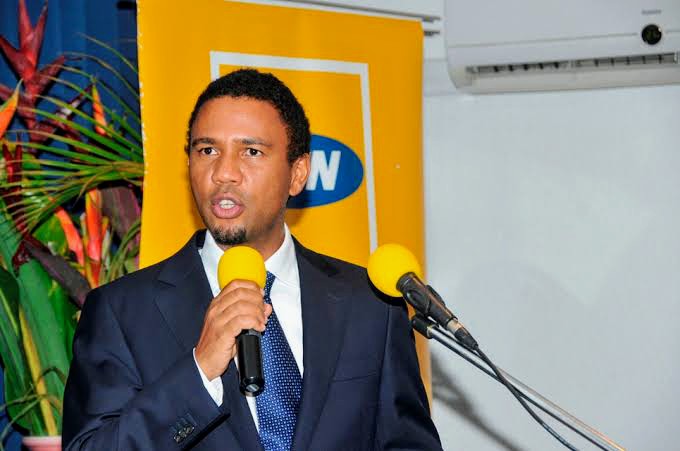
The Chief Executive Officer of MTN Nigeria, Karl Olutokun Toriola, while speaking on the company’s impressive financial performance, attributed it to robust balance-sheet resilience and targeted investments.
According to Toriola, the company committed N1.0 trillion in capital expenditure (CAPEX) to expand network infrastructure, particularly in underserved and rural areas, ensuring reliable, secure access to digital financial services.
“This targeted network deployment enhances service quality, which is non-negotiable for secure digital transactions”, Toriola said, while emphasizing the link between profitability and the ability to drive nationwide financial inclusion.
Revenue Responds to Expansion
As a result of the revenue surge, MTN Nigeria announced a final dividend of N15 per ordinary share, following an interim dividend of N5 per share earlier in 2025. This pushes total dividend earned on each share in 2025 to N20.
While the MTN Nigeria boss largely attributed the revenue boom to aggressive network expansion, BH findings showed that the turnaround was helped by the surge in the adoption of financial digital services by Nigerians across the country, as well as the adoption of internet calls by Nigerians as a cheaper means of communications.
Further analysis of MTN Nigeria’s 2025 financial report by BH shows that its data revenue jumped by 74.5 percent to N2.78 trillion (more than half of its generated income), outperforming voice revenue which grew 42.1 percent to N1.85 trillion.
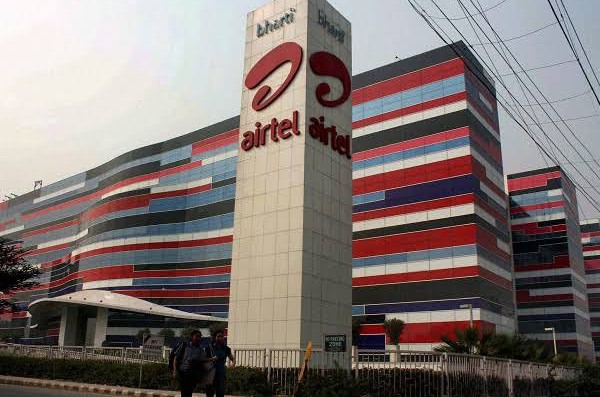
In the same vein, Nigeria’s second largest telecommunications company, Airtel Nigeria, reported a revenue of $1.13 billion from its Nigerian operations in FY’2025.
Using the current official exchange rate of N1,345 to a dollar for conversion, this translates to about N1.519.850 trillion revenue in 2025.
Specifically, Airtel Nigeria reported data revenue growth of 65.4 percent during the period, its fastest-growing segment, with earnings climbing to N838.6 billion.
Like MTN Nigeria, Airtel Nigeria’s usage intensity also rose in the year under review with average monthly data consumption climbing to 10.7 gigabytes per customer, from 8.4GB in 2024. Also, smartphone penetration on Airtel Nigeria’s network massively improved, climbing by 4.6 percentage points to 54.1 percent.
Data is King
Speaking on its impressive 2025 financial reports, Airtel Nigeria attributed it to rising smartphone adoption and increasing data usage among subscribers.
While the financial reports of other telecommunications companies like Globacom and T2 (formerly 9Mobile) are not readily available as they are not required to publicly report their financial results since they are not listed on the Nigerian Exchange Limited ((NGX), available data suggests they are all benefiting from the data boom.
According to an interim report by the Nigerian Communications Commission (NCC) on Nigeria’s data traffic in 2025, broadband usage, and not traditional calls, now anchors the telecom industry’s growth model.
The NCC said in a report on its website seen by BH at the weekend that data usage skyrocketed by 35 per cent to over 13.2 million terabytes (TB) in full-year 2025, from 9.76 million terabytes in 2024 and 7.27 million terabytes in 2023.
According to the NCC, between January and November 2025 alone, data consumption hit 11.86 million terabytes, up 34.96 per cent, or 3.07 million terabytes, from 2024’s consumption level.
Giving reasons for the data boom, the commission attributed it to surging internet usage across mobile and broadband networks.
“In 2023, Nigeria recorded 7.27 million TB in total data usage. This climbed to 9.76 million TB in 2024, representing a 34.3 per cent year-on-year growth.
“Between January and November 2025 alone, Nigerians consumed 11.86 million TB, up from 8.79 million TB in the same period last year—an increase of 34.96 per cent, or 3.07 million TB in additional volume”, the report stated.
However, while telecom operators are smiling to the banks with billions of naira generated daily from data purchases, BH findings revealed that the windfall has not translated into improved service delivery.
Subscribers in major cities and towns across the country who responded to BH’s survey, complained of unstable internet connections, frequent call drops, as well as delayed messages despite a steep rise in the cost of data and voice services.
Paying For Poor Service
Exactly 72.3 percent of respondents confirmed that they have experienced failed connections or service interruptions during digital transactions, virtual meetings and online calls.
A reporter with a national newspaper based in Lagos, who did not want his identity revealed, informed our correspondent that it has become very difficult lately for the paper to conduct its usual weekly editorial meetings virtually, as network services provided by telecommunication companies have become epileptic.
“We resorted to doing our general, management and editorial meetings since the outset of COVID-19 pandemic in March 2020 as a form of palliative to workers burdened by delayed and stagnant wages.
“For several years, things sailed smoothly, until recently when internet services took a hit. The situation often gets out of hand with many staffers unable to join scheduled online meetings, forcing us to either abandon or move meetings to early in the morning or very late in the night when we hope to have better service.
“On several occasions, management had been forced to summon staffers to the office for unplanned physical meetings when network issues lingered”, the media practitioner stated.
Also speaking, an IT specialist with an international examination and assessment firm in Lagos, Geoffrey Inyama, said the firm had been experiencing erratic network services from local internet providers for some time now..
“As you know, we conduct real-time proficiency tests for prospecting students and workers planning to attend or join top educational institutions and companies abroad.
“So, our systems across the country which enable us to conduct tests simultaneously, monitor proceedings and get instant results from our centres are internet based.
“But unfortunately, we have been experiencing interruptions and deadline failures, leading to loss of credibility and patronage. Many of our customers have abandoned us for competitors.
“In their resolve to ensure uninterrupted network and woo back lost clients, the management recently paid for a Starlink package, which comes at a huge cost to the company, to be installed as backup”, Inyama disclosed.
In the same vein, a Port Harcourt based trader, Benjamin Iloh, lamented that recurring poor network has negatively affected his business.
“I have encountered uncountable loss of funds as a result of failed bank transfers. Funds needed for urgent business transactions are often trapped between switching/processing firms and banks’ systems after leaving customers accounts.
Failed Transfers Enriching Banks
“I currently have N3.1million meant for a purchase trapped in Zenith Bank after a failed transfer. The seller refused to release the goods to me without getting confirmation that the money has dropped in his account, asking me to lodge a complaint with my bank.
“When I visited my bank, they said the money had left my account and the bank and is no longer with them. I was told to give them five working days for the fund to be reversed. Five working days had turned to over 20 days now and my money is still hanging somewhere”, Iloh lamented.
Speaking on the development, industry analysts and stakeholders warned that without urgent upgrades and expansion, network congestion will persist as demand continues to outpace capacity.
While calling for stricter enforcement of quality-of-service standards and greater accountability from operators, they demanded that telcos must be compelled to reinvest a significant portion of their earnings into improving network reliability.
“The widening gap between earnings and service quality highlights deeper structural issues, including underinvestment in network infrastructure, rising operational costs and challenges linked to foreign exchange volatility.
“Fortunately for operators and unfortunately for subscribers, the push towards internet-based gadgets will continue to grow. And as it rises, further strain will be put on existing infrastructure.
No Solution in Sight
“While telecom companies have done well by investing heavily in infrastructure upgrade, they should do more by ensuring that investments are commensurate with digital adoption”, said Engr. Jide Falodun, a data systems specialist.
In its response, the NCC admitted that the surge in internet adoption is placing sustained pressure on mobile and broadband networks nationwide.
According to a statement by the the Executive Vice Chairman of the Nigeria Communications Commission (NCC), Dr. Aminu Maida, posted on the commission’s website, the quality of telecom service requires improvement despite recent gains.
“Quality of service today is not yet where we want it to be, but it is equally true that we are no longer where we used to be,” Maida said.
He assured subscribers that operators are being compelled to accelerate investment while improving customer experience.