Education in Nigeria
Changing leadership role as more Women as more take over top position in the universities
Adebayo Obajemu
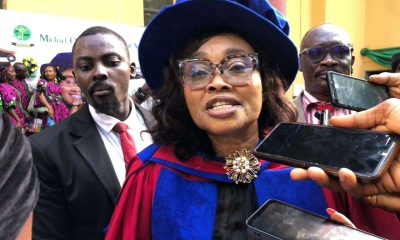
The emergence of Prof. Ursula Ngozi Akanwa as the 7th Vice-Chancellor of Michael Okpara University of Agriculture, Umudike, on February 20, 2026, has once again ignited a renewed interest in the contribution of women to tertiary institutions when thrusted into the highest office in the university.

Women have shown to be excellent leaders in the course and evolution of Nigeria, and in the academia, many of these women – vice chancellors, have done well beginning with Professor Alele Williams who was the first female vice chancellor in the country, assuming the position in 1985. Then it was considered a novelty; but now it is common place.
These women have always brought unique perspectives to leadership positions. Based on investigations , a mere 5.27 per cent of Nigeria’s vice chancellors since 1960 have been women.
Presently, out of 270 universities in Nigeria, only 13 have female vice chancellors.
For much of Nigeria’s post-independence history, the office of Vice-Chancellor was mostly occupied by men. Women were visible in academia as lecturers, researchers and professors, but they were seldom entrusted with the apex executive authority of universities. Since 1960, only about 38 women have ever held the position of Vice-Chancellor nationwide; this is a stark indicator of entrenched gender imbalance in higher education governance.
However, the period from 2016 to 2026 marks a significant change in the number of women taking leadership roles in Nigerian universities. While women still account for only a small fraction of Vice-Chancellors nationwide, the number of appointments within this period is significantly higher than in earlier decades.
Since 2016, at least 19 women have served or are serving as Vice-Chancellors across federal, state, and private universities in Nigeria and this is a marked increase compared to the sparse representation recorded before the mid-2010s. Despite this progress, the overall proportion remains modest when measured against the 307 approved universities currently operating in Nigeria. Even with these 19 appointments over the last decade, women still constitute well below 10% of total university leadership at any given time.
A Structural Shift
Nevertheless, the concentration of these appointments within a single decade points to a structural shift. What was once a rare occurrence has become increasingly visible and this suggests that the pattern of female exclusion from apex university governance is gradually giving way to a more inclusive, merit-based leadership landscape.
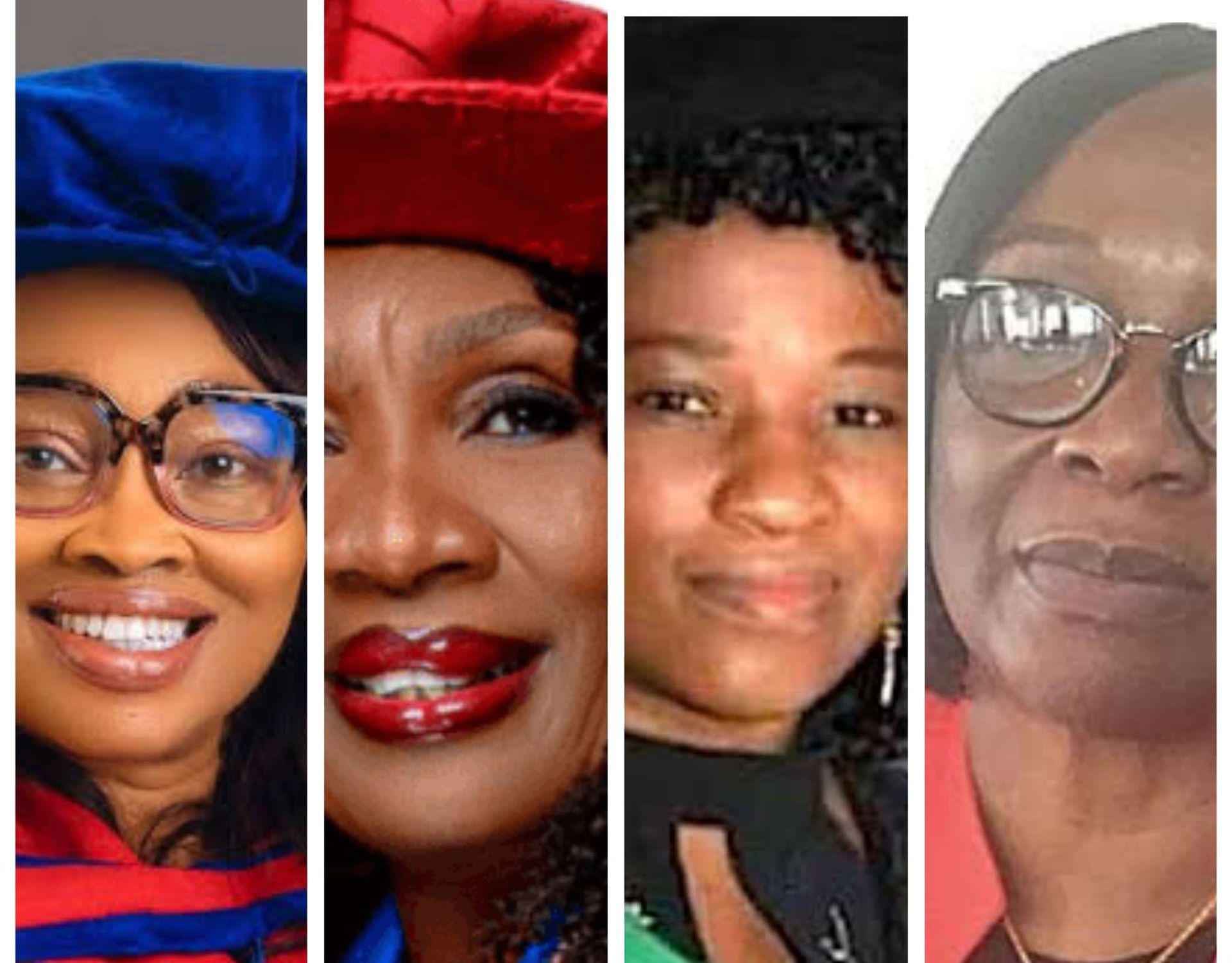
High-profile breakthroughs illustrate this momentum. At the University of Benin, Prof. Lilian Salami assumed leadership. The University of Calabar appointed Prof. Florence Obi, breaking a 45-year male-only streak. The Federal University of Technology Owerri saw Prof. Nnenna Oti emerge as Vice-Chancellor, while the University of Lagos appointed Prof. Folasade Ogunsola as its first female VC. Similarly, the Federal University of Technology Akure appointed Prof. Adenike Oladiji.
The latest is Professor Ursula Ngozi Akanwa, who assumed office as the 7th Vice-Chancellor of Michael Okpara University of Agriculture, Umudike (MOUAU) on March 1, 2026, following the university’s Governing Council approval at its 95th meeting held on February 20, 2026, marking a historic milestone as the first female to lead the 34-year-old federal institution. These developments signal that the “glass ceiling” in Nigerian academia, though not fully dismantled, is visibly cracking.
Female Role 2016–Present
Below is a consolidated list of women, who have served as Vice-Chancellors in Nigerian universities from 2016 to date:
Prof. Fatima Batul Mukhtar: Vice-Chancellor, Federal University Dutse (2016–2021); later pioneer VC, Azman University Kano (2023), Prof. Angela Freeman Miri: Vice-Chancellor, Federal University Lokoja (2017–2021)
Prof. Victoria Adaobi Obasi: Vice-Chancellor, Imo State University (2017–2020), Prof. Smaranda Olarinde: Vice-Chancellor, Afe Babalola University (from 2020)
Prof. Omolola Irinoye: Vice-Chancellor, Achievers University (appointed 2023)
Prof. Lilian Imuetinyan Salami: Vice-Chancellor, University of Benin (from 2019-2024), Prof. Florence B. Obi: Vice-Chancellor, University of Calabar (from 2020–2025), Prof. Ibiyemi Olatunji-Bello: Vice-Chancellor, Lagos State University (from 2021), Prof. Nnenna Oti: Vice-Chancellor, Federal University of Technology Owerri (from 2021), Covenant University has had one female Vice-Chancellor in its history: Professor Aize Obayan.
Prof. Kaletapwa G. Farauta: Vice-Chancellor, Adamawa State University (from 2017-2022), Prof. Adenike Temidayo Oladiji: Vice-Chancellor, Federal University of Technology Akure (from 2022), Prof. Folasade Tolulope Ogunsola: Vice-Chancellor, University of Lagos (from 2022), Prof. Bidemi Lafiaji-Okuneye: Vice-Chancellor, Lagos State University of Education (from 2023), Prof. Enase Felicia Okonedo: Pan Atlantic University (from 2022)
Others are Prof. Stella Chinye Chiemeke: Vice-Chancellor, University of Delta (from 2021), Prof. Eunice Eboserehimen Omonzejie: Vice-Chancellor, Ambrose Alli University (appointed 2025)
Prof. Chinedum Peace Babalola: Chrisland University (2017-2024)
Prof. Adenike Kuku: Kings University (2021-2026), Prof. Ursula Ngozi Akanwa: Vice-Chancellor, Michael Okpara University of Agriculture, Umudike (appointed 2026).
Several factors contribute to these low rates. Women often contend with marriage and motherhood responsibilities, which frequently consume the time they would otherwise dedicate to advancing in their careers.
A senior lecturer in the Department of Mass Communication, University of Maiduguri, Dr Amina Abana, highlighted various factors contributing to the underrepresentation of women as vice chancellors in Nigerian universities, particularly in the North, such as cultural and religious.
Social Impediments
Dr Abana said, “Specifically addressing the North, cultural, religious, and societal expectations regarding women’s roles play a significant role. For example, some Islamic scholars assert that women should not assume leadership positions. Additionally, male dominance in the academia, coupled with restricted access to mentoring and networking opportunities, gender biases and discrimination, as well as unequal access to resources and decision-making positions within the academic sphere, further compound the issue.”
A professor of Broadcasting at the Ahmadu Bello University, Dr Ladi Sandra Adamu, said there has been a noticeable increase in the number of female professors qualifying for the position of vice chancellors, signalling a positive shift.
She highlighted that historically, political and religious influences had favoured male professors with the position of vice chancellor often serving as a political reward, further pushing gender biases.
Dr. Adamu stressed the prevailing belief in Africa that men were inherently superior to women, leading to a tendency for women academics to settle for lower leadership positions, such as deans, directors and deputy vice chancellors.