Politics
Possible party switch, North’s strategic importance: 10 key takeaways from Peter Obi’s Arise TV interview
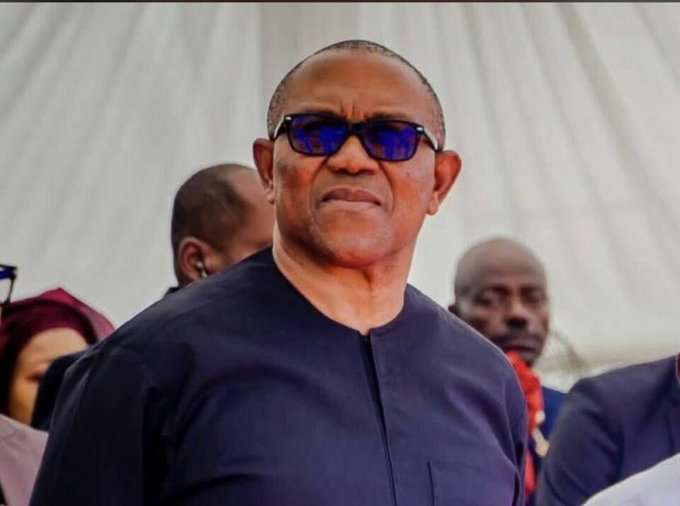
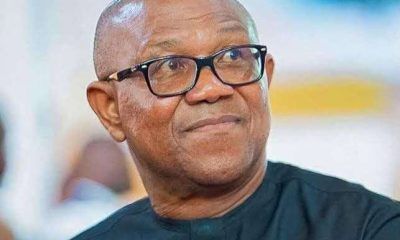
Former Anambra State governor and 2023 presidential candidate, Peter Obi, has offered an expansive defence of his political journey while laying out a broad vision for Nigeria ahead of the 2027 elections.
Speaking during an interview on Arise TV on Monday, Obi addressed his frequent party switches, economic plans, security strategy and efforts to build a united opposition. His remarks provide a clearer picture of how he intends to position himself in the evolving political landscape.

Here are 10 key takeaways from the interview:
1. Party switches driven by principle, not ambition
Obi defended his movement across political parties, saying each decision was based on principle rather than personal gain.
He explained that his exit from the All Progressives Grand Alliance (APGA) stemmed from a dispute with his successor as governor of Anambra State, which he feared could undermine governance.
“I moved from APGA to the PDP because of issues with my successor. Rather than allow it to become destructive to governance, I moved out,” he said.
2. Rejection of ‘transactional politics’
His experience in the Peoples Democratic Party (PDP), he said, reinforced his belief that Nigeria’s political system is deeply flawed.
According to him, internal processes were often ignored, with politics reduced to patronage and personal interests.
“People were not playing by the rules. It was transactional. I cannot be part of a transactional system,” Obi said.
3. Labour Party crisis weakened confidence
Obi also cited internal crises and legal disputes within the Labour Party as factors that eroded its viability as a platform.
While he did not elaborate extensively, he suggested that instability within the party made it difficult to sustain a long-term political project.
4. Building a united opposition front
The former presidential candidate confirmed that he is now working with opposition figures aligned with the African Democratic Congress (ADC) as part of efforts to build a stronger coalition ahead of 2027.
He acknowledged public concerns about some of his new allies but maintained that present commitment matters more than past affiliations.
“What is important is not what people were yesterday, but what they are today,” he said.
5. Commitment to sustained political struggle
Obi signalled that he is prepared for a prolonged political battle, regardless of setbacks.
“We are ready to work with people who are committed to change. If the process is compromised again, we will continue the fight,” he said.
He framed his political engagement as part of a broader mission to rebuild Nigeria’s democratic system.
6. South-East mobilisation and broader alliances
Following his formal registration with the ADC in Agulu, Anambra State, Obi said the South-East region is working collectively ahead of the 2027 elections.
He added that discussions are ongoing with other regions to build a nationwide coalition.
“In this particular journey of 2027, we in the South-East are working as a family and we are discussing with other regions. We are working to unite all opposition,” he said.
7. North as Nigeria’s greatest economic asset
Obi made a strong pitch to northern voters, describing the region as Nigeria’s most valuable but underutilised asset.
He argued that with the right policies, agriculture could generate more revenue than oil.
“Nobody can do what I intend to do in the North. We will change the North. Our greatest asset as a country is in the North,” he said.
He emphasised that targeted investment in agriculture and rural development would unlock the region’s potential.
8. Security as foundation for development
The former governor stressed that insecurity remains the biggest obstacle to development, particularly in northern Nigeria.
He linked insecurity to poverty, unemployment and weak social infrastructure, calling for a comprehensive approach.
“If we want to secure the North, we must invest in agriculture, reduce poverty, and improve education and healthcare,” Obi said.
Drawing from his time in office, he argued that decisive leadership can significantly reduce crime, citing his experience in Anambra State.
9. Debt burden and fiscal concerns
Obi raised alarm over Nigeria’s rising debt profile, describing it as unsustainable and poorly utilised.
He noted that the country’s debt grew significantly in recent years without corresponding development outcomes.
“When Buhari came in, our borrowing was about N13 trillion; when he left, it was N87 trillion. Today, we’re hitting N200 trillion without anything to show for it,” he said.
He also criticised continued borrowing despite the removal of fuel and power subsidies, arguing that government finances remain strained.
“Our budgets are not financed. In the entire 2025 budget for capital projects, contractors are being owed,” he added.
10. Call for unity and stronger democracy
Obi concluded with a broader appeal for national unity and institutional reform, urging Nigerians to move beyond ethnic and religious considerations in politics.
“Don’t vote for me because I’m from the South-East or because I’m a Christian. Vote for me because I’m committed to turning around Nigeria,” he said.
He also criticised what he described as a system rooted in “criminality” and called for its dismantling through transparent governance.
In addition, he urged the government to support a vibrant opposition, arguing that it is essential for accountability in a democratic system.
“The government should protect the opposition. In fact, they should make opposition stronger and make it work,” he said.