Business
Obi unveils education, healthcare blueprint in second phase of New Nigeria roadmap

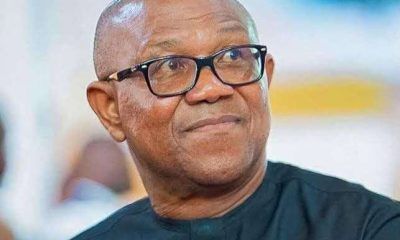
The presidential candidate of the Nigeria Democratic Congress (NDC), Peter Obi, has outlined plans to prioritise education and healthcare as key pillars of national development, insisting that both sectors are fundamental to building a prosperous and productive nation.
Obi disclosed this on Thursday while releasing the second part of his Roadmap to a New Nigeria, in which he expanded on his vision for transforming the country’s education and healthcare systems.

According to the former Anambra State governor, sustainable national development must begin with investments in human capital, stressing that quality education and accessible healthcare are essential for economic growth, social mobility and national stability.
“Education and healthcare remain the foundation of a renewed Nigeria,” Obi stated.
He recalled that the first part of his roadmap, released on July 1, focused on a broad framework for national renewal centred on human capital development, technical and vocational education, character building and economic reforms aimed at shifting Nigeria from a consumption-driven economy to a production-based one.
Expanding on the proposals, Obi said evidence from successful nations around the world showed that strong education and healthcare systems were among the most important factors distinguishing prosperous countries from struggling ones.
Citing Nobel Prize-winning economist Angus Deaton’s work, The Great Escape: Health, Wealth, and the Origins of Inequality, Obi argued that education and healthcare provide the foundation for reducing inequality and creating opportunities for citizens.
He rejected claims by some youths that education had become irrelevant, maintaining that learning, when combined with access to quality healthcare, remains a pathway to personal advancement and national development.
The NDC candidate also called for greater alignment between educational policies and national development priorities, drawing lessons from countries such as Singapore and China, whose investments in education contributed significantly to their economic transformation.
As part of his proposals, Obi said his administration would strengthen collaboration among the different tiers of government in the management of education, with primary education anchored at the community and local government levels and supported by active parental participation.
He added that curricula would be tailored to local economic realities and productive sectors to ensure that education contributes directly to economic growth and job creation.
The former governor further pledged support for state governments to expand access to quality secondary education and Technical and Vocational Education and Training (TVET) through grants and incentive programmes.
According to him, universities would also be encouraged to develop specialised areas of teaching and research to enhance global competitiveness and produce graduates equipped with skills required in a rapidly evolving economy.
Obi said the proposals form part of a broader strategy to build a productive and prosperous Nigeria, reiterating his campaign slogan that “a new Nigeria is possible.”
The roadmap is expected to be released in phases, with additional policy proposals to be unveiled in the coming weeks and months.