Business
Ododo’s giant strides in Kogi surpasses public expectations
By Adebayo Obajemu
Something different and promising seems to be taking place in Kogi State in spite of prevailing changes of insecurity and hardship in the country. Unlike the last administration of Yahayah Bello that was marked by controversies, corruption allegations and lack of performance, Gov. Ododo appears to be changing the narrative and bringing dividends of democracy to the people.

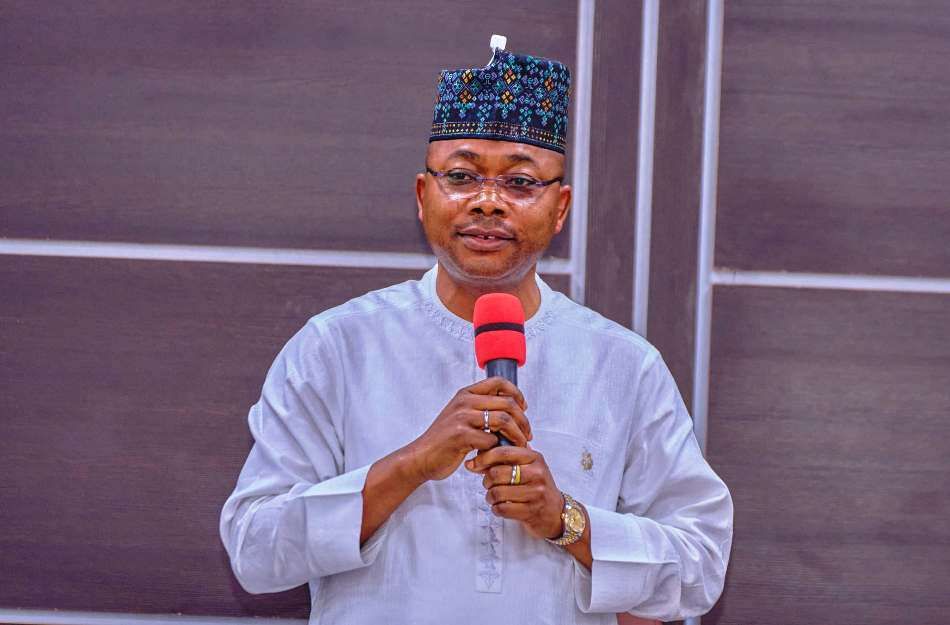
Gov. Ahmed Usman Ododo was sworn in as Kogi governor on January 27, 2024 , after the expiration of the two terms of eight years of the former governor, Yahaya Bello.
Ododo, a member of the All Progressives Congress, took his oath of office as the state governor in Lokoja following his November 11, 2023 victory becoming the 5th Executive Governor of the state.
Speaking shortly after receiving his certificate of return from the Independent National Electoral Commission, Ododo assured the people that he would make good his campaign promise to build on the past achievements of Governor Yahaya Bello while preserving the unity of the state. This promise has been kept given the giant architecture of achievements visible even to his detractors and critics across the state.
Widely described as amiable and approachable with down-to-earth manner, Governor Ododo’s first two years in office (January 2024 – 2026) have been defined by targeted investments in workers’ welfare, security, healthcare, education and infrastructure among others.
One of his flagship achievements is his cordial relations with the organized labour, which has seen the state unaffected by the usual industrial action and labour turbulence witnessed in other states mainly arising from official negligence of workers’s welfare.
Ever since he became governor prompt payment of salaries of workers has become directive principle of state policy. Specific achievement in this direction is the incontrovertible fact that he’s the first governor in Northern Nigeria to implement a new minimum wage of N72,500. The administration has consistently ensured regular salary payments and improved pensions for retirees.
Security & Law Enforcement:
His predecessor Yahaya Bello was able to build countermeasures to curtail banditry and lawlessness, but Ododo vigorously strengthened the ramparts built to curtail the resurgence of banditry in the state by equipping security operatives, strengthening their operational capacity and logistics. His administration also integrated local vigilantes and hunters into the civil service framework, as well as procuring hundreds of customized security vans and motorcycles.
Through these measures, the state has for much of 2026 seen a drastic reduction in the rate of kidnapping for ransom, killings and banditry, though there are still pockets of incidents here and there, but his administration has further ratcheted up measures to ensure that the state, being an important route and link between the North and South- is rid off criminality.
Infrastructure
The Ododo’s administration has focused on rapid infrastructural development since 2024, rehabilitating over 100 kilometers of roads, initiating construction of over 300 kilometers more, and launching a new International Cargo Airport. Key projects also include urban renewal in Lokoja, 24-hour solar power in health facilities, and rural infrastructure, aimed at boosting economic connectivity.
This ambitious plan aims to revitalize rural access, enhance connectivity, curb environmental degradation, and stimulate agricultural productivity — all anchored firmly on local content development.
Complementing these are more than 200 kilometers of rural roads linking about 50 communities within key agricultural belts across various local government areas, made possible through strategic collaborations with international partners.
Central to this vision is the Agro-Climatic Resilience in Semi-Arid Landscape (ACReSAL) project, which focuses on large-scale erosion control interventions in Etahi (Okene), Olubiojo (Ankpa), and Omigbo (Kabba). These efforts, representing the three senatorial zones of the state, are backed by investments worth nearly 30 billion Naira.
Equally significant is the Rural Access and Agricultural Marketing Project (RAAMP), which has commenced construction of over 200 kilometers of rural roads aimed at linking farming communities with markets and essential services.
The Governor noted that “these rural roads are not just transport links, they are lifelines that connect our traders, farmers, and communities, fostering economic growth and food security. By improving access, we empower farmers to compete in regional and national markets, boosting incomes and reducing poverty.”
Governor Ododo described the project as the foundation for a broader rural road network designed to enhance connectivity, reduce transportation costs for farmers, and improve market access across the state.
Urban Projects
It completed critical roads in Lokoja, including the 9km Zone 8–Army Barracks–Zariagi road and the ongoing dualization of the Zone 8–Zango–GYB Junction Road. Undertook major rehabilitation of Egbe Township roads and various street upgrading projects in Mopa and Omala, Idah, Bassa in Kogi East; Mopamuro, Egbe, Ijumu in Kogi West; and Okene, Okehi, Adavi in Kogi Central.
Rural Roads:
It embarked on extensive rural road construction to link communities to markets across the three senatorial districts.
Proposed International Cargo Airport:
By January 2026, the administration completed the design phase and moved to the procurement stage for a transformative International Cargo Airport to boost commerce.
Water Supply:
The Ododo government has executed borehole projects and improved water access in underserved communities across the state.
Educational Institutions:
The administration has upgraded infrastructure in schools and tertiary institutions across the state, has built giant infrastructure in the newly created state university in Kabba.
Healthcare Expansion:
In the area of health, governor Ododo’s administration has made its impact loudly, as it has revitalized over 200 Primary Healthcare Centres (PHCs) across rural communities to provide 24-hour service. Over 220,000 residents are now covered under the state health insurance scheme. The administration also upgraded the Reference Hospital Okene to the Confluence University of Science and Technology Teaching Hospital.
The administration has also affirmed its commitment to grassroots development, economic sustainability, and infrastructural growth .
Governor Ododo charged government officials to remain close to the grassroots and ensure constant engagement with the people, noting that such connection is key to responsive governance. “We are in government to serve the people, and that means staying connected to their needs and aspirations”, the governor recently declared.
As part of efforts to boost the local economy, the governor also directed all government officials to wear Made-in-Kogi fabrics as a show of support for indigenous industries. He encouraged Kogites to take pride in local products and lead a cultural and economic renaissance from within.
The Commissioner for Information and Communications, Hon. Kingsley Femi Fanwo, told Business Hallmark that the administration was committed to making governance more visible and impactful. “Governor Ododo is driving a government that listens, learns, and leads from the grassroots. His directive on Made-in-Kogi fabrics is a strategic move to grow our economy and export our identity,” Fanwo said. On infrastructure, Fanwo disclosed that perimeter fencing at the Confluence University of Science and Technology (CUSTECH), Osara is 90% completed, while both male and female hostels have been completed and are already housing students. Similar projects at the Kogi State University, Kabba, are progressing .
Gov. Ododo has consistently charged government officials to remain close to the grassroots and ensure constant engagement with the people, noting that such connection was key to responsive governance.
“We are in government to serve the people, and that means staying connected to their needs and aspirations,” the governor was quoted as saying during the meeting.
As part of efforts to boost the local economy, the governor also directed all government officials to wear Made-in-Kogi fabrics as a show of support for indigenous industries. He encouraged Kogites to take pride in local products and lead a cultural and economic renaissance from within.
To improve public safety, the administration also approved a bill to restrict the movement of heavy trucks during peak hours. Another bill was approved for the establishment of the Kogi State Agency for Climate Change as part of a forward-thinking response to global environmental challenges.
Fiscal Stability
In a separate briefing, the Commissioner for Finance, Budget and Economic Planning, Mukadam Asiwaju Asiru Idris, announced that the Ododo administration has fully liquidated N98.8 billion in debts inherited from previous administrations within just 15 months.
The breakdown includes:
• N8 billion in bonds from the Idris Wada administration.
• N50.8 billion salary bailout from the last administration.
• N10 billion ECA-backed infrastructure loan.
• N15 billion infrastructure loans from Zenith Bank and another N15 billion from UBA Plc.
“This is a landmark achievement. His Excellency Governor Ododo has demonstrated fiscal discipline and commitment to economic recovery. Within 15 months, we have cleared N98.8 billion in inherited debt,” Idris said.
He added that Fitch Ratings has upgraded Kogi State’s credit rating from ‘B-’ to ‘B’, with a stable outlook, citing prudent financial management. As of September 30, 2024, the state’s debt profile stands at N40.5 billion, placing it on a strong path to debt sustainability.
Education & Youth Empowerment:
The administration ever since coming on board has given much priority to education and youth empowerment.
It has always been giving speedy approval to the payment of WAEC and JAMB fees for students across the state and has launched skill acquisition programs with starter packs for hundreds of youths.
Agriculture:
The Ododo administration’s stride in agriculture is very huge . It has invested over a billion in agricultural interventions to boost food security, deployed over 100 tractors to cultivate 7,000 hectares of farmland, supported by a ₦7 billion investment in the “Wet Season Agricultural Intervention Programme”.
Institutional Reforms:
It also established the Kogi Electricity Regulatory Commission to improve local power supply and secured new mining licenses to boost the state’s Internally Generated Revenue (IGR)