Business
Supreme Court clears path for Providus-Unity Bank merger, dismisses legal challenge
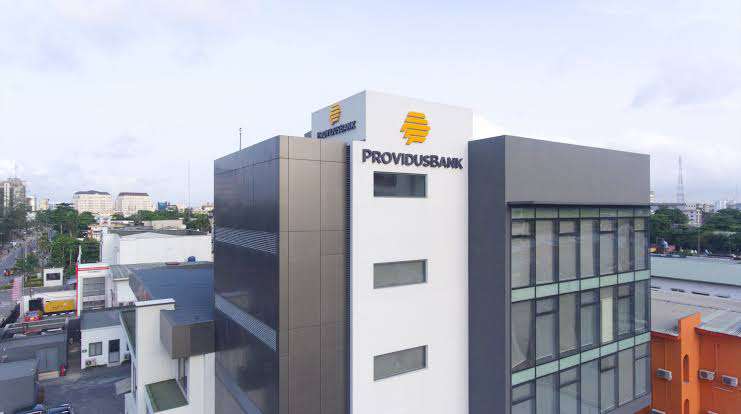
The Supreme Court has thrown out a legal challenge against the merger between Unity Bank Plc and Providus Bank Limited, effectively affirming the consolidation plan and removing the final judicial obstacle to the transaction.
A five-member panel of the apex court unanimously held on Monday that the appeal brought by two shareholders lacked merit. The appellants had sought to overturn earlier decisions of both the Federal High Court and the Court of Appeal which had upheld aspects of the merger process.

In its ruling, the court also awarded costs of N10 million against the appellants in favour of each respondent involved in the case.
Beyond dismissing the appeal, the Supreme Court invoked Section 22 of its enabling Act to directly endorse the merger scheme, a move that effectively validated the transaction and accelerated its implementation.
The judgement ordered that all assets, liabilities, undertakings, and real estate belonging to Unity Bank be transferred to Providus Bank. It further directed that the entire process be concluded within 10 days.
The court also approved the agreed exchange terms, fixing compensation for Unity Bank shareholders at N3.18 per share or an alternative swap ratio of 18 Providus Bank shares for every 17 Unity Bank shares held.
As part of the restructuring, the court sanctioned the dissolution of Unity Bank’s board without winding up the company and approved the adoption of a new identity for the enlarged institution, to be known as ProvidusUnity Bank Limited upon completion.
The dispute originated from a suit filed by shareholders Suleiman Abubakar and Mohammed Modu, who challenged the merger through the lower courts before proceeding to the Supreme Court in a final attempt to halt the deal.
The consolidation effort, first initiated in August 2024, had earlier received approval from the Central Bank of Nigeria, which said the intervention was aimed at strengthening financial system stability and reducing systemic risk in the banking sector.
The regulator later granted final approval in August 2025 as part of broader banking reforms tied to new capital adequacy requirements for commercial lenders ahead of the 2026 compliance deadline.
The transaction also secured shareholder approval at an extraordinary general meeting held in September 2025, following an order of the Federal High Court in Lagos earlier in July 2025. Regulators including the Securities and Exchange Commission and the Federal Competition and Consumer Protection Commission were among the bodies listed as respondents in the case.
Market analysts have described the ruling as a significant boost to ongoing efforts to consolidate Nigeria’s banking sector and enhance the resilience of financial institutions amid tightening regulatory capital requirements.