Politics
NDC presidential bid gathers momentum as Kwankwaso backs Obi, offers to serve as running mate
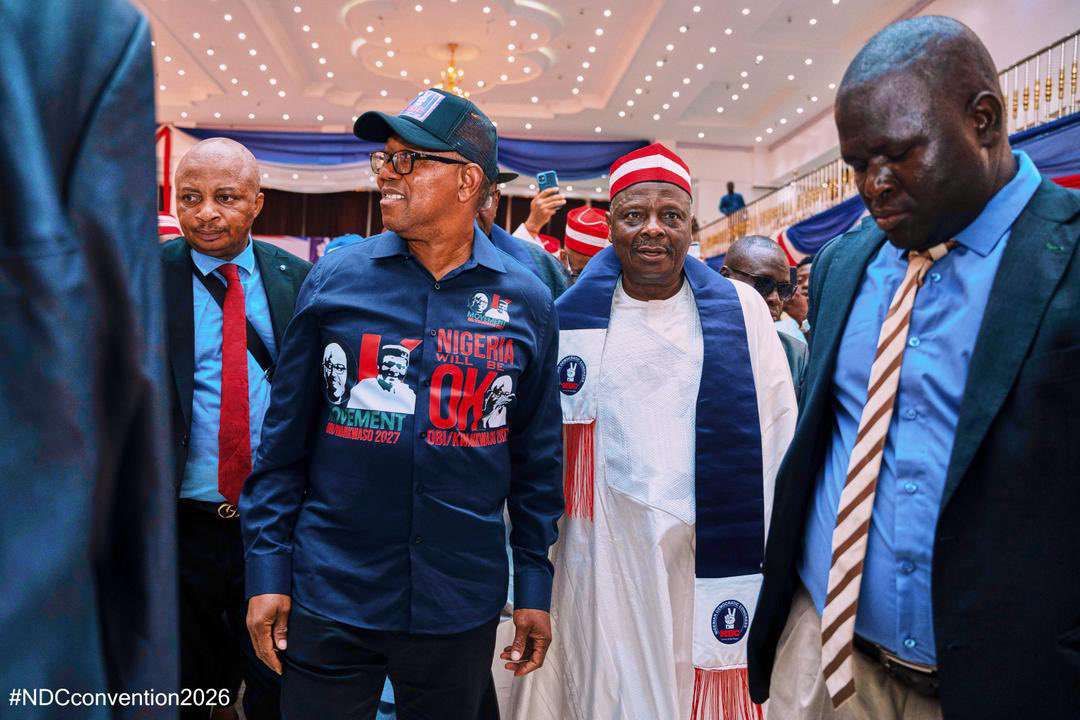
Fresh momentum appears to be building around the emerging political alliance within the Nigeria Democratic Congress (NDC) ahead of the 2027 general election, following a major declaration by former Kano State governor, Rabiu Musa Kwankwaso, that he is willing to serve as running mate to Peter Obi if the party settles for a southern presidential candidate.
Kwankwaso’s remarks, made during an interview on Arise Television’s Prime Time programme on Monday, are already fuelling discussions about a possible Obi-Kwankwaso ticket, a combination many opposition supporters believe could reshape the political landscape ahead of the next presidential election.

The former governor, who leads the influential Kwankwasiyya movement, said discussions between him and Obi had centred largely on tackling Nigeria’s worsening insecurity and rebuilding national stability.
“Both of us, my humble self and Peter Obi, have agreed to tackle the issue of insecurity head-on to ensure there is peace and stability in this country,” Kwankwaso said during the interview.
His comments are being interpreted in political circles as one of the clearest indications yet that opposition figures are actively exploring strategic alliances capable of challenging the ruling establishment in 2027.
Asked directly whether he would accept the vice-presidential slot if Obi eventually emerges as the NDC presidential candidate, Kwankwaso gave an unambiguous response.
“If the party decides that I should be the running mate of any candidate from the south under the circumstances, I’d be happy to work together with him,” he stated.
The declaration marks a significant shift in Nigeria’s opposition politics, especially given the political weight both men command in different parts of the country.
While Obi continues to enjoy strong support among urban youths and sections of the southern electorate following his performance in the 2023 election, Kwankwaso retains considerable grassroots influence in Kano and across parts of northern Nigeria through the Kwankwasiyya movement.
Political observers say a potential alliance between the two leaders could alter existing political calculations by combining Obi’s reformist appeal with Kwankwaso’s northern political structure and electoral base.
Kwankwaso appeared confident about the political strength of such a partnership, insisting that few political combinations could rival what both leaders would bring to the table.
“Personally, I cannot remember any better combination, no matter how much time is given to find those who can beat us in terms of doing the right thing for this country,” he said.
The development also signals growing efforts among opposition politicians to close ranks ahead of the 2027 contest, amid increasing public frustration over economic hardship, insecurity and governance challenges across the country.
Both Kwankwaso and Obi recently moved to the NDC after separate political stints in the African Democratic Congress, a development that has intensified speculation about broader coalition talks within the opposition.
Although the NDC is still in the process of consolidating its national structure, analysts believe the entry of high-profile political figures such as Obi and Kwankwaso could significantly boost the party’s visibility and electoral prospects.
The possibility of a joint ticket is also likely to revive debate around regional balancing and coalition politics, which have historically played a crucial role in determining presidential outcomes in Nigeria.