Education in Nigeria
Fear, optimism cloud ASUU/FG agreement, as other unions kick over exclusion
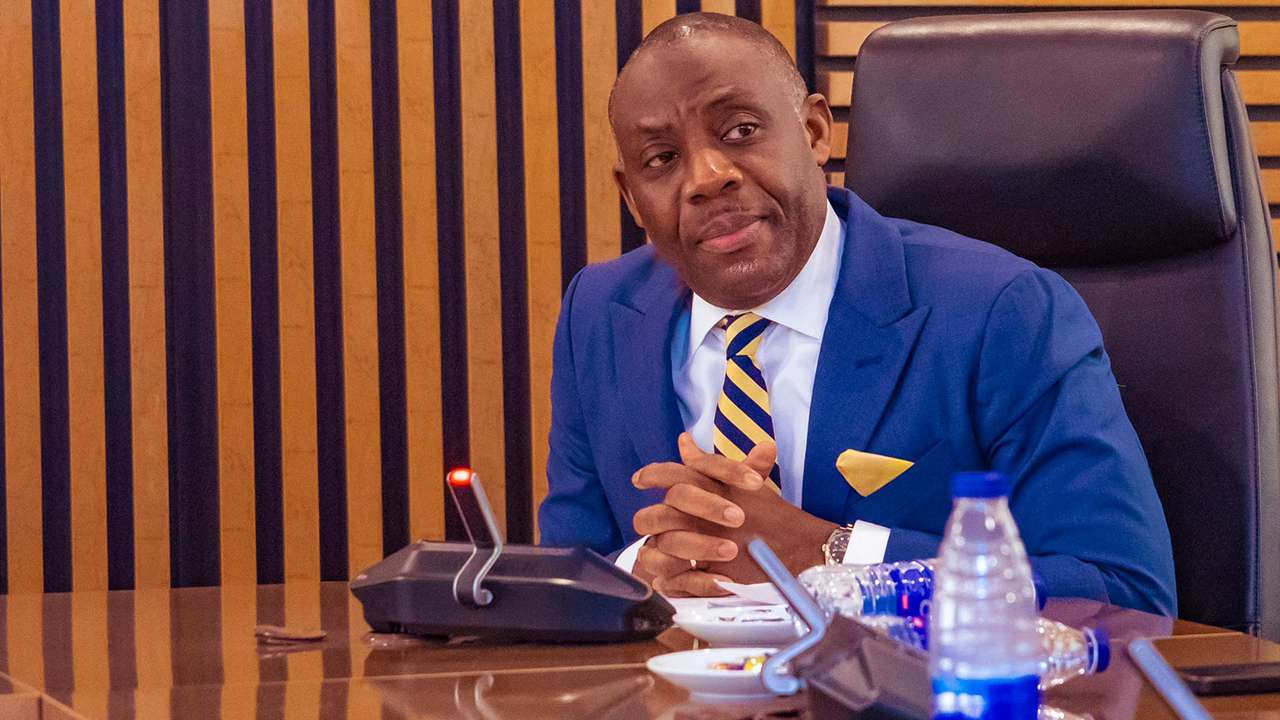
Penultimate Wednesday, precisely January 14, 2026, the Federal Government, through the Minister of Education, Dr. Tunji Alausa, signed a fresh agreement with the Academic Staff Union of Universities. The federal government described the agreement as a turning point in the effort to restore stability, trust, and quality in Nigeria’s tertiary education system.
“History will remember today not merely as an unveiling ceremony, but as the day Nigeria chose dialogue, transparency, fiscal realism, and strong presidential commitment as the pathway to resolving long-standing governance challenges and achieving sustained progress,” Dr. Alausa, had said during the signing of the agreement.

The agreement has effectively ended a 17-year crisis that has repeatedly destabilized Nigeria’s university system.
The long-drawn crisis, defined by recurring strikes, inadequate funding, and unresolved welfare concerns, has continuously negatively affected academic calendars, fostered brain drain, and left millions of students at a disadvantage.
It could be recalled that during this period, ASUU embarked on eight major strikes, lasting a combined total of about 1,200 days, two of which lasted more than a session.
The 2026 agreement, which replaces the 2009 pact, takes effect from January 1, 2026, with a three-year review cycle. It aims at resolving deep-seated, long-standing issues in respect of salaries, pensions, university funding and strike prevention.
Bumper Package
The 35-page document is compartmentalised into six chapters and delves on conditions of service, funding, university autonomy, academic freedom and other critical matters. The new arrangement seeks to stabilize the tertiary education sector, but it faces skepticism due to historical precedence and economic constraints.
Many experts spoken to say the agreement though good on paper may have difficulties in execution due to funding challenges.
Going through the highlight of the agreement, it can be seen to be
all-encompassing: one, it provides for an upward review of lecturers’ salaries by about 40 per cent, alongside improved conditions of service. Under the new structure, professors are also entitled to an annual allowance of N1.74 million, while Readers on CONUASS 07 and 06 will receive N840,000 per year.
In the new arrangement, university academic staff are eligible for Earned Academic Allowances. The agreement mentions nine types: postgraduate supervision allowance; teaching practice, industrial supervision and field trip allowance; honoraria for postgraduate oral examinations; honoraria for external moderation; and external assessment allowances for Readers and professors.
Other allowances in the kitty are postgraduate study grants, call duty/clinical duty/clinical hazard allowance, responsibility allowance and excess work-load allowance.
The retirement age for the professorial cadre is fixed at 70 years. Retired professors in recognized public universities will now have access to pensions calculated at 100 per cent of their annual salary.
The agreement also provides for maternity and paternity leave, as female academic staff are granted six months of maternity leave, while male academic staff are entitled to two weeks of paternity leave.
Renewed Hope
As contained in the 2009 FGN/ASUU Agreement, the Federal Government will continue to bear the full capital and recurrent costs of university staff primary schools, as well as the capital costs of university secondary schools.
Additional non-salary benefits include group life insurance, research leave, sabbatical leave, annual leave, sick leave and deferred leave, or compensation for denial.
The agreement also provides for injury pensions and the provision of office accommodation and facilities, to be managed by individual university governing councils.
Also the Federal Government will provide N30 billion for the stabilization and restoration of universities. Tagged the Stabilisation and Restoration Fund, the money will be disbursed in three equal instalments of N10 billion annually from 2026 to 2028.
A National Research Council Bill will be forwarded to the National Assembly. The proposed legislation will provide for funding of research, innovation and development through, at least, one per cent of the Gross Domestic Product (GDP).
The agreement also provides for the review and amendment of five laws considered to impede university autonomy and academic freedom. This process will be initiated by the Federal Ministry of Education in collaboration with ASUU and other stakeholders.
The laws include the Joint Admissions and Matriculation Board (JAMB) Act; National Universities Commission (NUC) Act; Education (National Minimum Standards and Establishment of Institutions) Act; Universities Miscellaneous Provisions Act; and the Tertiary Education Trust Fund (TETFund) Act.
Cautious Optimism
Though, there has been guarded optimism in education sector, many experts are cautious in voicing ‘Uhuru’ for the university fundings given past experiences and government’s antecedent, coupled with the paucity of funds to address the core issues of the agreement.
Professor Abdullahi Aminu, an economic historian, told Business Hallmark that “When you’re dealing with government with little integrity you have to be careful. Right from 2009 all the successive governments suffered from low integrity quotient. Until this administration begins implementation I can’t be sure we have reached where we are going. Where is the money? I believe the agreement is to buy time, political time. Let us watch and see.
A Nigerian educationist, Musa Zubairu, expressed strong doubts that the federal government will fully implement its agreement with ASUU, despite recent assurances and resolutions reached with the union.
Zubairu said the federal government has a long-standing record of failing to honor agreements it freely negotiated and signed with ASUU. He stressed that the current situation appears no different from previous experiences. According to him, ASUU has consistently shown commitment to agreements reached with the government, while successive administrations have repeatedly failed to meet their own obligations.
“In most cases, ASUU sticks to the agreements reached, but the Federal Government does not fulfil its own part. This has been the pattern over the years, and that is why many Nigerians are sceptical whenever a new resolution is announced.”
Zubairu criticized what he described as the government’s poor communication and lack of transparency, arguing that Nigerians are rarely updated on the status of agreements years after they are signed.
The Kaduna-based educationist further decried the level of attention given to the education sector, describing it as inadequate for a country of Nigeria’s size and aspirations.
“Education is not given the attention it deserves. You cannot develop any nation without strong investment in education, yet the sector is treated as an afterthought.”
Prof. Akintunde Lawal, a political scientist, told Business Hallmark that, “ASUU has repeatedly accused the government of poor record-keeping and a lack of sincerity in implementing agreements. I can tell you that there are serious concerns regarding whether the government has the financial capacity to fulfill the 40% salary increase and infrastructural investments given the current economic situation. While the agreement promises autonomy, there are fears of continued government interference in the appointment of vice-chancellors and university administration,” he noted.
Prof. Lawal hinted that, “The agreement is viewed as a “wait-and-see” deal, if implementation lags, a new strike is inevitable. He noted that “The workability of the new agreement is questionable and depends heavily on the sincerity of both parties.”
A Partial Solution
A new committee comprising the National Universities Commission (NUC), Ministry of Labour, and ASUU has been established to monitor the agreement and raise red flags on delays.
But experts argue that for the agreement to be functional, it must be implemented in phases rather than in total, allowing for adjustments to economic realities.
Though the government has emphasized that it will not sign an agreement it cannot afford, sceptics are worried, saying that some demands might be scaled back in practice.
Barrister Seyi Odetola, a London – based social commentator and educationist, told this medium that the fundamental issue remains the low trust between ASUU and the government, which historically leads to breaches of agreements.
“What is important is to build trust, parties to the agreements must work on integrity,” he said.
But the elephant in the room, according to Odetola, is the exclusion of other university unions from the agreement. As if sounding prophetic, CONUA, SSANU and NASU have begun to beat war drums. SSANU and NASU have already issued indefinite strike threats
Giving credence and steam to the fears of watchers of the unfolding development, including Odetola, last week other university unions, such as Congress of University Academics (CONUA), Joint Action Committee (JAC) of the Non-Academic Staff Union of Educational and Associated Institutions (NASU), and Senior Staff Association of Nigerian Universities (SSANU) threatened indefinite strikes over alleged non-completion of pending agreements with them. The other university union is the National Association of Academic Technologists (NAAT).
Opening Old Wounds
SSANU and NASU are asking the government to meet its obligations, concerning the payment of withheld four months’ salaries from 2022 and implement agreements like the 2009 renegotiation and the N35,000 wage award.
A statement signed by Prince Peters Adeyemi, General Secretary, NASU and Mohammed Ibrahim, President, SSANU and Chairman of JAC, said: “JAC of NASU and SSANU remains committed to the entrenchment of industrial harmony and sustainable communities in our universities, and calls on the Federal Government to ensure expedited action in the ongoing renegotiation with NASU and SSANU, as any further delay after the signing of today’s agreement with our sister union would be tantamount to a clear invitation to chaos, and the distortion of industrial peace, which we have continued to maintain despite government’s continued insensitivity to the university system and the gruesome conditions under which our members are made to work.
“JAC notes that timely conclusion of the ongoing renegotiation with NASU and SSANU would avert the breakdown of industrial peace and harmony in the system, and hereby advises the Federal Government not to stir the hornet’s nest through any form of delay tactics.”
Also, the CONUA National President, ‘Niyi Sunmonu, PhD, said that it must be recognized that issues arising from the 2009 agreements extend beyond a single union and affect the wider university system. The conclusion of the renegotiation between the Federal Government and ASUU, he said, in 2025 represents progress.“
The contentions include:
i. The “Sharing Formula” Dispute: A major grievance involves the distribution of the N50 billion intervention fund. The unions rejected the government’s formula, which they claim allocates roughly 70–80% of the funds to ASUU, leaving only 20–30% to be shared among all non-teaching unions.
ii.Inclusion of Specific Centers: SSANU has demanded that Inter-University Centers and research institutes, which they claim were “wrongly excluded” from previous payments, be fully included in future disbursements.
iii. “No Work, No Pay” Backlog: The unions are demanding the payment of salaries withheld during past industrial actions, specifically for several months in 2022.
iv. Salary Increment Arrears: There is a persistent demand for the payment of arrears from the 25% and 35% salary increments previously promised to university staff, as well as exclusion of members from harmonised Retirement Age Act.