Politics
Appeal Court affirms ruling against ADC caretaker committee’s state congresses
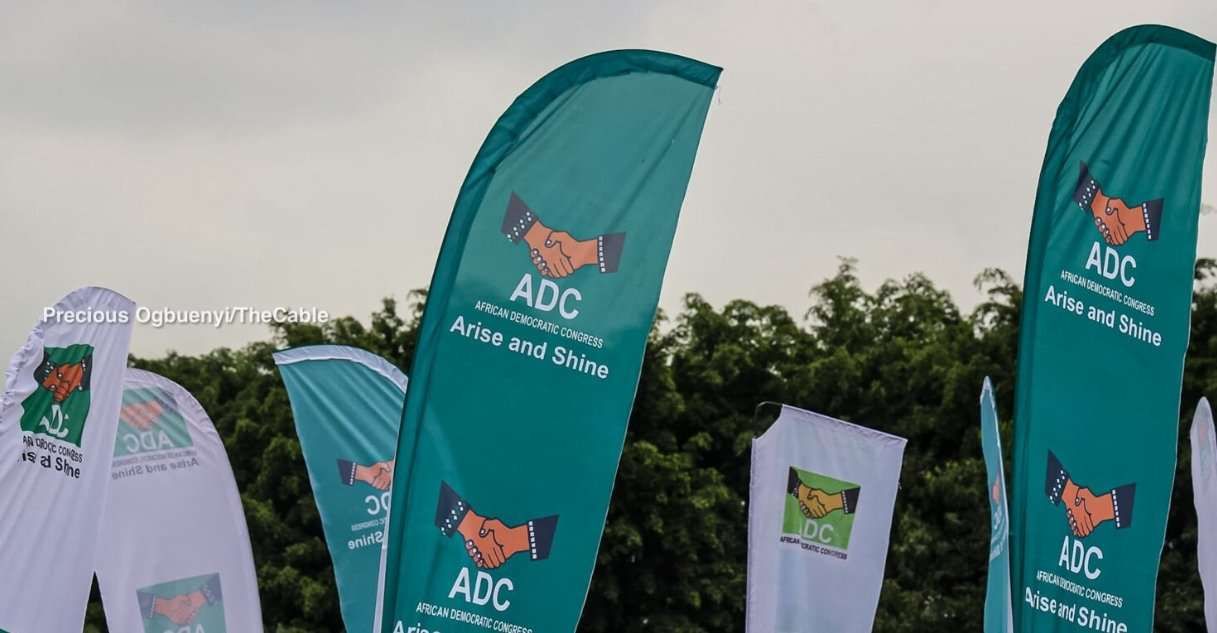
The Court of Appeal in Abuja has upheld a Federal High Court judgment restraining the Independent National Electoral Commission (INEC) from recognising state congresses conducted by committees appointed by the caretaker leadership of the African Democratic Congress (ADC) led by former Senate President David Mark.
In a split decision delivered on Monday, the appellate court dismissed an appeal challenging the earlier ruling of the Federal High Court, thereby affirming the judgment delivered by Justice Joyce Abdulmalik on April 29.

The appeal, marked CA/ABJ/CV/608/2026, was decided by a three-member panel, with two justices supporting the lower court’s decision and one justice dissenting.
Delivering the lead judgment, Justice Okon Abang held that the caretaker leadership lacked the authority to appoint committees to conduct state congresses, maintaining that such powers reside with duly elected state executive committees of the party.
Justice Donatus Okorowo agreed with the decision, while the presiding justice, Abba Mohammed, delivered a dissenting opinion.
Abang ruled that the issues raised in the suit went beyond the internal affairs of a political party because they involved alleged constitutional violations.
“Once a complaint before the court is anchored on a constitutional infraction, the shield of internal affairs drops and the veil is lifted for judicial intervention,” the court held.
The appellate court further stated that judicial intervention was necessary to safeguard democratic processes and prevent actions capable of creating instability within political parties.
The court relied on a recent Supreme Court decision arising from the Peoples Democratic Party’s leadership crisis to support its position that the matter was not purely an internal party dispute.
It also upheld the finding of the lower court that the state congresses and national convention conducted by the Mark-led caretaker committee were carried out in defiance of an existing court order issued on April 14 and were therefore invalid.
In addition, the court awarded N10 million costs against the ADC.
In his dissenting judgment, however, Justice Mohammed held that the matter was non-justiciable because it concerned the internal affairs of a political party.
He argued that the Federal High Court lacked jurisdiction to entertain the suit and should not have intervened in decisions relating to the internal administration of the party.
According to him, the role of state executive committees is limited to agenda-setting for congresses and does not necessarily include conducting such congresses.
The dispute originated from a suit filed by several ADC officials, including Don Norman Obinna, Johnny Tovie Derek, Obah C. Ehigiator, Olona Yinka, Charles Idowu Omideji, Samuel Pam Gyang and Obianyo Patrick, who sued on behalf of ADC state chairmen and state executive committees nationwide.
The plaintiffs challenged the decision of the caretaker committee to appoint committees to oversee state congresses, contending that the move violated both the ADC constitution and the Constitution of the Federal Republic of Nigeria.
They argued that only constitutionally recognised and duly elected party organs possess the authority to organise and conduct state congresses.
Those named as defendants in the suit included the ADC, David Mark, Senator Patricia Akwashiki, Bolaji Abdullahi, Rauf Aregbesola, Prof. Oserheimen Osunbor, who were sued on behalf of the party’s caretaker committee, as well as INEC.
In the judgment affirmed by the Appeal Court, Justice Abdulmalik held that neither the ADC constitution nor the 1999 Constitution empowered the caretaker committee to establish committees for the purpose of conducting state congresses.
She also ruled that the tenure of the party’s State Executive Committees and State Working Committees remained valid until properly conducted congresses and a national convention were held in accordance with the party’s constitution.
The judge further dismissed objections challenging the competence of the suit, holding that the case fell within the jurisdiction of the Federal High Court because it involved INEC’s statutory functions and obligations.
The appellate court’s ruling is expected to deepen the legal debate surrounding the ADC’s internal leadership crisis and could have significant implications for the party’s preparations for the 2027 general elections, particularly regarding the validity of congresses and conventions conducted under the David Mark-led caretaker administration.