Nation
Aguocha Reflects on Courtroom Intervention in Kanu Trial, Calls for Dialogue, Unity

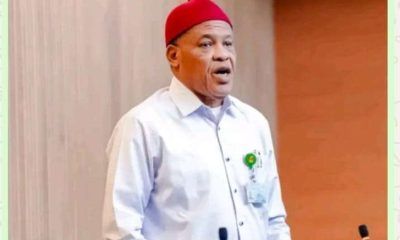
Hon. Obi Aguocha, the member representing Ikwuano, Umuahia North and South Federal Constituency, has spoken on his controversial courtroom intervention during the trial of Nnamdi Kanu, describing it as a moment driven by responsibility, conscience and the need to preserve national stability.
The lawmaker made the remarks during an interaction with journalists who encountered him on his way to Umuahia, months after the November 20, 2025 judgment in the terrorism case.
Recounting the tense atmosphere in court, Aguocha said he felt compelled to go beyond legal arguments and deliver an allocutus, a plea traditionally made for leniency, which he said in that instance became an appeal for the country’s broader interest.
He noted that while the decision of the court, presided over by Justice James Omotosho, was based on the law, timely interventions could influence perspectives.
Aguocha added that if his submission contributed in any way to the court opting for life imprisonment rather than a harsher sentence, he was satisfied that it served a necessary purpose.
Despite his intervention, the lawmaker maintained his earlier position that the conviction raised concerns about fairness and due process.
He, however, emphasised that his actions in court were aimed at preventing irreversible consequences and promoting restraint at a critical moment in the proceedings.
Aguocha also reiterated his commitment to pursuing a political resolution to Kanu’s case, describing the detained separatist leader as both a constituent and a longtime acquaintance.
He commended Abia State Governor Alex Otti for engaging stakeholders in search of a peaceful solution, stressing that dialogue and collective effort remained essential to addressing sensitive national issues.
The federal legislator further urged Nigerians to embrace unity and constructive engagement, stating that his courtroom intervention and subsequent advocacy were guided by the need to safeguard lives and keep the prospects of justice and peace alive.