
Health
Abia accelerates health sector reforms with vaccination gains, new partnerships
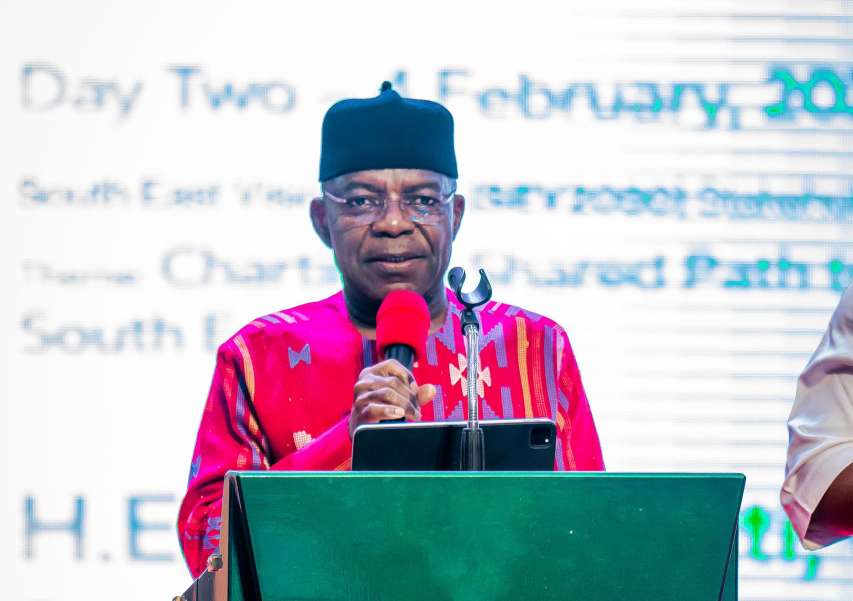
In what officials describe as a defining moment in Abia State’s ongoing health sector reforms, the government has announced a 96 per cent coverage rate in its just-concluded Measles and Rubella vaccination campaign, surpassing the 95 per cent target set by health authorities.
The campaign, which commenced on February 3, 2026, was implemented across schools and social institutions throughout the state. Addressing journalists at the Government House in Umuahia after the weekly State Executive Council meeting, the Commissioner for Information, Prince Okey Kanu, described the outcome as a major public health achievement.
According to him, more than 8,000 teams were mobilised for the exercise, reflecting what he termed a coordinated and community-driven approach to disease prevention.
“Currently, we are collating the raw figures from across the state,” he said, noting that the strong turnout demonstrated increasing public confidence in immunisation programmes.
The vaccination milestone comes amid a broader push by Governor Alex Otti to reposition the state’s healthcare system through structural reforms, partnerships, and infrastructure upgrades.
Q2 Health Pilot Project begins
As part of the reform agenda, the Abia State Q2 Health Pilot Project has commenced in selected hospitals and Primary Health Centres (PHCs) across the state. The initiative is designed to improve service delivery standards and patient outcomes.
In a further step to strengthen healthcare capacity, the state government has approved a partnership between the Ministry of Health and the U.S.-based QANTUS Medical Foundation. The collaboration will focus on training doctors, nurses, pharmacists, and other healthcare professionals in global best practices.
Prince Kanu said the partnership aims to drive a culture shift in the state’s health system.
“His Excellency has approved the collaboration between the State Ministry of Health and the U.S.-based healthcare consultancy outfit to ensure a healthcare culture change in the state. This is aimed at training health workers to embrace best practices in the delivery of healthcare,” he stated.
Commissioner for Health, Professor Enoch Uche, explained that the training would be phased, beginning with doctors and nurses before cascading to other categories of health workers, including those at the local government level.
“These are experts who go around helping health systems by training personnel to adopt behavioural and communication skills that enhance service delivery,” Uche said. “It is a top-to-bottom approach that will eventually impact all levels of care.”
He also used the occasion to reassure residents about vaccine safety, urging parents to ensure their children are immunised. According to him, vaccines are stored and administered in line with established preservation and safety protocols.
Reviving primary healthcare
Beyond training and pilot schemes, the state is set to functionalise 53 fully equipped Primary Healthcare Centres under “Project Ekwueme.” Officials say the initiative will significantly expand access to essential health services, particularly in rural communities.
The reforms have begun attracting national attention. Prince Kanu revealed that the Paediatric Association of Nigeria has chosen Abia as host for its 2027 Annual General Meeting – a development he described as recognition of the administration’s efforts to revitalise the health sector.
Infrastructure boost alongside health reforms
Healthcare is not the only area witnessing renewed momentum. Prince Kanu announced that Governor Otti is scheduled to commission the Ovom Street Road project and flag off the construction of the Enyimba International Hotel in Aba.
He described the Ovom road project as a remarkable engineering feat, noting that the site had first been reclaimed from severe erosion before construction commenced.
In addition, the governor will flag off the construction of the Ukwa East General Hospital in Ohanko, further expanding healthcare infrastructure to underserved areas.
Together, the vaccination gains, workforce training partnerships, and new infrastructure projects reflect what the state government presents as a holistic transformation agenda, one aimed not only at improving statistics but at rebuilding public trust in Abia’s healthcare system.