Health
Experts highlight the danger of biomass woods smoke to public health, as firewood cooking may be killing you
Adebayo Obajemu
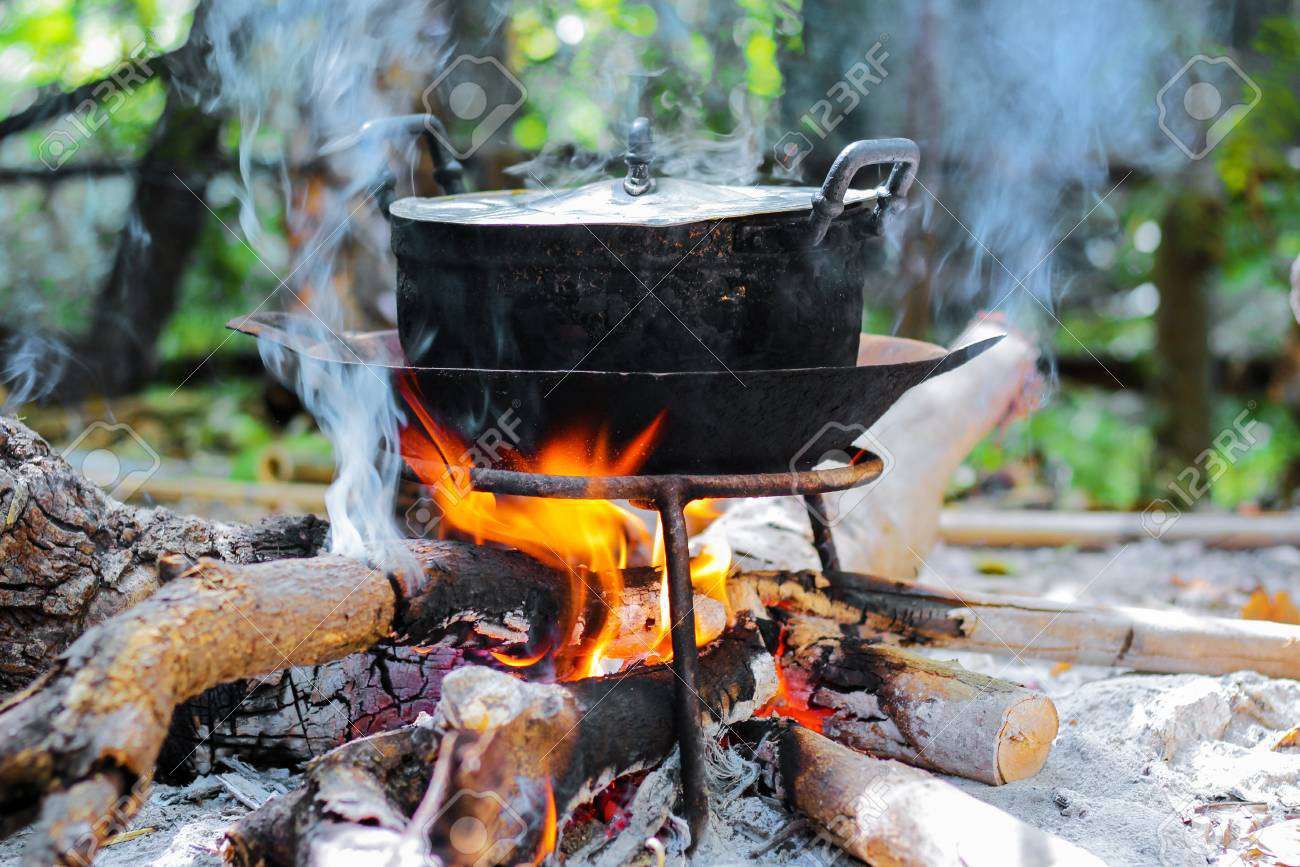
At a recent carbon-credit -financed clean cooking initiative promoted by GreenPlinth Africa Limited and aimed at transforming household energy use in Nigeria , experts warned of the danger of continued use of biomass woods for cooking. According to them, the smokes from one hour of biomass woods cooking is equal to the smokes arising from about 600 cigarettes.

Dr. Ayo Aboaba , a medical researcher told BH that “the equivalence between cooking with wood (biomass) and smoking cigarettes is a metric often cited by researchers to illustrate the severe health hazards of indoor air pollution, with some experts indicating that four hours of daily biomass cooking can expose individuals to pollution equivalent to smoking between 10 and 100 cigarettes, or in extreme cases of poor ventilation, hundreds of cigarettes, commonly noted as two packs (40 cigarettes) or more a day.
According to him, the comparison is based on the quantity of toxic substances inhaled, primarily in poorly ventilated kitchens.
He stated that “Inefficient wood stoves produce massive amounts of fine particles. Indoor concentrations in homes using wood can exceed 100 times the safe levels set by the World Health Organization (WHO).
He said “wood smoke is not just “natural smoke”; it contains carbon monoxide, benzene, formaldehyde, and polyaromatic hydrocarbons (PAHs), which are identical to or more dangerous than those found in cigarette smoke.
He noted that “some studies suggest that the toxic free radicals in wood smoke remain chemically active 40 times longer than those from cigarette smoke, and can be 30 times more potent in inducing tumors.
Seeking Alternatives
This is even as GreenPlinth Africa limited has moved closer to nationwide rollout of 80 million clean stoves across Nigeria.
The initiative seeks to distribute 80 million highly efficient clean cookstoves free of charge to households across the country, cutting dependence on firewood by more than 90 per cent.
The former deputy governor of the Central Bank, Tunde Lemo, noted that full implementation of green policy could eliminate about 1.2 billion metric tonnes of carbon dioxide annually, positioning Nigeria as a major contributor to global emission reduction through household energy reform. He added that the project prioritises women and children, who bear the brunt of indoor air pollution from traditional cooking methods using biomass woods.
Lemo noted that the transition from biomass woods to clean stoves could be managed in a way that protects livelihoods, explaining that firewood sellers should be retrained and absorbed into the clean energy value chain rather than displaced.
According to Lemo, once Greenplinth Africa’s project is fully implemented, the project is expected to “remove about 1.2 billion metric tons of carbon dioxide every year, making it the largest single clean cooking and household energy transition initiative globally.” Lemo stressed that the intervention is neither experimental nor speculative, noting: “This is not a pilot. It is not a promise. It is a nationally endorsed, structured, and scalable intervention.
On the project of eliminating cooking biomass woods cooking, the Chief Executive Officer of Natural Eco Capital, Dr. Eugene Itua, stressed the public health dimension of the intervention, pointing out that prolonged exposure to carbon monoxide from traditional biomass cooking contributes to respiratory illnesses, fatigue and other health complications that are often misdiagnosed.
The Chairman of the Lagos State House of Assembly Committee on Environment, Hon. Shabi Rasheed Adebola Adekola, said the state would continue to support initiatives that reduce carbon emissions arising from biomass woods cooking
Professor Abubakar Hambali, a retired heart surgeon, told Business Hallmark that a “recent study carried out by some experts to know the impact of exposure to biomass smoke versus cigarette smoke on inflammatory markers and pulmonary function parameters in patients with chronic respiratory failure showed that higher negative markers on biomass woods than cigarettes.
According to him, ” the aim of this study was to evaluate the impact of exposure to biomass smoke vs cigarette smoke on serum inflammatory markers and pulmonary function parameters in patients with chronic respiratory failure (CRF).
“A total of 106 patients with CRF divided into age and gender-matched groups of cigarette-smoke exposure and biomass group of exposure were included in the retrospective study.
Clinical Studies
He noted that “Carbon dioxide partial pressure levels were significantly higher in the biomass smoke exposure than in the cigarette smoke exposure group.
He stated that “study findings indicate similarly increased inflammatory markers and abnormally low pulmonary function test findings in both biomass smoke exposure and cigarette smoke exposure groups, emphasizing the adverse effects of biomass smoke exposure on lungs to be as significant as cigarette smoke exposure.
Association of biomass smoke exposure with higher likelihood of FEV1/FVC ratio of >70% and more prominent loss of vital capacity than cigarette smoke exposure seems to indicate the likelihood of at least 18 years of biomass exposure to be sufficiently high to be responsible for both obstructive and restrictive pulmonary diseases.
Keywords: biomass exposure, cigarette smoke, inflammatory markers, spirometry, chronic respiratory failure
According to him, “Biomass fuels refer to any plant (e.g, wood) or animal-based material (e.g, dung and crop residues) deliberately burned by humans as their main source of domestic energy for cooking, home heating, and lightening.1–3 Among >200 different compounds in the biomass smoke, carbon monoxide, nitrous dioxides, sulfur oxides, formaldehyde, and polycyclic organic matter are considered to be the most hazardous ones.1,4–6
Accordingly, the combustion of biomass fuels has now been recognized as a relevant risk factor for respiratory disorders, such as chronic bronchitis and COPD, asthma, lung cancer, lung fibrosis, and tuberculosis.1–4 than smokes from cigarettes.
On his take on the hazard of biomass woods cooking, Dr. Mayo Onietan, another heart surgeon told BH that both the smokes from biomass woods cooking and smokes from cigarettes are dangerous to health. He noted that ” being a cheaper and more attractive alternative to electricity and liquid petroleum gas, use of biomass fuels is a prevalent and a well-recognized cause of respiratory diseases, especially in developing countries.2,7,8.
However, increasing trend toward use of indoor wood fires as a more “natural” alternative to electrical and gas heating and a more flavored option during cooking processes (eg, wood-fired pizza, smoked meats, and barbecues) is considered to increase the prevalence of biomass smoke exposure also in developed countries.8–10
Findings showed that more than 2,000,000 people worldwide, particularly in countries, such as China, India, and sub-Saharan Africa, rely on biomass fuels to supply their household energy needs.
In many rural areas of Africa , biomass fuels are widely used for heating and cooking, such as burning wood, dung, and crop residues in traditional fireplaces. Onietan noted that “recent studies from rural areas in Africa support the contributory role of exposure to biomass smoke in the development of chronic bronchitis and chronic airway obstruction in nonsmoking women.
Onietan averred that previous studies have revealed differences between exposure to biomass smoke and cigarette smoke in terms of distribution of COPD phenotypes20–23 and type of systemic inflammatory response.However, limited data are available on comparison of biomass smoke- and cigarette smoke-induced pulmonary and inflammatory changes alongside inconsistent findings on the impact of acute biomass smoke exposure in healthy volunteers.