Opinion
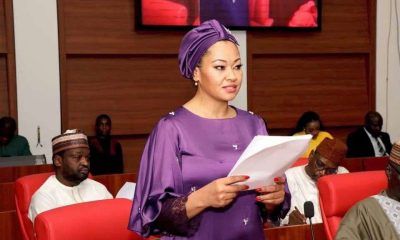
Senator Natasha Akpoti Uduaghan: Rewriting the role of representation in Kogi Central

By Isiaka Sadiq Fache.
Senator Natasha Akpoti Uduaghan is doing something Nigeria’s Senate rarely sees: turning constituency representation into economic diplomacy. Her recent hosting of ambassadors from Belgium, Denmark, Italy, and Spain in Ihima, Kogi Central, signals a deliberate shift from routine legislative work to tangible, outward-facing development strategy.

For decades, many constituencies have measured a senator’s impact by motions moved and projects commissioned. Senator Natasha is adding a new layer: positioning Kogi Central itself as an attraction.
By taking foreign envoys through the hills and landscapes around Ihima, she didn’t just host a visit. She staged Kogi Central for the world to see. The move frames the district not as a passive recipient of federal allocation, but as a destination with cultural, ecological, and economic value. That’s an uncommon fit for any Nigerian senator, and it redefines what “effective representation” can look like.
The significance isn’t ceremonial. Kogi Central sits on vast, underutilized mineral resources. When ambassadors and their governments see a region firsthand, the conversation moves from abstract investment memos to concrete possibilities.
If sustained, this approach creates a pipeline: 1. Visibility: Foreign missions experience the terrain, culture, and stability of the area directly. 2. Interest: Exposure opens doors for tourism, cultural exchange, and exploratory talks on mining and processing.
3. Investment: Credible foreign presence encourages companies to consider formal operations, moving mineral wealth from “lying fallow” to active production.
This is how regions transform. It’s not about waiting for Abuja. It’s about making Abuja and the world come to you.
The article’s call to Kogi Central-to “put sentiment aside and rally round this God sent woman”-speaks to a deeper point about leadership. Natasha’s approach reframes her role as stewardship of the district’s future, not just as a channel for short-term patronage.
Her mission, as framed by supporters, is about raising the ceiling for what Kogi Central expects from its representation. Turning the region into a “small London” is shorthand for ambition: functional infrastructure, international partnerships, job creation, and a reputation that draws people in rather than pushes them out.
That kind of vision requires political cover. It asks constituents to look beyond immediate, personal gains and support a strategy whose payoff is generational. It also demands that the “pull her down” politics common in Nigerian public life be set aside in favor of accountability and support.
If Kogi Central succeeds, the model is exportable. Nigeria’s 108 other senatorial districts all have untapped assets–agricultural, mineral, cultural, or geographic. Most remain invisible because representation stops at the National Assembly gate.
Senator Natasha is testing a different playbook: use the office to market the district, attract credible external actors, and convert attention into development. Should she continue in the Red Chamber, Kogi Central is positioned to test whether a senator can function as both legislator and economic ambassador.
This isn’t about personality. It’s about precedent. Nigeria needs more constituencies treated as investable places, not just voting blocs. It needs leaders willing to open their communities to scrutiny and opportunity, and it needs citizens willing to support long-term value over short-term spoils.
Senator Natasha Akpoti Uduaghan’s recent engagement in Ihima suggests she understands that difference. The question now is whether Kogi Central will back the strategy and let the work compound.