Business
Abia’s governance model: Nigeria’s next standard in the making
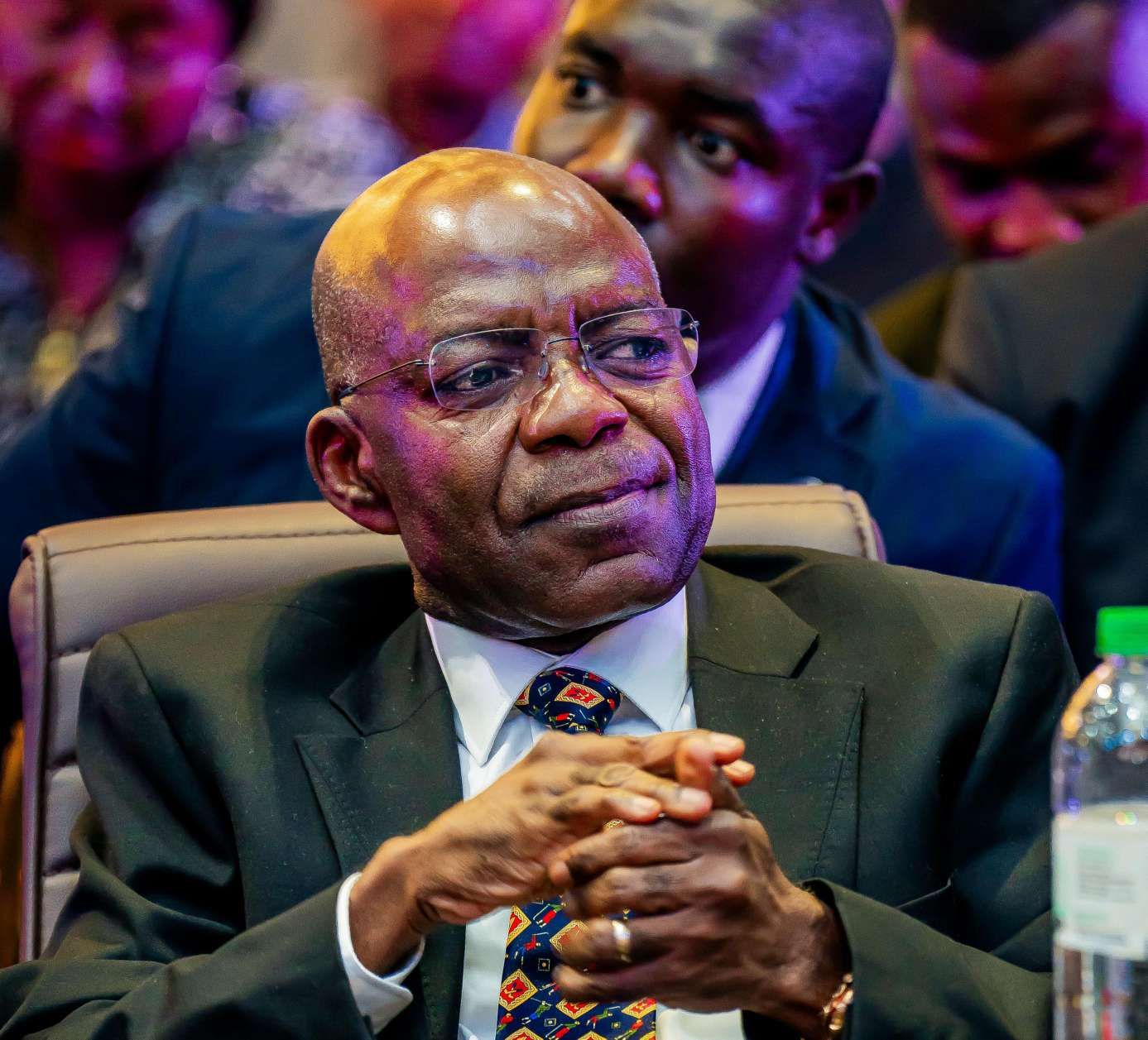
Alex Otti arrived with a balance sheet in one hand and a political mandate in the other. Three years on, the roads are real, the debt is shrinking, and Nigeria is watching, because if performance politics can survive in Abia, it can survive anywhere.
There is a quiet but powerful test running inside one of Nigeria’s South-East states,a test that has implications far beyond the borders of Abia.

The test is simple in concept and enormously difficult in practice: can a government in Nigeria succeed by actually governing?
That question sounds almost absurd. Of course a government should govern. But anyone who has watched Nigerian politics with clear eyes over the past two decades understands why the question is far from rhetorical.
Across much of the federation, governance has functioned less as a mechanism for delivering services and more as an apparatus for distributing patronage, rewarding loyalists, managing political threats, and cycling resources through networks of obligation that have nothing to do with the welfare of ordinary citizens.
Abia State was, for many years, one of the most vivid examples of that dysfunction.
It possessed nearly every ingredient for economic vitality: an entrepreneurial population with commercial instincts honed across generations, Aba, one of West Africa’s most productive manufacturing towns, as its industrial engine, a diaspora of professionals spread across three continents, and a strategic location within the South-East economic corridor.
And yet it squandered them all, year after year, under the weight of salary arrears, collapsing infrastructure, institutional decay, and a political class more interested in self-perpetuation than in the state’s enormous latent potential.
Into that landscape, in May 2023, walked Alex Otti.
The Turnaround Executive in Government House
Otti is not a typical Nigerian governor. He spent the formative decades of his career in banking and corporate finance, environments where performance is measurable, accountability is non-negotiable, and the gap between what is promised and what is delivered tends to attract consequences.
He ran Diamond Bank. He contested elections. He lost, challenged the results, and kept coming. When he finally took office as governor of Abia State under the Labour Party platform, he arrived not with the instincts of a traditional politician but with the mindset of a turnaround executive who had just been handed a severely distressed institution.
The metaphor is not merely rhetorical. It captures something essential about his governance approach.
A turnaround executive’s first obligation is diagnosis: what is actually broken, how deeply, and in what sequence should it be fixed?
Otti’s early signals were precise and deliberate. Fiscal discipline. Transparency in public accounts. Aggressive infrastructure renewal targeting the arteries of commerce. And institutional accountability, the idea that public officers exist to serve a purpose, and that purpose is measurable.
In a political culture that often rewards announcement over execution, Otti chose a different register. He would be judged, he signalled early, by what was built, repaired and delivered, not by what was promised.
864 Kilometres and What They Mean
The infrastructure numbers are striking in their own right. The administration has disclosed that, within three years, over 414 road projects spanning more than 864 kilometres have been completed across Abia State, with more than 80 additional projects still under active construction.
By any standard of Nigerian state governance, that represents a formidable pace of physical delivery.
But the political significance of those roads runs deeper than the kilometres. To understand why, one must understand what roads mean in Abia’s specific economic context.
Aba is not merely a city. It is a phenomenon. It is a place that produces goods, shoes, garments, electronics, pharmaceuticals, furniture, from raw materials and sheer ingenuity, with almost no government support, and distributes them across Nigeria and into export markets that formal trade statistics barely capture. The informal manufacturing genius of Aba is one of the most remarkable economic stories in West Africa. It operates largely despite the state, not because of it.
For years, that engine was being slowly strangled by infrastructure failure. Roads that should have moved goods to market dissolved into gullies. Flooding turned commercial corridors into obstacles. Transport costs spiralled. Investors who might have formalised and scaled Aba’s industries retreated. The manufacturing heartbeat of the South-East was weakening , not from any failure of enterprise, but from the failure of the state to provide the basic physical conditions in which enterprise can function.
The reconstruction of Port Harcourt Road and the adjoining economic arteries of Aba is therefore not simply a road project. It is a statement that the state now understands its role in its own economic ecosystem. It is an acknowledgement , long overdue, that Aba’s manufacturers and traders deserve infrastructure as much as they deserve to be left alone.
“Infrastructure is not merely about mobility. In Abia, it is about dignity, and it is about finally honouring a commercial culture that survived decades of governmental abandonment.”
The Fiscal Surgery
If the road programme is the most visible dimension of Otti’s governance, the fiscal restructuring is arguably the most consequential.
By the administration’s own figures, Abia’s debt profile has been reduced from approximately N191 billion in 2023 to below N60 billion by the end of 2025, a reduction of roughly 69 per cent in three years. In Nigeria’s current economic environment,shaped by the removal of the fuel subsidy, severe naira depreciation, persistent inflation, and pressure on state internally generated revenues,that achievement deserves serious analytical scrutiny, because it is either genuinely remarkable or requires verification.
If the figures are accurate and independently verifiable, they represent something rare in Nigerian state governance: a government that has run a fiscal surplus relative to the debt trajectory, funded infrastructure at scale, and simultaneously reduced the obligations it will leave to its successor. That combination, reducing debt, building infrastructure, and maintaining service delivery, is the structural definition of responsible fiscal management.
It also carries a political message that cuts across party lines: you do not need to borrow recklessly to govern visibly. The assumption, deeply embedded in Nigerian state politics, is that infrastructure requires debt, that the only way to build roads is to mortgage future revenues and hope that the next governor inherits the bill quietly. Otti’s administration, if its figures hold, challenges that assumption directly.
“Governance does not always require reckless borrowing. That may be Otti’s most subversive political message, and the one that the political establishment finds hardest to absorb.”
The legitimate questions that remain , whether IGR growth is sustainable without overburdening businesses already squeezed by a brutal national economic environment, whether the debt reduction will survive the pressure of the 2027 election cycle, whether capital spending has been optimally allocated, are healthy ones. Any serious fiscal analysis must ask them. But they are questions about the sustainability of a model, not about whether the model represents a genuine departure from what came before. It does.
Healthcare: The Governance That Doesn’t Photograph Well
Political analysts who focus exclusively on roads and fiscal numbers will miss an important dimension of what Otti’s administration has attempted: the quiet reconstruction of social infrastructure that doesn’t generate dramatic drone footage but directly determines household welfare.
The government has reported retrofitting hundreds of primary healthcare centres across the state, recruiting over 800 healthcare personnel, and significantly expanding health insurance enrolment within three years. These are not glamorous projects. They do not cut ribbons as dramatically as a six-lane highway. But in communities where a child’s fever can become a fatality because the nearest functioning clinic is 40 kilometres away on a broken road, they are more consequential than any expressway.
The political science literature on governance is unambiguous on this point: the reforms that generate the deepest and most durable popular loyalty are typically not the most visually spectacular. They are the ones that reduce daily suffering at the household level. Access to healthcare, functioning schools, reliable local markets, these are the things that shift political psychology from transactional voting to genuine civic loyalty.
Otti appears to understand this. Whether his administration has delivered at sufficient scale remains a legitimate question. But the attempt to operate across multiple governance registers simultaneously, roads, fiscal consolidation, healthcare, institutional accountability , suggests a strategic coherence that is unusual in Nigerian state governance.
The Technocrat’s Dilemma
No assessment of Alex Otti’s governance would be complete without confronting what is perhaps his most interesting political tension: the gap between his natural temperament and the emotional demands of democratic politics in Nigeria.
Otti is, by instinct and formation, a technocrat. His communication style is corporate and data-driven. He presents governance as a management challenge, populated by balance sheets, key performance indicators and implementation schedules. To professionals, entrepreneurs, civil society intellectuals and younger voters exhausted by the performative bombast of conventional Nigerian politicians, this is deeply attractive. It signals seriousness. It suggests that the man in Government House actually understands the complexity of what he has been elected to do.
But democratic politics, especially in a state with deep communal networks, rural populations whose political engagement is mediated through traditional and religious institutions, and constituencies accustomed to a more visceral, relational style of political leadership, is not a management challenge. It is a human one. It requires not just competence but connection. Not just data but empathy. Not just project completion but the ability to make people feel that their governor sees them as individuals, not as beneficiaries.
Critics of the Otti administration have pointed, with some justification, to a governance style that occasionally feels detached from its own grassroots, more comfortable in the language of policy documents than in the dialects of ward-level politics. That is not a trivial critique. In Nigerian democracy, the distance between a governor’s office and the village square is measured not in kilometres but in relationship capital, and no amount of road construction fully compensates for its absence.
“Otti can build the roads and balance the books. The question his critics raise is whether he can also build the political relationships that will protect those achievements when the electoral pressure intensifies.”
The Larger Question Nigeria Is Asking
The reason Alex Otti’s governance experiment attracts national attention, from political analysts, investors, diaspora Nigerians, civil society actors, and media organisations, is not simply because Abia is important, though it is. It is because Otti’s administration has become a stress test for a hypothesis that millions of Nigerians desperately want to believe: that governance in this country can be performance-based rather than patronage-based.
For decades, the working assumption in Nigerian politics was that technocratic governance was essentially incompatible with electoral survival. You needed godfathers. You needed to manage political structures through money and appointments. You needed to prioritise the people who could deliver votes over the people who needed services. The idea that a governor could win, govern competently, and survive politically by simply doing his job, that was considered romantic at best, politically suicidal at worst.
Otti has challenged that assumption. He won without the traditional political machinery. He has governed with a corporate, performance-oriented philosophy. And three years in, his political standing , within Abia and in the wider national conversation, appears to have strengthened rather than weakened.
That trajectory, if sustained, will carry implications far beyond one state. It will represent evidence, genuine, replicable evidence, that the Nigerian voter is more sophisticated than the political class has always assumed. That citizens will reward delivery. That the old architecture of patronage politics is more fragile than its operators believe.
What the Next Phase Must Deliver
Three years of credible governance is a foundation. It is not, by itself, a transformation. The next phase of Otti’s administration will be judged by whether the physical and fiscal gains of the first three years can be translated into structural economic change.
Roads and debt reduction are necessary conditions for Abia’s economic renaissance. They are not sufficient ones. The deeper challenge is whether the administration can now leverage its improved infrastructure base and fiscal credibility to attract the private-sector investment that Abia’s manufacturing economy desperately needs. Can Aba be repositioned as a competitive industrial hub within the regional economy? Can energy infrastructure be strengthened enough to reduce dependence on diesel generators that impose prohibitive costs on small manufacturers? Can the state government develop an industrial policy that goes beyond physical infrastructure to address financing, skills development, technology transfer and market access?
These are harder questions than road construction. They require a different kind of governance capacity — one that must engage the private sector as a partner rather than a supplicant, negotiate with the federal government on infrastructure and power, and create an enabling environment sophisticated enough to unlock the investment that Abia’s entrepreneurial culture has long deserved but never fully received.
History, as the source document observes, is kinder to leaders who institutionalise reforms than to those who merely execute projects. The distinction is critical. Executing projects leaves a record.
Institutionalising reforms creates a system — one that outlives any single administration, one that normalises the expectation of governance quality and makes it progressively harder for a successor to retreat into the old patterns.
The true measure of Otti’s legacy will be determined not in 2026 but in 2030, when Abia’s citizens ask themselves whether the governance transformation they experienced under his watch survived his departure ,or whether it was, in the final analysis, one exceptional man in one exceptional moment, rather than the beginning of something permanent.
A Political Experiment Nigeria Cannot Afford to Ignore
Three years into the Alex Otti administration, the honest verdict sits somewhere between the evangelical enthusiasm of his admirers and the sceptical minimalism of his critics.
The physical record is real. The fiscal trajectory is significant. The shift in public psychology, from exhausted cynicism to cautious belief , is politically consequential in ways that no amount of data can fully capture. Abia is not yet transformed. But it is unmistakably changing. And it is changing in the direction of governance rather than away from it.
In a federation where state governance has so often been the site of the most egregious public-sector failure, that represents something worth documenting carefully, not as hagiography, but as evidence. Evidence that the hypothesis of performance politics, long dismissed as impractical within Nigeria’s political culture, has survived its first serious test.
The experiment is not over. The harder tests , the 2027 election cycle, the pressure to revert to patronage politics, the institutional challenges of sustaining reform momentum without the galvanising energy of a first term , still lie ahead.
But the conversation in Abia has changed. Citizens expect government to work. That expectation, once implanted and validated by experience ,is itself a political force. It creates constituencies for accountability. It makes retreat more costly.
It shifts the terrain on which the next political battle will be fought.
That may be Alex Otti’s most durable contribution to Nigerian political life: not the roads themselves, but the expectation that roads should be built. Not just the reduced debt, but the demand that public money should be managed with discipline. Not just three years of better governance, but the irreversible conviction, now lodged in the minds of Abia’s citizens, that better governance is possible.
In Nigeria, where public cynicism about government runs as deep as the country’s history of disappointment, that conviction is not a small thing.
It is, arguably, the beginning of everything