Business
Obi rebukes Tinubu’s Kenya comparison, demands data-driven response to Nigeria’s economic crisis

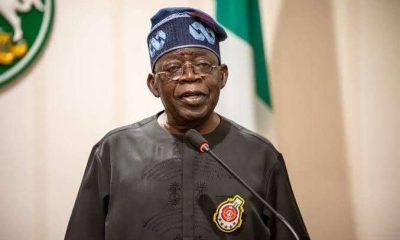
Peter Obi, former Anambra State Governor, has taken a swipe at President Bola Ahmed Tinubu over his recent comparison of Nigeria’s economic situation with that of Kenya, warning that such remarks risk trivialising the depth of hardship facing Nigerians.
Obi, in a strongly worded statement shared on his official X account on Monday , argued that suggesting Nigerians are “better off than Kenya and other African countries” reflects a troubling tendency to rely on superficial comparisons rather than confronting the country’s economic realities.

The former Labour Party presidential candidate said while cross-country comparisons are essential for measuring development, they must be grounded in credible data and used as tools for accountability, not as a means of offering comfort in the face of worsening conditions.
Drawing on religious references, Obi likened the President’s comment to the biblical parable of the Pharisee and the Tax Collector, cautioning against self-righteous comparisons that obscure deeper problems. He also cited a verse from the Qur’an warning against undue self-praise, reinforcing his call for introspection in governance.
According to Obi, the dismissal of statistics in public discourse – recalling Tinubu’s campaign-era remark, “Na statistics we go shop?” – undermines the role of data in shaping effective policy responses.
“Statistics are not optional; they are the foundation upon which nations assess their progress and design interventions,” he said.
To support his argument, Obi presented comparative data across key development indicators, contending that Kenya outperforms Nigeria in several critical areas.
On security, he noted that Nigeria ranks among the most terrorised countries globally, while Kenya is not listed among the worst-affected nations. He also pointed to disparities in the Human Development Index (HDI), where Kenya ranks significantly higher, reflecting better outcomes in health, education, and income.
Economically, Obi highlighted a stark gap in GDP per capita, with Kenya’s estimated at over $2,200 compared to Nigeria’s range of about $800. He also underscored differences in poverty levels, stating that while about 43 per cent of Kenyans live below the poverty line, the figure in Nigeria is closer to 63 per cent, translating to roughly 150 million people.
Further comparisons showed that Kenya’s life expectancy stands at approximately 67 years, far above Nigeria’s 54 years, while literacy rates in Kenya – estimated between 81 and 85 per cent – surpass Nigeria’s 62 to 65 per cent.
Obi also raised concerns about Nigeria’s energy deficit, noting that electricity access remains significantly lower than in Kenya, despite Nigeria’s larger economy and resource base. He added that Nigeria’s out-of-school population, estimated at about 20 million children, far exceeds Kenya’s figure of around 3.5 million.
On macroeconomic stability, Obi pointed to Kenya’s relatively stable inflation rate – averaging around 4.5 per cent in recent years – compared to Nigeria’s persistent double-digit inflation, which has remained above 15 per cent. He also cited the sharp depreciation of the naira, which has weakened from below ₦500 to over ₦1,250 per dollar within a three-year period, in contrast to Kenya’s more stable exchange rate.
The former governor further noted that despite global oil price fluctuations, Kenya has not experienced the steep increases in fuel prices seen in Nigeria, where subsidy removal has significantly raised the cost of living.
“Across these indices, it is clear that Kenya ranks higher than Nigeria in several areas that directly affect quality of life,” Obi stated. “If Kenya is considered to be struggling, then Nigeria’s situation is far more severe.”
He urged the President to move beyond what he described as “self-consolatory narratives” and instead embrace a governance approach anchored on transparency, accountability, and measurable outcomes.
Obi stressed that addressing Nigeria’s economic challenges would require deliberate efforts to improve productivity, invest in human capital, stabilise the macroeconomic environment, and strengthen institutions.
He added that leadership must demonstrate humility and a willingness to confront difficult truths in order to inspire confidence and drive meaningful reform.
The criticism comes amid growing public concern over rising inflation, currency volatility, and the broader impact of economic reforms introduced by the current administration. Analysts say the debate over Nigeria’s comparative performance within Africa is likely to intensify as policymakers grapple with the challenge of balancing reform with social protection.
“The focus must be on improving the lives of Nigerians through evidence-based policies, not on comparisons that obscure reality,” Obi concluded.