

Brands
Nigeria’s oil output drops 6.3% to 1.627m bpd as revenue losses hit N1.76tn
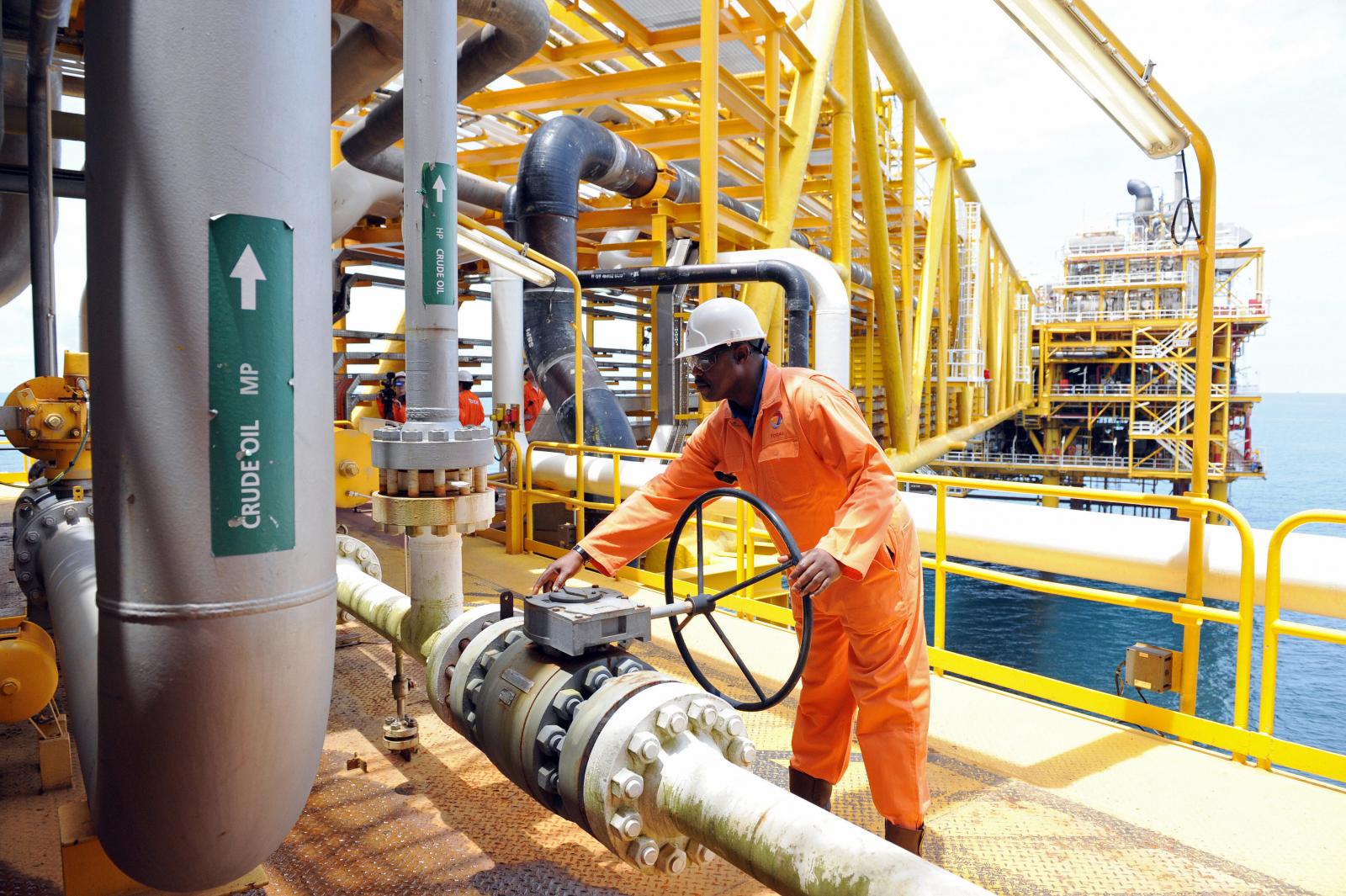
Nigeria’s oil production declined year-on-year and month-on-month in January 2026, falling short of both its 2026 budget benchmark and the quota set by the Organization of the Petroleum Exporting Countries (OPEC), even as crude prices hovered above the Federal Government’s reference price.
Data from the Nigerian Upstream Petroleum Regulatory Commission showed that total oil output, including condensate, dropped by 6.3 per cent to 1.627 million barrels per day in January 2026, from 1.737 million bpd in January 2025.
On a month-on-month basis, production slipped 5.4 per cent from 1.544 million bpd in December 2025 to 1.627 million bpd in January 2026, according to the Commission’s latest National Liquid Hydrocarbon Production Report.
The NUPRC said the lowest and peak combined crude oil and condensate production during the month were 1.59 million bpd and 1.82 million bpd respectively. Current condensate output stands at about 196,028 bpd.
Despite the marginal improvement in crude production compared to December figures released by OPEC, Nigeria still failed to meet its 2026 budget benchmark of 1.84 million bpd. The budget is based on an oil price of $64.85 per barrel and an exchange rate of N1,400 to the dollar.
Global oil prices, however, dipped to about $67 per barrel, down from nearly $70 in recent weeks, reflecting continued volatility in the international market.
Separately, OPEC reported that Nigeria’s crude oil production, excluding condensate, fell by five per cent year-on-year to 1.459 million bpd in January 2026, compared to 1.539 million bpd in January 2025. The figure also remained below Nigeria’s OPEC quota of 1.5 million bpd.
The sustained underperformance has translated into significant revenue losses. Between January 2025 and January 2026, Nigeria accumulated a production shortfall of 18.12 million barrels relative to its OPEC quota.
Using the average Bonny Light price of $72.08 per barrel – based on data from the Central Bank of Nigeria – the shortfall represents an estimated $1.31bn in lost revenue. At an exchange rate of N1,353 per dollar, this amounts to about N1.76tn.
The largest deficit occurred in September 2025, when production dropped to 1.39 million bpd, leaving a daily shortfall of about 110,000 barrels. January 2026 marked the sixth consecutive month Nigeria has missed its OPEC target, spanning August 2025 to January 2026.
Ironically, the losses came despite Nigeria producing about 530.41 million barrels in 2025, generating gross revenue estimated at N55.5tn at the same average price and exchange rate. Analysts noted that the figure represents gross inflows and excludes production costs, joint venture cash calls, cost recoveries and losses linked to oil theft.
Energy expert, Professor Emeritus Wumi Iledare, said the fundamental challenge was production inefficiency rather than oil prices. He noted that while the government planned to produce 766.5 million barrels in 2025, actual output was about 599.6 million barrels, leaving roughly 167 million barrels unrealised.
“Meeting oil production targets will depend far less on ambitious projections and far more on practical, on-the-ground actions,” Iledare said, urging improved security around oil assets, faster regulatory approvals and sustained investment in maintenance and infill drilling.
A professor of economics, Segun Ajibola, added that crude output is influenced by technical partnerships, global market trends and environmental conditions, many of which are beyond the immediate control of the government. He also cited lingering operational and governance challenges within the Nigerian National Petroleum Company Limited as a contributing factor.
The oil production slump has compounded broader fiscal pressures. Federal Government revenue between January and July 2025 stood at N13.67tn, significantly below the pro rata target of N23.85tn. Oil revenue underperformance weighed heavily on overall collections.
During the same period, only N834.80bn was released to Ministries, Departments and Agencies for capital projects out of a pro rata capital budget of N10.81tn, representing less than 10 per cent performance. Total capital expenditure reached N3.60tn, a 73.7 per cent shortfall relative to expectations.
Several ministries have reported severe funding gaps. The Federal Ministry of Health and Social Welfare received just N36m out of its N218bn capital allocation, while the Ministry of Transportation got about one per cent of its N256.73bn capital vote. The Ministry of Marine and Blue Economy and the Ministry of Women Affairs also recorded minimal releases.
While the Minister of Budget and Economic Planning, Abubakar Bagudu, has maintained that revenue pressures are not unusual in democratic systems, the combination of declining oil output and weak capital releases underscores the fiscal challenges confronting Africa’s largest oil producer as it enters the 2026 budget cycle.