Politics
Insecurity: Nigeria has broken down
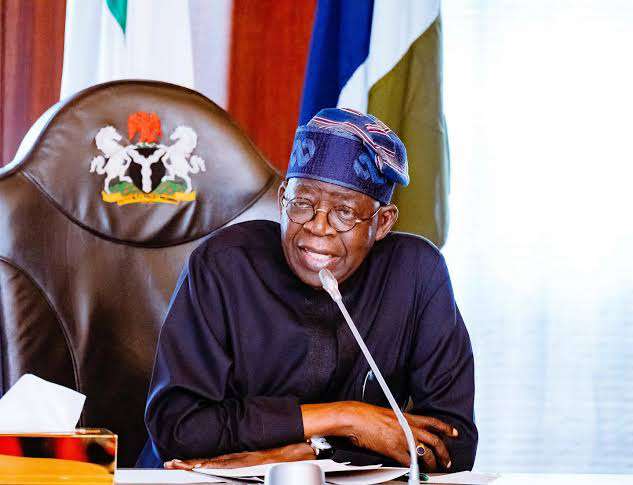
...as Tinubu is under pressure to fix it
By Olusesan Laoye

For over three months now, Nigeria has been boiling, and citizens have been living under intense fear of bandits, with lives and property no longer guaranteed. The bandits are daily engaging in kidnapping, with thousands of people rendered homeless in their various homes and villages, while another set of thousands remain in kidnappers’ dens across the country, from Kwara, Kogi, Kaduna, Katsina, Borno and Zamfara states. Even Ogun State, a shouting distance from Lagos, is not left out. Victims in Oyo State have spent over a month in captivity.
This new dimension in the operations of bandits is putting President Bola Tinubu under immense pressure as to how to fix the mess that has enveloped the nation under his watch as the country moves toward the 2027 polls.
What has compounded the situation lately is the modus operandi of the bandits, whose tactics are now different from when they started, targeting schools and other soft targets such as marketplaces.
Although, when the abduction of the Chibok schoolgirls occurred, it was said that the motive of Boko Haram was opposition to Western education.
Since then, however, the insurgency, which started in Borno, Yobe and Adamawa states in the North-East, gradually moved to the North-West, later to the North-Central and now to the South-West and South-South states such as Edo, Delta and Cross River, and even the South-East, leaving virtually no safe haven.
The incursions of these bandits into the South-West are now making people in the region suspicious of those in their midst as the war against insecurity intensifies.
For the first time, the South-West protested strongly, calling on the President to rise to his responsibility. But politics soon set in between the Presidency and the Governor of Oyo State, Seyi Makinde, over who is responsible and who is in default.
Suspicious Intentions
It has been argued that adequate security, protection of lives and property are the most critical responsibilities of any government, and it appears that the government has failed, or is failing, in these responsibilities.
One of Tinubu’s cardinal promises while seeking the presidency was to provide stable electricity. However, that promise has not been fulfilled, with the situation worsening by the day.
It is said that hardly a week passes without incidents involving bandits, including the kidnapping of innocent persons and demands for huge ransoms. Soft targets such as churches and schools continue to be attacked.
What is particularly worrisome about the new developments is that these bandits now operate with impunity and often in broad daylight. Last Thursday, bandits invaded a school in Sabon Gida Ora and abducted students, forcing everyone to flee in different directions. This came only days after the state’s governor, Monday Okpebholo, reportedly declared that even if everyone was kidnapped, Tinubu would still secure 2.5 million votes in the state.
The abduction and death of Major General Abubakar Rabe, a former Army spokesperson, has further raised questions about who is truly safe in the country.
Records show that at least a dozen military generals have been killed directly by insurgents during active combat and ambushes, while a retired Major General recently died in the custody of kidnappers.
These developments have alarmed the Association of Nigerian Generals, which has called for urgent action, describing the situation as a grave affront to both the military and Nigeria as a nation.
Presidential Cluelessness
The situation has left many Nigerians feeling helpless. Former Senior Adviser to the President on Political Matters, Dr. Hakeem Baba-Ahmed, recently revealed that his niece was kidnapped while he was serving in office and had access to virtually everyone that mattered in government, yet no assistance came. According to him, the family eventually paid N120 million, along with drugs, medications and a motorcycle, to secure her release. He further alleged that soldiers directed them to the location where the ransom and materials were delivered.
Although President Tinubu has expressed concern about the growing activities of bandits, particularly following the kidnap and death of Major General Rabe, many Nigerians believe his response has been inadequate.
His reaction described the incident as a reminder of the grave threat posed by armed criminal groups to the country. However, critics argue that beyond press statements, the President has yet to directly address the nation on the worsening security situation.
Many believe that if the President is genuinely concerned, he must act swiftly and decisively rather than allow bandits to continue undermining national security.
What is further angering Nigerians is the level of poverty, the lack of social amenities and infrastructure, particularly electricity, which has crippled many businesses and diminished hopes for better living conditions.
To make matters worse, critics argue that the government appears more focused on politics and securing a second term while the country drifts towards anarchy and possible state failure.
Frequent blackouts across the country are also said to be aiding criminal activities, as many communities and cities remain in darkness at night.
Growing Anxiety
What has further heightened anxiety across Nigeria are the recent incidents of schoolchildren being kidnapped twice within a month in Gwoza, Borno State.
There were also incidents in May 2026 in Niger and Kwara states, where about three villages were attacked and residents abducted, leading to the abandonment of those communities.
The most recent case in Orire Local Government Area of Oyo State has generated significant controversy.
The abduction of the younger sister of former Minister of Power, Adebayo Adelabu, and her twin boys in broad daylight while she was taking the children to school at about 8 a.m. has also cast further doubt on the credibility of Nigeria’s security architecture and its ability to protect ordinary citizens.
As of now, more than 15 traditional rulers in the South-West have reportedly been abducted, while several others have allegedly fled their palaces. These developments have created fear among their subjects, many of whom have abandoned their homes for neighbouring towns amid concerns that they could become the next targets.
Although there have also been incidents of bandit attacks in Ondo and Ekiti states, they have not been as pronounced. Reports indicate that some of the bandits terrorising the states have been apprehended.
There have also been rumours of bandit infiltration into Osun State, with some suspects allegedly arrested by the state police command, which has called for calm. Some Fulani residents in the state have publicly distanced themselves from those responsible for the attacks and insecurity in the South-West.
The pan-Yoruba socio-political organisation, Afenifere, is among the groups expressing concern about the security situation. The organisation has warned that continued delays in establishing state police could plunge Nigeria into “intractable ethnic conflicts.”
Afenifere, through its National Secretary, Sola Ebiseni, argued that worsening insecurity across various parts of the country could push citizens towards self-defence. The group insisted that the establishment of state police cannot wait for the 60-month gestation period reportedly proposed by the Inspector-General of Police, Olatunji Disu.
Public Outrage
Afenifere condemned what it described as the Federal Government’s fire-brigade approach to security deployment and warned that vast ungoverned spaces have been left vulnerable to terrorist infiltration and cross-border criminal networks.
The organisation argued that Nigeria has become a deliberate target of international terrorism driven by an “undisguised territorial agenda.”
“The unnecessary vacuum being created by the intolerable delay in establishing state police may soon be filled by intractable ethnic conflicts arising from the natural instinct for self and communal protection if urgent action is not taken,” the group warned.
A senior military spokesperson, Brigadier General Samaila Uba, said recent attacks should not be interpreted as a sign of weakness but rather as evidence of the pressure being mounted on insurgents.
“We have gone to every nook and cranny where these terrorists are located, destroyed their logistics hubs, bases and camps. Many of them are fleeing to areas that previously had no insecurity issues,” he said.
Similarly, the Director of Legal Services at the Office of the National Security Adviser, Zakari Mijinyawa, said hostage rescue operations require careful planning rather than rushed interventions driven by public pressure.
He explained that security agencies must prioritise the safety of victims in all operations.
The Minister of Works, David Umahi, who attempted to defend President Tinubu by arguing that the insecurity problem did not start under his administration, was criticised on social media. Many commenters argued that, as a senior government official holding a key portfolio, he was merely defending his principal.
In a telephone interview with Business Hallmark, the President of the Oodua Peoples Congress (OPC New Era), Chief Rasak Arogundade, said combating terrorism is not an easy task and should not be left to the government alone.
He said it is time for the Federal Government to approve state police while allowing private security outfits to collaborate with them in combating insurgency and the high level of terrorism confronting Nigeria.