Politics
Right-wing lawyer De la Espriella elected Colombia president in closely fought runoff
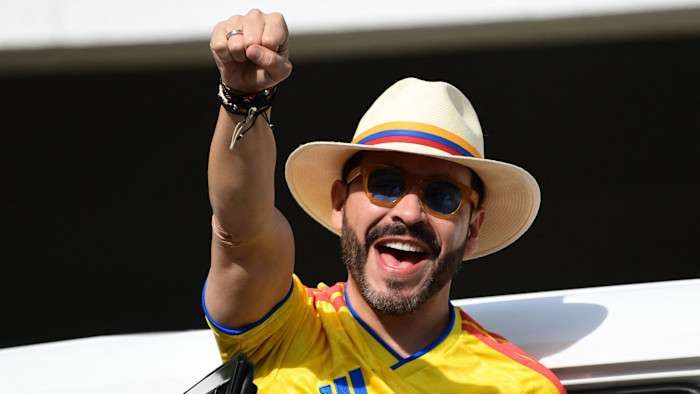
Conservative lawyer Abelardo de la Espriella has been elected Colombia’s next president after securing a narrow victory in Sunday’s presidential runoff, marking a significant shift to the right in the country’s political landscape.
With nearly all votes counted, De la Espriella won 49.65 per cent of the vote, defeating leftist Senator Ivan Cepeda, who secured 48.70 per cent in one of the closest presidential contests in recent Colombian history.

The president-elect, a prominent lawyer and political newcomer who has never previously held public office, celebrated the outcome as a turning point for the South American nation.
“Today Colombia won its most important game,” De la Espriella declared after the results became clear. He also revealed that he had spoken with US President Donald Trump, who reportedly congratulated him on his victory and pledged support for his incoming administration.
The 47-year-old’s victory is expected to strengthen ties between Bogotá and Washington while adding momentum to a broader conservative resurgence seen across several Latin American countries in recent years.
Celebrations erupted in major cities as supporters took to the streets waving Colombian flags, sounding horns and wearing the yellow national football jersey that became a symbol of De la Espriella’s campaign.
Many backers expressed optimism that the incoming president, popularly known as “The Tiger,” would restore security amid rising violence linked to armed groups and drug trafficking networks.
“I believe he can bring security, jobs and dignity back to the country,” said Daniela Oliveros, a supporter who joined celebrations in the coastal city of Barranquilla.
Security concerns featured prominently during the election campaign, which was overshadowed by guerrilla attacks, political tensions and the killing of a leading conservative presidential contender.
De la Espriella campaigned on a hardline security platform, promising to intensify military operations against armed groups and criminal organisations that continue to operate in parts of the country despite a landmark peace agreement signed with the Revolutionary Armed Forces of Colombia (FARC) a decade ago.
During the campaign, he pledged to end negotiations with dissident armed factions and pursue an aggressive security strategy aimed at dismantling criminal networks involved in the cocaine trade.
Although Colombia has experienced significant economic and social progress since the 2016 peace accord, large areas of the country remain under the influence of armed groups, while drug production and exports continue to pose major challenges.
Despite the victory, analysts say the narrow margin highlights deep political divisions within Colombia. The incoming president is also expected to face difficulties in Congress, where his political allies do not command a majority.
His opponent, Senator Ivan Cepeda, stopped short of formally conceding defeat and said he would wait for the completion of the final vote count and verification process before recognising the official outcome.
The left-wing candidate attracted support from voters seeking greater economic equality and those concerned that a tougher security approach could undermine progress made under the country’s peace process.
Some Colombians expressed apprehension about the direction of the incoming administration.
“I am worried about what his government could mean for the country,” said Santiago Galindo, a bank employee who supported Cepeda. “The concern is whether power will be exercised with respect for democratic institutions and ordinary citizens.”