Education in Nigeria
Funding constraint endangers FG, ASUU, as old rhetorics return, other unions gear up for war
Barely two months after the Federal Government announced a supposedly breakthrough agreement with the Academic Staff Union of Universities (ASUU) , Nigeria’s public university system is once again facing another threat of disruption.
The union has issued fresh ultimatums and is warning of a nationwide strike raising a recurring concern as to why crises persist even after agreements are reached.

At the core of the issue lies a long-standing pattern that has shaped relations between ASUU and successive governments. Agreements are often reached after prolonged negotiations, but their implementation has consistently lagged behind commitments.
The January 2026 agreement, initially viewed as a major step forward, now appears to be following this familiar trajectory.
The President of ASUU, Professor Christopher Piwuna, reiterated the union’s position two Thursdays ago while delivering a speech at a public lecture held at Sa’adu Zungur University, Yuli Campus in Bauchi State.
An agreement on a new salary structure had been reached in December 2025, with implementation scheduled to begin in January 2026.
However, delays have prompted renewed pressure from the union.
Piwuna stated that the ultimatum takes immediate effect and urged the Federal Government to commence payments under the approved salary arrangement without delay.
“We have issued a four-day ultimatum from today to the Federal Government to begin the payment of the newly approved salary structure. Failure to comply will attract a strong response from the union,” he said.
His comments came days after ASUU members at the University of Lagos (UNILAG) declared an indefinite strike over the non-payment of their full salaries, which was later called off after a series of meetings with the management.
Uncertainty Returns
Piwuna said the situation is largely due to practical difficulties surrounding the implementation of a new salary agreement between the union and the federal government, particularly the delay in passage of the 2026 budget.
Tensions escalated further on March 11, 2026, when ASUU directed members in some branches to withdraw their services over delays in the payment of June 2025 salary arrears, as well as challenges associated with the transition to the Government Integrated Financial Management Information System (GIFMIS).
Despite government assurances, lecturers have yet to receive the 40% salary increase and other welfare provisions outlined in the renegotiated agreement.
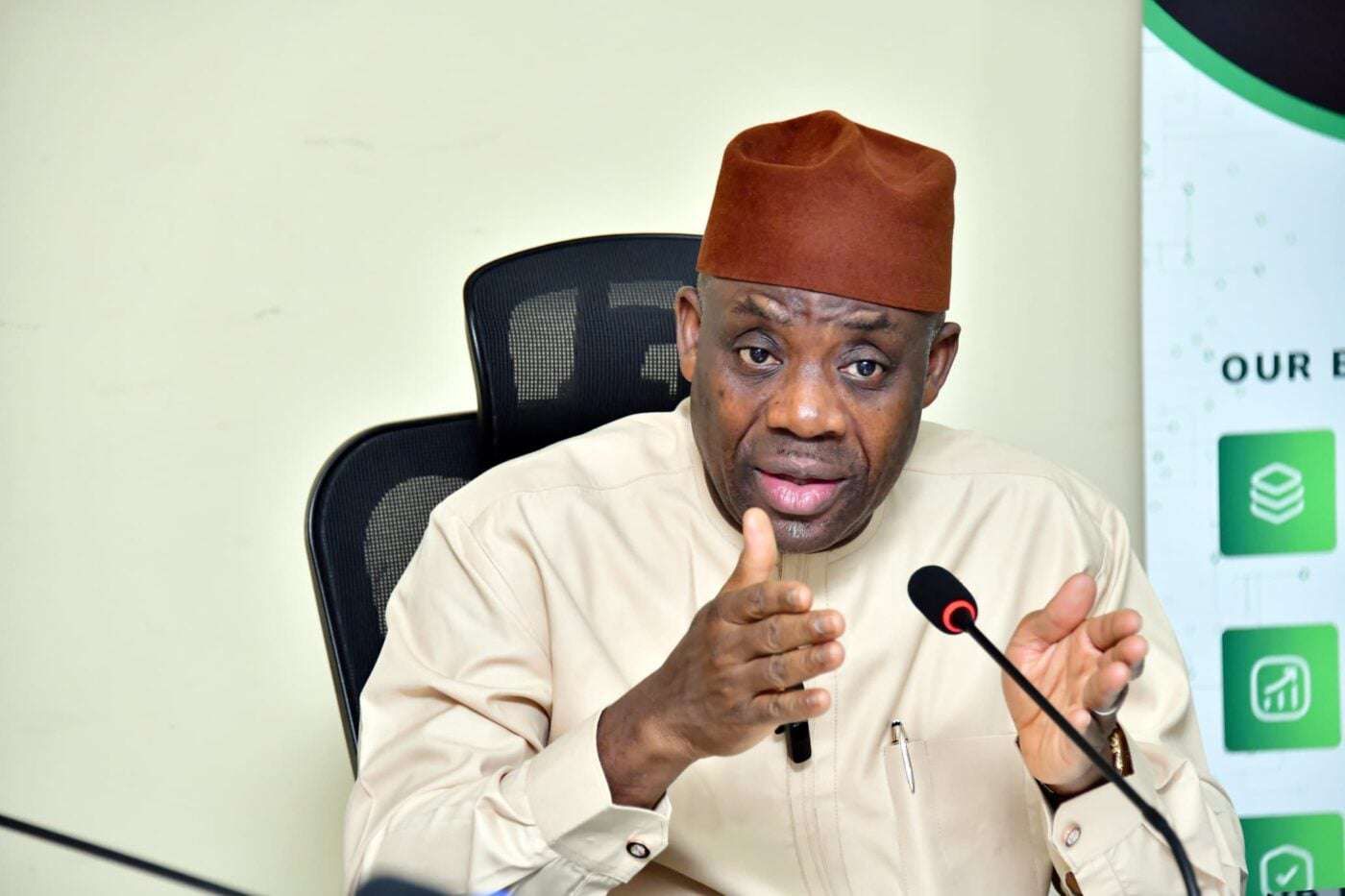
In a statement issued recently by Boriowo Folasade, Director of Press and Public Relations at the Federal Ministry of Education, the Federal Government maintained that implementation is already underway.
According to the statement, the Minister of Education, Dr Maruf Alausa, confirmed that the government had begun implementing a 40% increase in the Consolidated Academic Allowance for ASUU members, effective January 1, 2026.
He directed vice-chancellors to ensure compliance, urging them “to make judicious use of available resources to ensure the successful rollout of the allowance.”
He further clarified that “the payment has already been captured and circularised by the National Salaries, Incomes and Wages Commission, and that its inclusion in the 2026 budget is a formal statutory
The Federal Government last week declared the era of strikes in Nigerian tertiary institutions as permanently over, assuring parents, students, and the general public that universities and polytechnics will remain open for all academic sessions.
Minister of Education, Dr Tunji Alausa, who gave the assurance at the presentation of awards to winners of the students venture capital grant initiative in Lagos, said government had resolved longstanding disputes with the Academic Staff Union of Universities (ASUU) under the FG/ASUU 2025 agreement and was close to finalising an agreement with the Non-Academic Staff Union of Educational and Associated Institutions (NASU).
“Our tertiary institutions will continue to remain open for all academic sessions. Please don’t worry about strikes. We’ve also resolved issues with the non-academic staff union, and that agreement will be signed in the coming weeks,” Alausa said.
“The academic staff are happy. This is an agreement that went into a quagmire for 20 years, and we have fixed it in totality. This is one government that believes in our youth. They are the heartbeat of this nation, and we have to keep them engaged in school.”
FG upbeat
On the status of salary payments, the minister revealed that the 40 per cent increase has kicked off in some of the institutions, assuring that it will be implemented without any problem.
“Even without the passage of the 2026 budget, almost 90 to 95 per cent of our tertiary institutions, starting with universities, have started paying the increase without any problem,” Alausa stated.
On NASU, the minister said the government had met with the union leadership and would finalise their agreement in the coming weeks.
“Please be patient with us. We have drafted that agreement, and it will be signed soon. Our commitment is to ensure all staff in tertiary institutions benefit and that students’ education continues uninterrupted,” he said.
Dr.Olufemi Omoyele of Osun State University said “funding challenges may have been at the roots of the simmering crisis. I believe the delay in total execution of the agreements may have to do with funds, government simply does not have the money.”
Another lecturer from the University of Ilorin, who craved anonymity, told Business Hallmark that “I can tell you that the delay has to do with lack of funds on the part of government, but they will not openly say it.”
Background to the crisis
Nigerian students, parents and scholars lamenting the 16-year industrial crisis that has rocked the country’s university system over the 2009 Federal Government-Academic Staff Union of Universities agreement were happy and may have hissed a sighed relief, as the Union accepted the Federal Government’s proposed 40 per cent pay increase for academic staff in January.
The union then had announced that it formally reached a fresh agreement with the Federal Government on December 23, 2025, noting that the development brought to an end the renegotiation of the 2009 FG-ASUU Agreement.
The agreement, which was to take effect from January 1, 2026 will be reviewed after three years. This was announced on the Union’s office website.
Other key highlights of the agreement are better university funding model with dedicated allocations for research, libraries, labs, equipment, and staff development; stronger university autonomy and academic freedom; elected academic leadership (Deans/Provosts), with only professors eligible. It also noted that there would be no victimisation of anyone involved in the struggle.