Business
CBN on edge as election campaigns threaten surge in excess liquidity
The Central Bank of Nigeria (CBN) is bracing for one of the most formidable threats to its reform agenda yet, not from global commodity shocks or exchange rate volatility, but from within Nigeria’s own political cycle.
As the campaign season for the 2027 general elections begins to gather steam, senior officials and economic analysts are warning that the billions of naira set to flood the economy through political spending could overwhelm the apex bank’s tightening measures, reignite inflationary pressures, and destabilise a currency that has only recently begun to find its footing.

The concern is not theoretical. Nigeria has a well-documented history of election-induced liquidity surges that confound monetary policy, distort markets, and leave the CBN scrambling to contain the fallout long after polling day. What is different this time, analysts say, is the context: the apex bank has spent the better part of two years engineering a painful but consequential stabilization, raising benchmark interest rates aggressively, clearing a backlog of unmet foreign exchange obligations, and gradually restoring confidence in the naira. The prospect of a campaign-season cash deluge threatens to erode much of that progress before the 2027 elections are even called.
Cardoso Sounds the Alarm
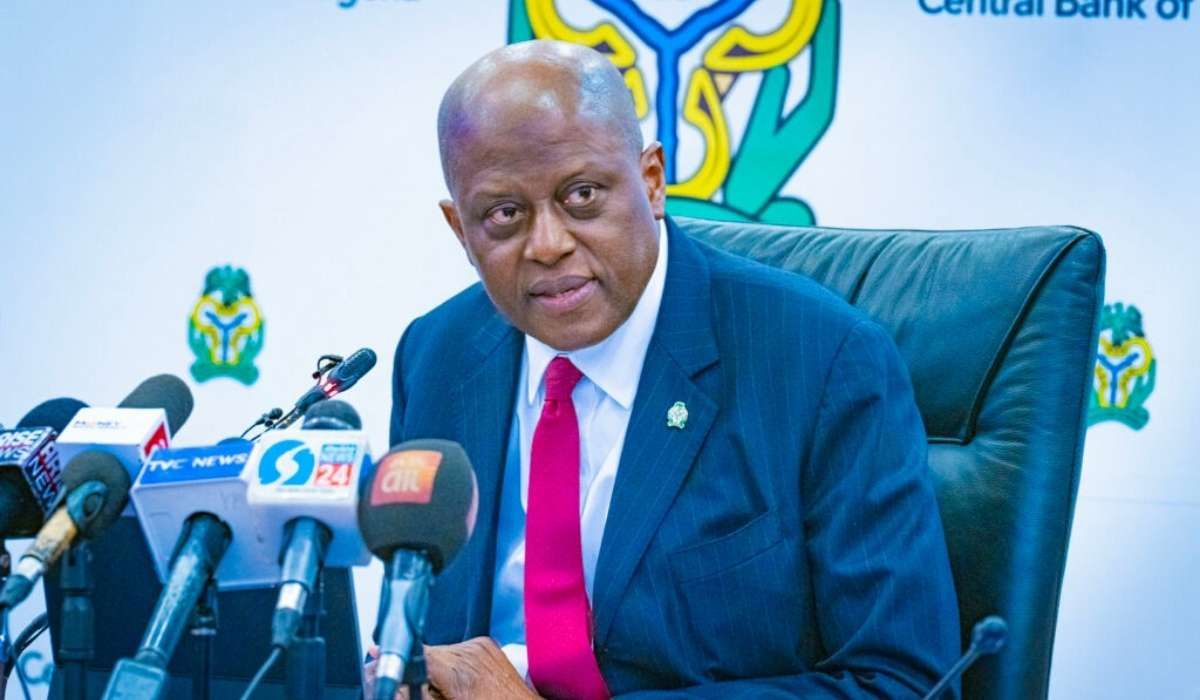
CBN Governor Olayemi Cardoso has been unusually direct in articulating the risk. Speaking at a recent National Economic Council (NEC) meeting in Abuja, he warned that the volume of cash already circulating within the financial system remains dangerously high, and that the approaching election cycle will only compound the problem.
“There is still a lot of liquidity within the system, and we’re going to manage this very carefully. We are not out of the woods yet.” said Olayemi Cardoso, CBN Governor
The governor’s remarks were pointed in their acknowledgement that political spending is not merely a fiscal nuisance but a direct monetary policy challenge. Campaign expenditure in Nigeria, much of it cash-driven, informally distributed, and difficult to track, injects money into the economy at a velocity and scale that conventional liquidity management tools struggle to absorb in real time.
“The election cycle , a typical election cycle , a lot of money has been pumped into the system. This has to be watched to ensure that it does not destabilise and challenge the very bold reforms which have brought about stability to the economy.” Olayemi Cardoso, CBN Governor had said.
Cardoso was equally candid about the structural limitations of monetary policy as a standalone tool, noting that the CBN cannot indefinitely absorb the effects of politically-induced fiscal looseness. Lasting stability, he argued, requires fiscal discipline, efficient public expenditure, and genuine coordination between the monetary and fiscal authorities — a coordination that has historically been Nigeria’s weakest link in managing election-year economic pressures.
History as a Warning
A review of past election cycles lends urgency to the governor’s concerns. In the run-up to the 2023 general elections, the widespread “dollarisation” of campaign financing, politicians hoarding and deploying foreign currency for vote-buying and logistics, triggered a severe shortage of dollars in the official foreign exchange market and sent the naira spiralling past N900 to the dollar at the parallel market during the primaries. The CBN was left firefighting a crisis that was as much political as it was monetary.
The 2019 and 2015 cycles told similar stories. Campaign spending in 2019 was widely reported to have exceeded legal limits by multiples, flooding the system with untracked naira. In 2015, allegations surfaced of as much as N2 trillion being injected by major political parties, a figure that, if accurate, would represent a liquidity injection of staggering proportions for an economy that size.
The pattern reveals a structural vulnerability: Nigeria’s monetised politics and its monetary policy framework are fundamentally in tension.
Each election cycle, the CBN is effectively forced to fight a battle on two fronts, defending against external shocks with one hand while mopping up internally-generated excess liquidity with the other. Open Market Operations (OMO), treasury bill issuances, and Cash Reserve Ratio adjustments are the usual instruments deployed, but their effectiveness diminishes when the source of liquidity is political rather than systemic.
The Dollar Question: Risk or Relief?
Not all analysts view the approaching campaign season through an exclusively negative lens. Dr. Muda Yusuf, Chief Executive Officer of the Centre for the Promotion of Private Enterprises (CPPE), offered a more nuanced reading of the foreign exchange implications, pointing to a dynamic that is often overlooked in the standard analysis.
“There are different ways of looking at it. Politicians are likely to spend more dollars which they have stashed away locally or abroad because it is easier for them to keep dollars due to traceability issues. So, there may be a positive effect on the dollar because we are likely to see an upsurge in dollar supply.” Dr. Muda Yusuf, CEO, Centre for the Promotion of Private Enterprises warned.
Dr. Yusuf’s argument rests on the observation that a significant proportion of Nigerian campaign financing is denominated in foreign currency. When politicians spend those dollars, on logistics, media, grassroots mobilisation, and informal inducements, the recipients tend to convert the proceeds to naira through the foreign exchange market, thereby boosting dollar supply and potentially exerting downward pressure on the exchange rate.
He was, however, careful to distinguish between the legitimate and illegitimate dimensions of campaign expenditure. Spending by the Independent National Electoral Commission (INEC) on ballot paper printing, logistics, and security deployment represents substantial but traceable outflows. The greater risk, he noted, lies in vote-buying and other informal distributions that inject raw naira liquidity at the grassroots level, cash that enters the real economy rapidly, unpredictably, and largely beyond the reach of monetary surveillance.
Despite these nuances, Dr. Yusuf concurred with the CBN’s underlying concern, cautioning that the more consequential threat may not be the direct monetary effects of campaign spending, but what it does to policymakers’ attention. “The major fear,” he said, “is the distraction of the government in managing the economy.”
Who Watches the Money?
The debate over campaign-induced liquidity inevitably raises the question of institutional responsibility. Nigeria’s campaign finance regulations impose spending limits on political parties and candidates, but enforcement has been consistently weak.
INEC, which bears nominal oversight responsibility, has repeatedly been criticised for lacking the institutional capacity, and arguably the mandate, to function as a financial watchdog during elections.
Former Senate Minority Leader Senator Olorunnimbe Mamora recently argued that the current oversight architecture is unfit for purpose, calling for a fundamental reassignment of campaign finance monitoring to a body with the relevant expertise and authority.
“INEC is not equipped to monitor financial flows during the three electoral phases, pre-election, election day and post-election. In my view, another agency, such as the Nigerian Financial Intelligence Unit, should handle this responsibility.” Senator Olorunnimbe Mamora, Former Senate Minority Leader had said.
The Nigerian Financial Intelligence Unit (NFIU), which tracks suspicious financial transactions and maintains oversight of anti-money laundering compliance, would be a more natural institutional home for this function, Mamora argued.
Greater digitalisation of campaign payments, replacing cash distributions with traceable electronic transfers, has also been proposed as a structural reform that would give both the NFIU and the CBN better visibility into the flow of election-related funds.
The CBN’s Next Moves
For the apex bank, the immediate challenge is to stay ahead of the liquidity curve without choking an economy that is only beginning to stabilise. The CBN is widely expected to ramp up its Open Market Operations in the months ahead, issuing treasury bills and conducting repo transactions to absorb excess naira from the system. Further adjustments to the Cash Reserve Ratio, a tool the bank has deployed aggressively in recent tightening cycles, are also considered likely if liquidity conditions deteriorate markedly.
The more difficult task will be maintaining the credibility of monetary policy in the eyes of domestic and international investors. Markets have, over the past eighteen months, gradually recalibrated their expectations of the CBN under Cardoso’s leadership, pricing in a more independent, reform-minded institution than his predecessors presided over. A perception that political pressures are once again distorting the monetary environment could unwind that trust rapidly, with consequences for foreign portfolio investment flows and the exchange rate that would extend well beyond the campaign season.
Governor Cardoso has acknowledged that monetary policy is, at best, a partial solution. The inflation war, he has made clear, will not be won by interest rate decisions alone, it requires coordinated restraint from the fiscal side, including subnational governments, which control roughly half of federation revenue and whose spending patterns significantly shape monetary conditions on the ground.
Nigeria enters the 2027 pre-election cycle in a materially stronger macroeconomic position than it did two years ago. Inflation, though still elevated, has moderated. The foreign exchange market has achieved a degree of unification and transparency that was absent under the previous multiple-window regime. The naira, battered but not broken, has stabilised at levels that, while painful for import-dependent businesses and households, reflect a more realistic valuation.
Whether those gains survive the campaign season will depend, in large measure, on whether the CBN has the institutional tools, the policy space, and the political insulation to absorb the monetary shock of an election year. Based on the pattern of the past three decades, the risks are real, the instruments imperfect, and the window for early action narrow. For now, the apex bank’s credibility, and Nigeria’s fragile economic stability, are squarely on the ballot.