

Arts & Books
‘Biodun Jeyifo: Passage of High Priest of Literature, political activist
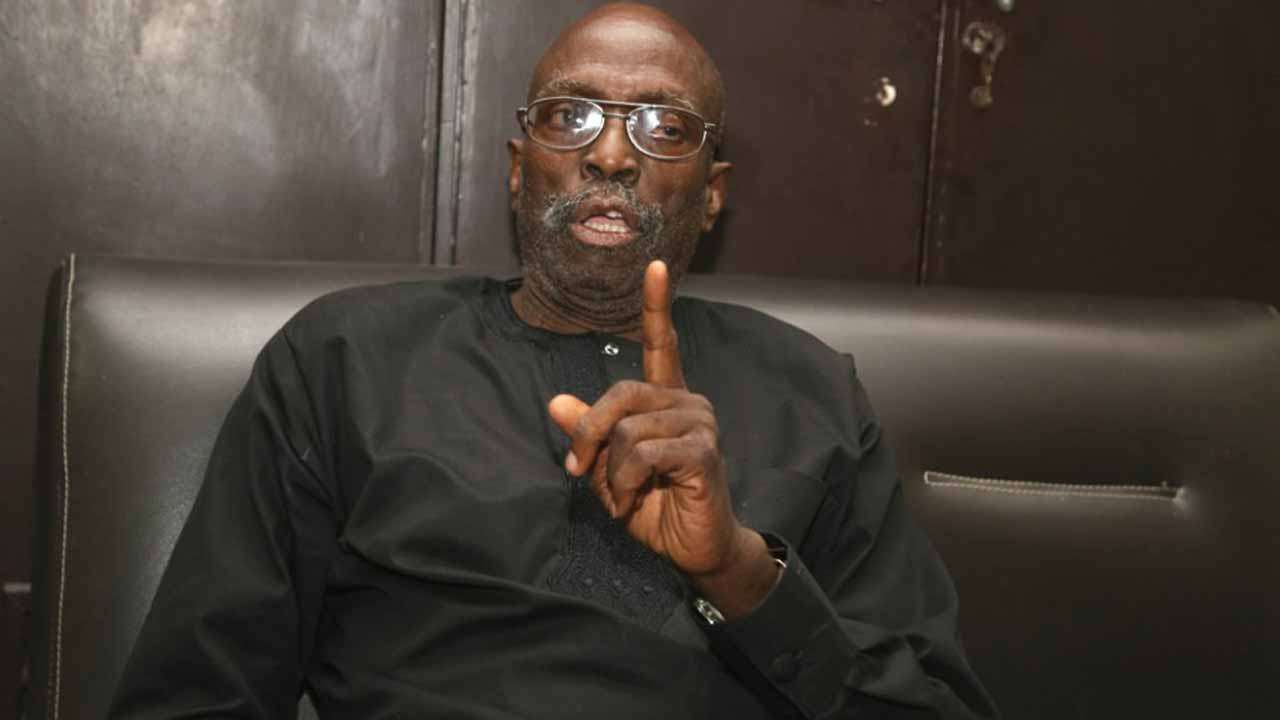
Professor (A) Biodun Jeyifo was no ordinary professor. He was not a middling in global intellectual circles, but a towering colossus with world wide validation. His passing February 11 was a great loss to the world of letters.
In the past decade or two, the Nigerians literati community has lost respected minds in literature and literary criticism. Only last July, Professor Charles Nnolim , another chief priest of literary criticism joined the pantheon of literary ancestors. The list of the departed is troubling, given their larger than life image in global literary criticism and theorizing :
Obi Wali, Kolawole Ogungbesan, Abiola Irele, MJC Echeruo, Oyin Ogunba, E.N. Obiechina, D.I. Nwoga, Oladele Taiwo, Ben Obumselu, Sunday Anozie, Ime Ikeddeh, Isidore Okpewho, and now Biodun Jeyifo.
In the past five years, the Ahmadu Bello University alone lost three giants of the theatre. Professor Saint T. Gbilekaa (passed August 20, 2024), a former lecturer at ABU before moving to University of Abuja died: A distinguished scholar in dramatic theory and criticism.
He was a national president of the Society of Nigeria Theater Artists (SONTA).
Dr. Salihu Bappa, a renowned academic in the Department of English at Ahmadu Bello University, Zaria, who gave Theatre Arts at ABU its “radical and guerrilla flavour” died in October 2020.
The third was Prof. Jenks Okwori, another dramatic theorist. If one really combs the African literary landscape of death, then the grief will be inconsolable; the doyen of east African literary criticism professor Chris Wanjala, who died in 2018, the recent death of Africa’s answer to Charles Dickens, the cerebral Ngugi wa thiong’o and the South African poet, Keorapetse Kgositsile, who assisted Ngugi to escape to Zimbabwe when Arap Moi was after him, from where he made his way to the United States in the late 70s.
Jeyifo, a different hue
No one can deny the range of Jeyifo’s scholarly and professional interests- which demonstrates his purposeful pursuit of knowledge that can bring about social change: African and Caribbean ‘Anglophone’ literatures; theatrical theory and dramatic literature, Western and non-Western; comparative African and Afro-American critical thought; Marxist literary and cultural theory; colonial and postcolonial studies; and twentieth-century revolutionary social philosophy and literature.
He was widely considered as the world’s pre-eminent scholarly authority on the works and career of Wole Soyinka. His award-winning book on the 1986 Nobel laureate, “Wole Soyinka: Politics, Poetics and Postcolonialism” (Cambridge University Press, 2004), is one of Jeyifo’s magnum opus, and regarded as the most comprehensive study of the author’s work, and the most sophisticated single-author study of any writer in African postcolonial studies.
An academic, critic, public intellectual, cultural theorist and a specialist in world Anglophone literature and culture, he distinguished himself in all these fields.
He was also a social political activist, being not only involved in the founding of the umbrella body for Nigerian academics, the Academic Staff Union of Universities, ASUU, but emerging it’s pioneer president.
At Harvard University, he was highly respected.
Jeyifo attained great prominence in African intellectual circles and transcontinental circuits of academia for his analyses of capitalist modernity and its social and cultural crises. It has been said of him that “No other scholar, apart from Edward Said, Gayatri Spivak and Homi Bhabha, is more attentive to the radically dispersed accents or strands of thinking the post-colonial the way BJ had done.”
Literary Criticism
While critics of Soyinka’s works took the view that the difficulties and complexities in the Nigerian writer’s body of work were either merely self-constitutive or wilfully obscurantist, in “Soyinka: Poetics and Post colonialism” and other books and essays on Soyinka’s writings, Jeyifo based his analysis on the premise that modernist and avant-gardist techniques and language were at the heart of the alleged difficulties and complexities. The book is notable for its detailed readings of Soyinka’s greatest works of drama, poetry and fictional and nonfiction prose, combining intellectual rigour with sheer writing pleasure in his explications.
His exact place of origin remains disputed. Some account says Jeyifo came from Sabongida Oran ( Owan) , the same place as the late doyen of African literary criticism, the globally revered professor Abiola Irele, but what is clear is that he was born and raised in Ibadan.
Jeyifo had all his formal education – primary, secondary and tertiary – in that city when it was the cultural and intellectual capital of Nigeria in the 60s ferment of literary talents.
Jeyifo earned a PhD in 1975 from New York State University, where respected Richard Schechner was his PhD supervisor; he had gained a master’s degree from the same university in 1973, and a bachelor’s in 1970 at the University of Ìbàdàn, where he graduated with first-class honours — the third at the university to do so after Dan Izevbaye and Molara Ogundipe.
Awards and Accolades
He also held a D.Litt (honoris causa) from Ọbafẹmi Awolọwọ University. He taught at Cornell University, Oberlin College, and Harvard University. Jeyifo was the first president of the Academic Staff Union of Universities (ASUU) in Nigeria, when he taught at the University of Ife.
In Nigeria, Jeyifo taught at the University of Ibadan (1975–77) and the University of Ife (now Obafemi Awolowo University, (1977–87). Then he taught for one year (1987–88) at Oberlin College, Ohio before moving to Cornell University in Ithaca, New York, where he taught from 1989 to 2006 in the English department. Thereafter, he moved to Harvard University in 2006 in the Comparative Literature and African and African American Studies departments, a position from which he retired in 2019.
In all these institutions, Jeyifo invested a lot of intellectual and moral capital in working very closely with undergraduate students, graduate students and younger, untenured junior faculty.
Beyond his own home institutions, Jeyifo also worked extensively on faculty development projects at other universities and on major international, interdisciplinary and non-Eurocentric scholarly projects. Among the “highlights” are:
The Free University of Berlin’s International Center for Research in Interweaving Cultures of Performance began a project that led to the publication of a “first-of-its kind” book on indigenous theatre concepts of five non-Western regions of the world that have no sources in Western theater traditions and practices.
For this project, Jeyifo served as one of the supervising editors and, with Femi Osofisan, wrote the Introduction to the Yoruba/Africa section of the book. In addition, Jeyifo gave the keynote lecture to launch the project in Berlin on April 20, 2008. Thereafter, he was associated with the Center as visiting professor in 2008, 2009, 2010, 2016 and 2017;
Academic Collaborations
In the 2011, 2012, 2014 and 2015 academic sessions, Jeyifo had a visiting professorship at Peking University (PKU) in the People’s Republic of China, the objective of which was to lay the foundations of Africanist literary and theatrical studies in PKU itself and in China as a whole. Later on, Professors Femi Osofisan of the University of Ibadan and Chima Anyadike of OAU-Ife joined Jeyifo in this project, which entailed teaching formal courses at PKU and giving lectures and seminars at various other PRC universities.
For over a decade between 2006 and 2019 and mostly during the summer, Jeyifo met with other scholars from Europe, the United States, India, China and the Caribbean in a project with the title, Literature: A World History (LAWH). Among other places, the group met in Leiden, Istanbul, Hong Kong and Beijing. At the end of the project, the group produced a six-volume new non- or post-Eurocentric literary history of the world published by Wiley in 2022. The volume on Africa was jointly edited by Jeyifo, Eileen Julien and Karin Barber, in addition to the co-editor’s individual chapters in the volume.
In the spring of 2021, the British Journal of Sociology published an essay by Jeyifo titled “An Illuminati and its Acolytes: Critical Theory in the Text and in the World”. This essay was one of four invited commentaries on Bernard Harcourt’s magisterial “Critique and Practice: A Critical Philosophy of Illusions, Values, and Action”.
Of the four invited commentaries, Jeyifo’s was apparently so effective in making Harcourt to rethink the entire conceptual architecture and conclusions of his book that he created a year-long course and public seminar series titled “Revolutionary 13/13: Worldly Philosophers” at Columbia University in New York City in the 2021-22 academic session.
Altogether Jeyifo’s teaching, research and publications in the 1970s through the 1980s were pivotal in transforming the curriculum of Nigerian universities.
In this unprecedented development, Marxist literary, theater and cultural studies, Marxist philosophy and historiography, and Marxist social sciences became so prevalent in the curriculum of the country’s universities that the dons were accused by the government of “not teaching what they were paid to teach.”
In a retort to this accusation that became famous, Jeyifo asserted that he and his cohorts in the movement were indeed teaching what they were paid to teach on account of texts like Chinua Achebe’s Things Fall Apart and No Longer at Ease and Wole Soyinka’s Season of Anomy and The Man Died that were savagely critical of the state of affairs in the postcolonial era. Much later at Cornell University in the early 2000s, Jeyifo was a member of a group of English department faculty that gave free weekly classes to inmates at the all-male maximum-security correctional facility of Auburn in upstate New York. On this project he testified that it was an unforgettable experience for him to teach the writings and thought of the likes of Frantz Fanon, Amilcar Cabral, Nelson Mandela, James Baldwin and Chinua Achebe, among others, to prison inmates, some of whom were lifers.
He was a celebrated columnist in Nigeria, writing for many dailies like The Guardian and The Nation. Indeed, Africa has lost the High Priest of criticism.