Business
Moghalu questions ‘Africa rising’ narrative, urges focus on governance, state capacity
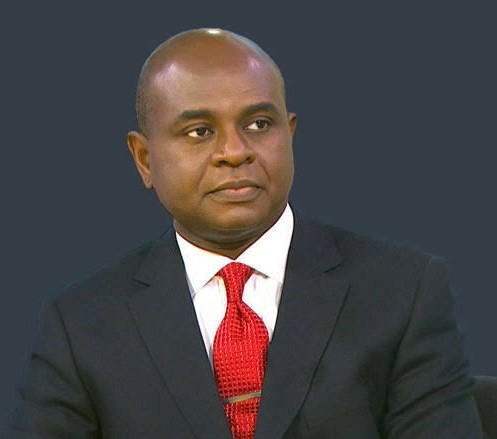
Former presidential candidate and ex-deputy governor of the Central Bank of Nigeria, Kingsley Moghalu, has raised concerns over recent optimistic portrayals of Africa’s economic future, arguing that private investment alone cannot drive transformational growth across the continent.
In a Facebook post reflecting on a 23 March 2026 feature in The Economist titled “Get Paid, Not Aid”, Moghalu acknowledged the piece’s positive outlook on Africa but expressed skepticism about narratives of rapid economic rise. He recalled the “Africa Rising” wave of the 2000s, also popularized by The Economist, which he said was largely driven by external agendas seeking investment opportunities in a region less correlated to global markets after the 2008 financial crisis.

Moghalu pointed to his 2014 book, Emerging Africa: How the Global Economy’s ‘Last Frontier’ Can Prosper and Matter, where he argued that the continent’s rise would depend on foundational factors such as education, skills development, good governance, transparency, accountability, and innovation—not merely foreign capital or aid. He noted that a decade later, many of the challenges he highlighted persist: democratic backsliding, slow industrial transformation, limited innovation-driven productivity, widespread electricity shortages, and persistent poverty affecting hundreds of millions.
He further criticized narratives focused on strategic investment in critical minerals, even as they praised indigenous entrepreneurs, saying such coverage overlooks the essential role of the state. According to Moghalu, Africa’s 54 countries will not experience transformational growth like Asia unless governments can provide security, mobilize domestic revenue, deliver basic social services, and create enabling business environments.
“Private capital isn’t enough,” he wrote. “Africa won’t ‘rise’ in a transformational manner until the public sector delivers the basics of state capacity.”
Read full post below:
I read a long piece on Africa’s economic future in The Economist magazine of 23 March 2026 titled “Get Paid, Not Aid”, in which the newsmagazine argued that business investment will shape the continent’s future. The long read was quite glowing about Africa’s prospects.
I am skeptical. Why? Because, while it is positive, past experience including the “Africa Rising” wave of the 2000s (started, again, by The Economist, perhaps in atonement for its famous earlier derogatory cover story titled “The Hopeless Continent”), has shown that Africa will not rise simply because western media says it is rising. These narratives, in the main, are often driven by subtle agendas. In the post-2008 financial crisis, it was driven by Africa being seen as a “last frontier” after the financial crisis destroyed $14 trillion of economic value and Africa, with a low correlation to the global economy at the time, offered a prospect for global investors looking for profit.
To counter this narrative with more nuance, I wrote the book Emerging Africa: How the Global Economy’s ‘Last Frontier’ Can Prosper and Matter, published by Penguin Publishing Group in 2014, in which I argued that although Africa was “emerging”, it had not “risen” and was not rising despite the breathless media narrative driven by western commentators. In that book I provided a guide to how the continent could actually rise, making the point that foundational philosophical worldviews, education and skills, basic good governance anchored on transparency and accountability, and innovation, were far more important than foreign investment or aid for Africa to truly rise.
The Financial Times review of Emerging Africa called it “a welcome last word on the Africa Rising obsession”. A decade later, my arguments have been borne out. Democracy is in decline, and Africa has not worked out a better alternative (as Winston Churchill famously described it, “democracy is the worst form of government, except for all the rest”). Industrial-based economic transformation has not yet occurred, innovation-driven productivity is absent with perhaps the exception of South Africa. 600 million Africans remain without electricity, and poverty levels remain stubbornly high. Meanwhile, population is rising faster than concrete progress.
The Economist piece appears heavily driven by a focus by western investors on strategic critical minerals, even as it lauded the impact of indigenous African entrepreneurs. In this sense, these narratives miss the point: Africa won’t “rise” in a transformational manner, as Rising Asia has, until the continent’s 54 countries are properly governed with the public sector delivering the basics of state capacity. These are: security, effective revenue mobilization from a domestic base as opposed to incessant foreign borrowing, effective provision of social services such as health and education, and enabling business environments (especially electricity). Private capital isn’t enough.