Business
Oil wells row: A’Ibom, C’River escalate dispute as both govs exchange heated words
The lingering dispute over 76 oil wells between Akwa Ibom State and Cross River State has taken a fresh turn, with both governors hardening their positions while the Revenue Mobilisation Allocation and Fiscal Commission (RMAFC) insists that no final decision has been reached on the matter.
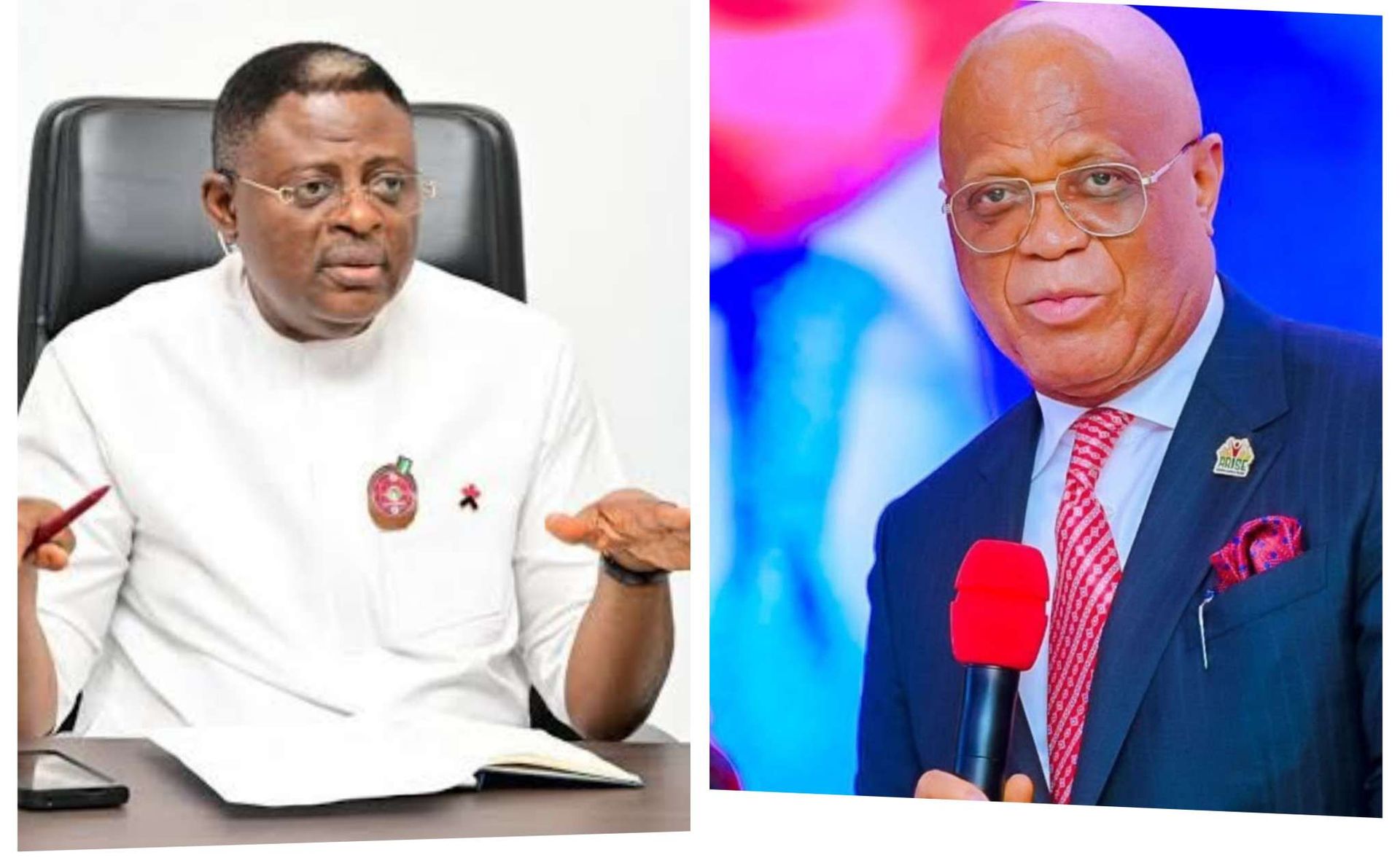
Governor Bassey Otu of Cross River, speaking before supporters on Monday, declared that his state would not continue to accept what he described as injustice over the oil-rich assets.

“People cannot be cheated forever. The ceding of parts of Bakassi was for peace for Nigeria. It was not for Cross River State to lose its oil wells. So, enough of nonsense,” Otu said in a video widely shared online.
He maintained that Cross River was only demanding its lawful rights, stressing that the state could no longer “take rubbish.”
On his part, Governor Umo Eno of Akwa Ibom dismissed the claims, asserting that two judgments of the Supreme Court of Nigeria had conclusively settled ownership of the wells in favour of his state.
Addressing journalists on arrival at Victor Attah International Airport, Eno said no propaganda or sentiment could overturn established judicial pronouncements.
“There are two Supreme Court judgments that give Akwa Ibom State the right to those oil wells,” he said, adding that Akwa Ibom shares maritime boundaries with Cameroon, not Cross River.
The dispute traces back to the 2008 transfer of the Bakassi Peninsula to Cameroon, following a ruling by the International Court of Justice. The development altered Cross River’s coastal status and affected its claim to offshore derivation.
Although the Supreme Court ruled in 2012 that the 76 oil wells belonged to Akwa Ibom, Cross River has continued to contest the decision, arguing that updated mapping and geological data place a majority of the wells within its territory.
Eno urged Akwa Ibom residents to remain calm and expressed confidence in President Bola Ahmed Tinubu and the rule of law, insisting that the issue was one of established facts rather than emotion.
Meanwhile, Akwa Ibom’s Attorney-General and Commissioner for Justice, Uko Udom, described as misleading reports suggesting that the wells might be returned to Cross River following the submission of a federal inter-agency committee report.
According to him, the document submitted to RMAFC on February 13, 2026, was only a draft and did not constitute a final recommendation or reallocation.
Reinforcing this position, RMAFC Chairman Mohammed Shehu said reports claiming that certain oil wells had been earmarked for ceding were “misleading, premature, and not reflective of the commission’s position.”
The commission explained that it had transmitted the draft report to relevant technical agencies – including the Nigerian Upstream Petroleum Regulatory Commission, the National Boundary Commission, and the Office of the Surveyor General of the Federation – for review and technical input.
RMAFC stated that the matter would still undergo further examination by its internal committees before any final recommendations are forwarded to the President and the Attorney-General of the Federation in line with constitutional procedures.
While the commission called for patience and restraint, the sharp exchange between the two governors highlights the continuing tension over the oil wells, a dispute that remains politically and economically significant for both states.