Business
World Bank: West Africa expands power trade as 15 countries link grids, boost electricity access
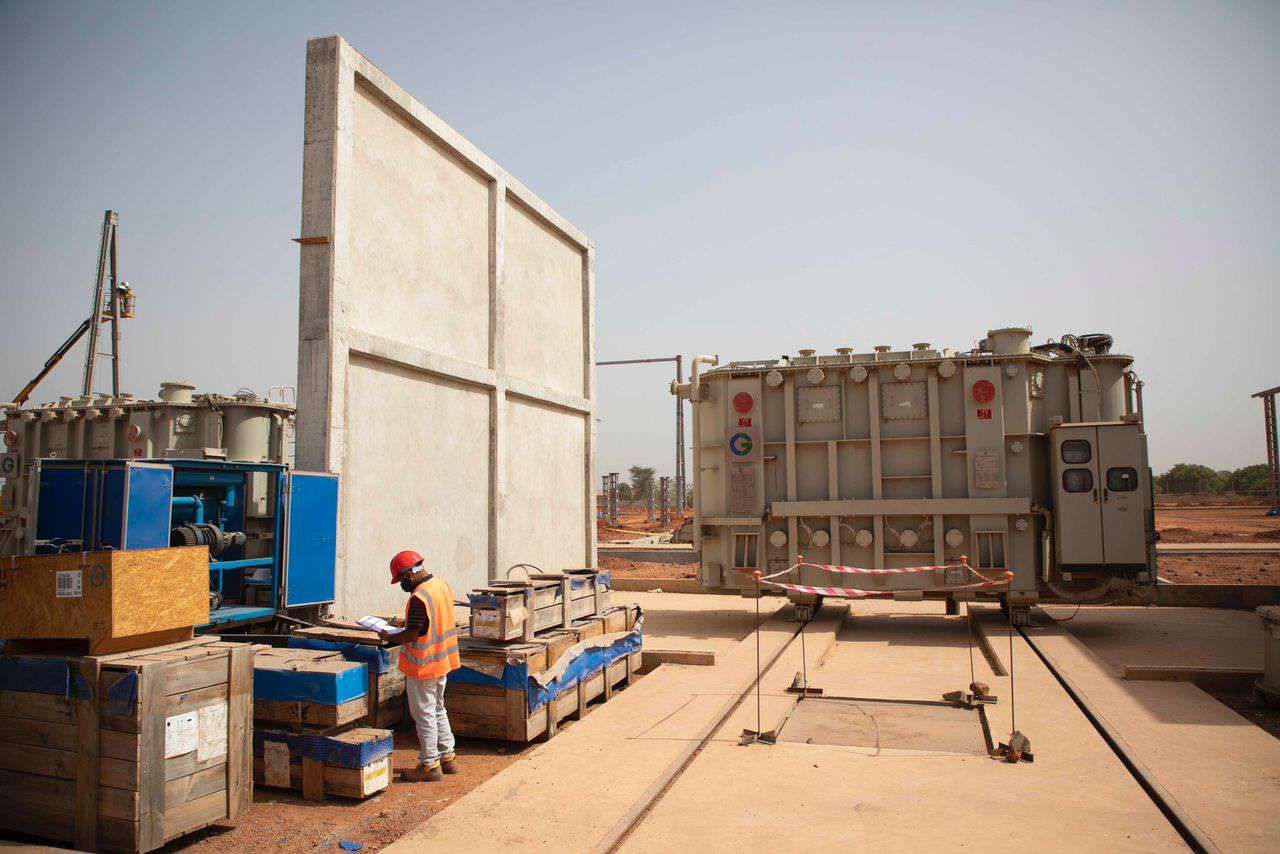
The World Bank has reported major progress in West Africa’s regional electricity integration programme, revealing that more than 4,000 kilometres of high-voltage transmission lines now connect the power grids of 15 countries under the West African Power Pool (WAPP), significantly expanding cross-border electricity trade and improving access across the sub-region.
According to the development institution in it’s Website, about 8 percent of regional electricity is now traded between countries – moving closer to the European Commission’s benchmark of 10 to 12 percent for integrated electricity markets. The Bank said the development has helped lower electricity costs, improve supply reliability, and strengthen energy security across participating states.

Millions gain electricity access
Between 2019 and 2025, more than 3 million people in Burkina Faso, Guinea, Liberia, Senegal, Sierra Leone, and The Gambia gained access to electricity through expanded transmission and distribution infrastructure supported by the programme.
The World Bank said the initiative has also improved the financial performance of several utilities in the region. Guinea-Bissau’s electricity utility (EAGB) reportedly moved from monthly losses of about $1 million to a positive financial position, while The Gambia’s NAWEC returned to profitability after achieving around 42 percent cost savings, largely due to access to lower-cost hydropower through regional power trade.
Regional interconnection projects drive integration
The programme has been anchored on major cross-border infrastructure projects, including the Côte d’Ivoire–Liberia–Sierra Leone–Guinea (CLSG) transmission line, the Guinea–Guinea-Bissau–The Gambia–Senegal (OMVG) loop, and the Senegal–Mali (OMVS) interconnector.
These projects have helped unify previously fragmented national electricity systems, allowing power-surplus countries such as Guinea and Côte d’Ivoire to export electricity while import-dependent countries benefit from more affordable supply sources.
The Bank also noted that innovative transmission technologies have enabled electrification of communities along power corridors, extending access beyond major urban centres.
New regional electricity market set for 2026
A key milestone in the integration process is the planned launch of a short-term “Day-Ahead Market” in 2026, which will allow utilities to purchase electricity for next-day delivery at competitive prices.
The West African Power Pool and the ECOWAS Regional Electricity Regulatory Authority (ERERA) have also advanced efforts to synchronise interconnected national grids, enabling more stable and efficient cross-border electricity flows.
Regulators validated tariffs for the new market in late 2025, while WAPP successfully completed the first synchronisation trial involving uninterrupted power exchange across 12 West African countries.
Stronger utilities and reduced generation costs
The World Bank said regional electricity trade has significantly reduced generation costs for participating utilities.
In Guinea-Bissau and The Gambia, access to Guinea’s hydropower resources reduced electricity costs by more than 40 percent, helping both utilities return to profitability. Similarly, Liberia and Sierra Leone, through the CLSG transmission network, have reduced generation costs by between 10 and 20 percent by importing cheaper electricity from Côte d’Ivoire.
Senegal also recorded cost reductions in parts of its network, particularly in Tambacounda, through imports from the Manantali Hydropower Complex via the OMVS line.
Jobs, inclusion, and economic impact
The programme has generated more than 52,000 direct and indirect jobs across engineering, construction, logistics, operations, and maintenance linked to major transmission projects.
The World Bank said the initiative has also contributed to improved living standards, reduced gender gaps, and supported the growth of women-led businesses through expanded electricity access, particularly in rural and underserved communities.
Development approach and partnerships
The Bank said the programme was implemented through a multi-partner financing model involving institutions such as the African Development Bank, European Investment Bank, West African Development Bank, Islamic Development Bank, and Agence Française de Développement.
Its approach combined infrastructure expansion, regulatory reform, market development, and institutional strengthening, including the establishment of standard power contracts, regional grid codes, and improved transmission pricing frameworks.
The West African Power Pool’s Information and Communication Centre has also been strengthened to coordinate cross-border electricity exchanges more effectively.
Expert perspective and regional cooperation
High Commissioner of the OMVG, Demba Jallow, described the regional interconnection as a major step toward long-term energy stability.
He said the OMVG project “pools the resources of four countries and three river basins to provide continuous, secure, and affordable electricity supply for all,” adding that it strengthens utilities and supports socioeconomic development across member states.
Next phase of expansion
Looking ahead, the World Bank said the programme will focus on expanding cross-border electricity trade, strengthening utility finances, and advancing universal electricity access under the broader Mission 300 initiative.
Plans include establishing a liquidity support mechanism to ensure timely payments between utilities, alongside continued reforms to improve financial sustainability in the power sector.
The Bank also confirmed that new regional transmission projects are being prepared to deepen interconnection across West Africa, as policymakers push toward a fully integrated regional electricity market aimed at supporting industrial growth, job creation, and improved living standards.