Business
US House vote to suspend Nigeria aid sparks fears over health, humanitarian crisis
By Adebayo Obajemu
Nigeria could face one of its most severe humanitarian challenges in decades after the United States House of Representatives voted to suspend all American assistance to the country over concerns about alleged persecution of Christians and worsening insecurity.

Although the measure has not yet become law, development experts and humanitarian stakeholders have warned that, if approved by the U.S. Senate and signed by President Donald Trump, the move could severely disrupt life-saving health programmes, humanitarian interventions and development initiatives across Nigeria.
They cautioned that a total aid freeze could lead to the loss of thousands of jobs in the humanitarian sector, undermine efforts to combat HIV/AIDS, tuberculosis and malaria, increase maternal and child mortality, and reverse decades of progress in public health.
The experts also described the development as a stark reminder of Nigeria’s heavy dependence on foreign aid, arguing that the country must strengthen domestic funding for critical social programmes.
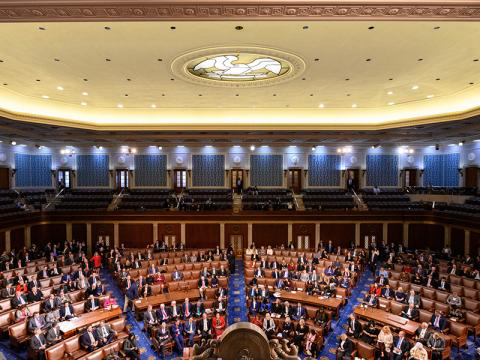
The amendment, sponsored by Congressman Gregory Steube, was adopted by the House of Representatives during consideration of the Fiscal Year 2027 State Department Appropriations Bill.
Following the vote, Steube said: “American taxpayers should never bankroll governments that turn a blind eye while Christians are abducted, tortured, and murdered.”
The amendment expands an earlier proposal to suspend 50 per cent of U.S. assistance to Nigeria by seeking a complete freeze until the U.S. Secretary of State certifies that the Nigerian government has taken measurable steps to halt the violence and bring perpetrators to justice.
However, the proposal still requires approval by the U.S. Senate and the assent of President Donald Trump before it can take effect.
For more than two decades, Nigeria has ranked among the largest recipients of U.S. foreign assistance in Africa.
According to available figures, the United States provided approximately $1.16 billion in assistance to Nigeria in 2022, about $1.02 billion in 2023 and an estimated $767 million in 2024. Much of the funding was channelled through the U.S. Agency for International Development (USAID), the President’s Emergency Plan for AIDS Relief (PEPFAR) and other American agencies.
Over the years, Washington has invested more than $6 billion in Nigeria’s HIV/AIDS response through PEPFAR, supporting treatment for more than 1.5 million Nigerians, including over one million women and children.
According to the U.S. Mission in Nigeria’s 2024 report, American assistance also supplied malaria medicines to 2.2 million children, supported HPV vaccination for 13 million girls, screened 19.8 million Nigerians for tuberculosis, strengthened surveillance for diseases such as cholera and Lassa fever, and funded programmes in agriculture, education, water and sanitation, security sector reform and private sector development.
The proposed aid suspension, if eventually enacted, is expected to have far-reaching implications for Nigeria’s healthcare system, humanitarian operations and broader development agenda, particularly at a time when the country continues to grapple with economic hardship, insecurity and rising poverty.