Politics
Tinubu justifies airport reception for Plateau attack victims, blames flight restrictions
President Bola Tinubu has defended his decision to meet victims of the recent attacks in Plateau State at the Yakubu Gowon Airport in Jos rather than at the affected communities, attributing the arrangement to flight restrictions and security logistics that limited his movement during the visit.
The explanation was contained in a statement released on Friday by the President’s Special Adviser on Information and Strategy, Bayo Onanuga.

According to the presidency, Tinubu had earlier planned to travel to Iperu in Ogun State on Thursday after hosting the President of Chad, Mahamat Idriss Déby Itno, in Abuja. However, the plan was shelved following a security briefing from Plateau State Governor Caleb Mutfwang regarding the attacks in the state.
Onanuga said the President immediately arranged to visit Jos after the briefing, directing that presidential assets be deployed for the trip overnight.
The visit, however, experienced delays due to a scheduled bilateral meeting with the Chadian leader at the Presidential Villa, which focused on strengthening security cooperation between Nigeria and Chad.
“The President of Chad was at the Presidential Villa for a very important bilateral meeting focused on strengthening security collaboration between the two countries. The meeting ran longer than expected, affecting President Tinubu’s scheduled departure for Jos,” the statement said.
The presidency further explained that logistical challenges encountered upon Tinubu’s arrival in Jos made it impossible for him to travel into the city to meet victims at the scene of the attacks.
Officials noted that although the journey from the airport to Jos town takes about 40 minutes by road, the runway at the airport does not support night operations due to the lack of navigational aids.
Because of the limited time before dusk, it would have been difficult for the President to travel into town and return to the airport in time for departure.
“The constraints made it unfeasible to drive into town, meet victims for on-the-spot assessment and return to the airport before dusk,” the statement said.
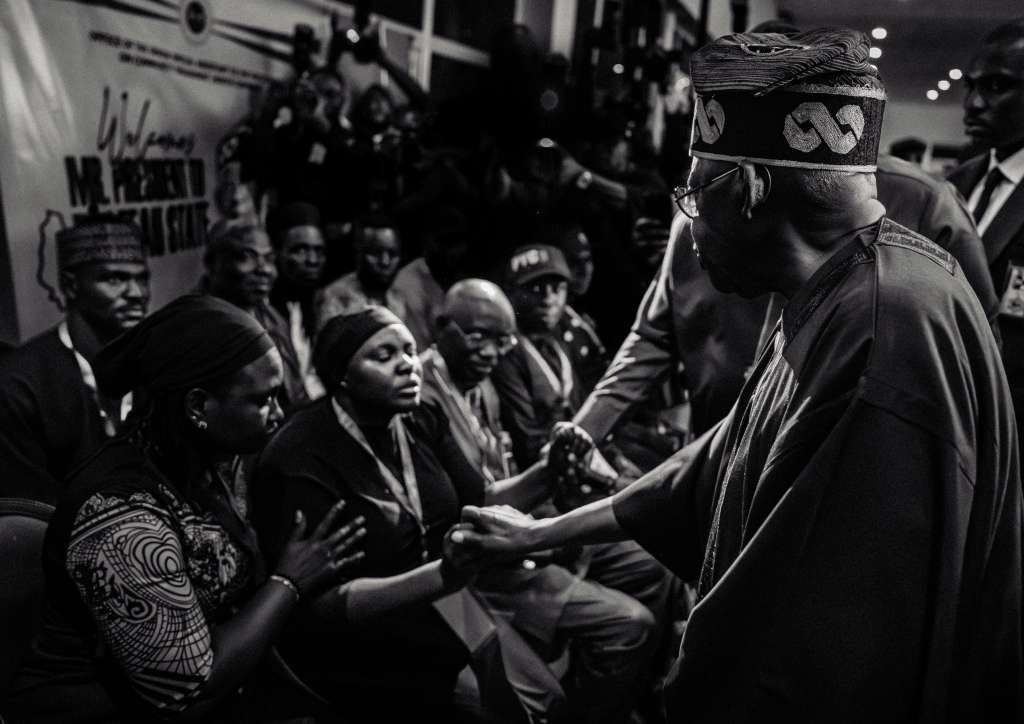
Consequently, representatives of the affected communities were brought to a hall adjoining the airport where the President met with them.
Present at the meeting were key security officials, including the Minister of Defence, the Chief of Army Staff and the Inspector General of Police, who had earlier visited Rukuba – identified as the epicentre of the violence.
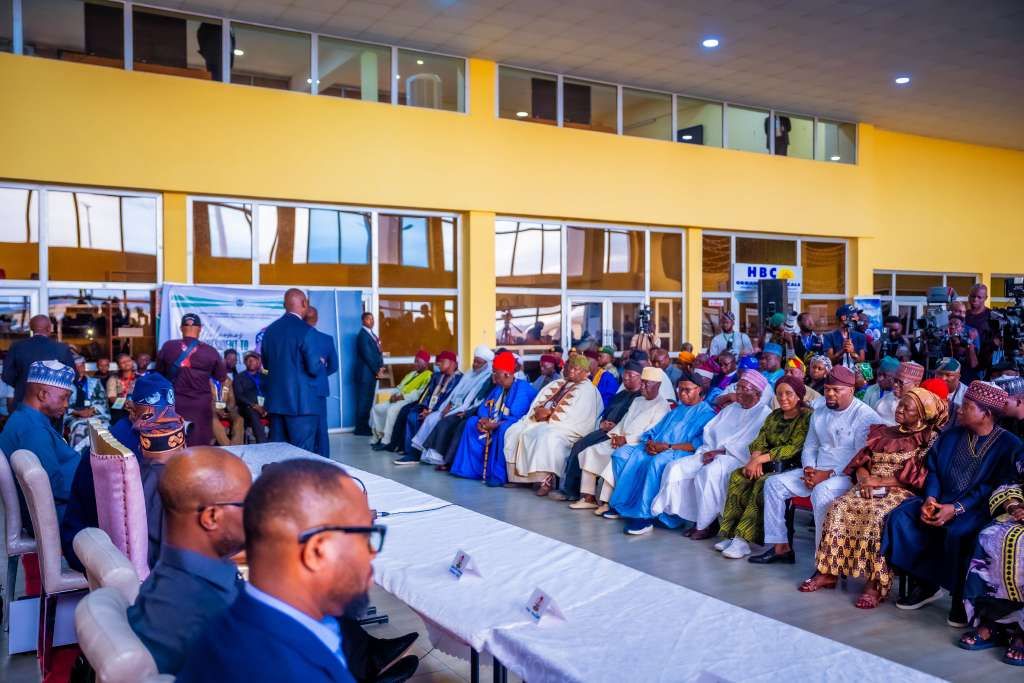
Bola Tinubu meeting with Plateau stakeholders at the airport
According to Onanuga, the President had also deployed a high-level team to the area ahead of his visit to undertake groundwork on security and community engagement in order to stabilise the situation.
Beyond offering condolences to victims, Tinubu used the engagement to consult with community leaders and other stakeholders on ways to address the long-standing conflict that has repeatedly triggered violence in the state.
During the meeting, the President assured residents that the federal government would pursue justice for victims and work to end the cycle of attacks.
Tinubu also announced plans to deploy 5,000 artificial intelligence-enabled surveillance cameras across Jos to strengthen security monitoring and help law enforcement agencies identify and apprehend perpetrators of violence.
In addition, he invited community leaders from Plateau State to Abuja for further dialogue aimed at finding lasting solutions to the recurring crisis.
The presidency noted that the meeting, which was broadcast live, allowed victims and local leaders to directly share their experiences with the President.
“The meeting was solemn and reassuring, boosting residents’ confidence,” the statement said.
Onanuga added that the visit fulfilled its objective of engaging affected communities and demonstrating the federal government’s commitment to restoring peace in the state.
“President Tinubu achieved the purpose of his visit despite the naysayers’ attempts to ridicule it,” he said.
“He dropped an unmistakable message: sustainable peace must be built with the people, not imposed on them.”