

Politics
Short tenure fears stall Tinubu’s envoy postings as India, others hesitate
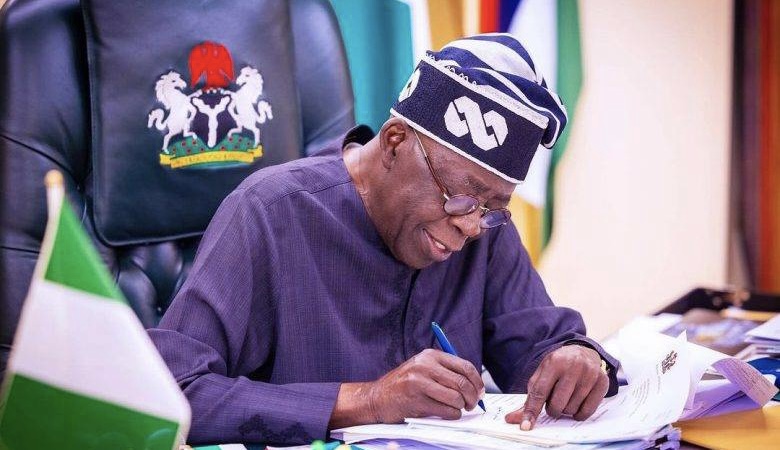
India and several other countries are reportedly declining to accept some of the ambassadors-designate recently posted by President Bola Ahmed Tinubu, citing diplomatic practices that discourage receiving envoys from administrations with less than two years remaining in office.
The development has cast uncertainty over the fate of some of Nigeria’s newly announced diplomatic nominees, whose postings require formal approval from their host countries before they can assume duty.
Business Hallmark had reported that several of the ambassadors-designate were at risk of being rejected by their receiving countries because the current administration has just over a year left in its tenure.
Following last week’s announcement of the postings by the President’s Special Adviser on Information and Strategy, Bayo Onanuga, the newspaper also noted that the announcement did not automatically make the nominees ambassadors, as the Nigerian government would still need to obtain agrément – formal diplomatic approval – from the receiving countries, a process expected to pose challenges in several cases.
Those concerns now appear to be materialising. Senior officials within the Presidency and the foreign service disclosed on Tuesday that India, where career diplomat Ambassador Muhammad Dahiru has been posted, operates a standing policy against accepting ambassadors from governments with less than two years remaining in office.
According to a report by Punch Newspaper quoting sources familiar with the matter, the Asian power is exercising its discretionary authority to decline the Ministry of Foreign Affairs’ request for Dahiru’s accreditation.
The development validates an earlier exclusive by this newspaper which indicated that several of Tinubu’s ambassadorial nominees could encounter resistance from host countries due to the limited time remaining in the administration’s tenure.
Three separate sources familiar with the situation, who spoke on condition of anonymity to Punch because of the sensitive nature of diplomatic negotiations, said the Federal Government had already begun receiving signals from New Delhi and possibly other capitals indicating reluctance to grant agrément.
Agrément is the formal approval granted by a receiving country to accept a diplomat designated by another state and is a prerequisite before an ambassador can officially assume duty.
“They don’t accept an ambassador from an administration that has less than two years in office. So they are already giving us that body language,” a Presidency official said.
The official explained that the hesitation from some countries was more about timing than the individuals nominated.
“Some countries are hesitant to accept certain nominees not because of the individuals themselves but because of time. They already see the Tinubu government as an outgoing administration.
“So their concern is that the President has just about one year left in office. What if he doesn’t win the next election? Another government could come and remove them. Some countries have policies that any ambassador from an administration with less than a year or two remaining will not be accepted, and India is one of them,” the official said.
A second source, a senior foreign service official, confirmed India’s position but expressed optimism that Nigeria might still persuade New Delhi to reconsider.
“I know India has that policy. If you are less than two years to the end of the tenure, there will be difficulties accepting an ambassador. Perhaps we can leverage our relationship with them to scale through that,” the official said.
The source added that some countries might also consider Nigeria’s political outlook before making a final decision.
“Some of them gauge political tides. They may believe this government can still win the next election. If they think the chances of victory for the ruling party are high, they may decide to proceed with the acceptance,” the official said.
He stressed, however, that India remains the only country with a confirmed policy against short-tenure ambassadors, though other nations could adopt similar practices based on their diplomatic conventions.
“India is the only one I can confirm for now. The others will depend on their own diplomatic practices. But India has a standing rule, so we will have to do a lot of convincing,” the official added.
Another official disclosed that although the Ministry of Foreign Affairs had already secured funding for the mandatory induction course for the ambassadors-designate, the timeline for the programme remains uncertain.
“On the training, we don’t know when it will take place yet. But the Foreign Ministry already has the funds to conduct the induction course,” the source said.
President Tinubu approved the posting of 65 ambassadors-designate and high commissioners on Friday, March 6, assigning them to various countries and international organisations including the United Nations.
Among the nominees are former aviation minister Femi Fani-Kayode (Germany), presidential aide Reno Omokri (Mexico), former Katsina State governor Abdulrahman Dambazau (China), and Senator Jimoh Ibrahim, who was nominated as Nigeria’s Permanent Representative to the United Nations.
So far, the Ministry of Foreign Affairs has secured agrément from only two countries — the United Kingdom for High Commissioner-designate Aminu Dalhatu and France for Ambassador Ayodele Oke — leaving the fate of the remaining 63 nominees uncertain.
Nigeria’s next presidential election has been scheduled for January 16, 2027 by the Independent National Electoral Commission, while Tinubu’s first term in office is expected to end in May 2027.
Earlier reports had suggested that several countries might insist that ambassadors serve for a minimum period—often one or two years—linked to the tenure of the appointing administration.
A senior foreign service official had previously told The New Diplomat that the limited timeframe could pose a significant obstacle.
“The problem we have is that most countries will say if an ambassador has less than one or two years left, they may have issues.
“Usually the calculation runs to the end of the current administration. By the time agrément is granted, some of these ambassadors may have only a few months left,” the official said.
He also noted that some envoys might not begin their tours of duty until August 2026, leaving them with barely nine months before the next election.
Under Article 4 of the Vienna Convention on Diplomatic Relations (1961), a receiving state must grant consent before any ambassador can be formally accredited.