

Politics
Saif al-Islam Gaddafi assassinated in Zintan, Libya
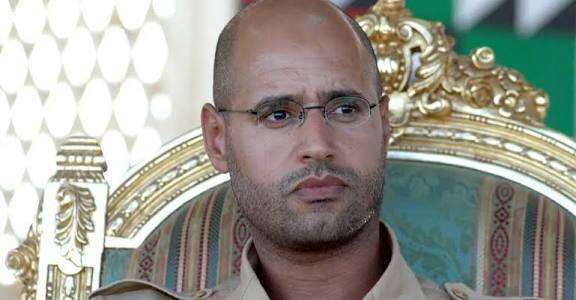
Saif al-Islam Gaddafi, the most prominent son of former Libyan leader Muammar Gaddafi, has been killed in what his associates described as a targeted assassination at his home in Zintan, southwest of Tripoli.
News of his death was announced on Tuesday in separate Facebook posts by his lawyer, Khaled al-Zaidi, and his political adviser, Abdulla Othman. Neither initially provided details.
However, Libyan news outlet Fawasel Media quoted Othman as saying that armed men stormed Gaddafi’s residence in Zintan, about 136 kilometres from the capital, and killed him.
A later statement from Gaddafi’s political team said “four masked men” forced their way into the house, disabled the security cameras, and carried out what they called a “cowardly and treacherous assassination.” According to the statement, Gaddafi confronted the attackers before he was killed.
Khaled al-Mishri, former head of the Tripoli-based High State Council, called for an “urgent and transparent investigation” into the killing.
Although Saif al-Islam Gaddafi never held a formal government position, he was widely regarded as his father’s heir apparent from the early 2000s until the collapse of Muammar Gaddafi’s rule in 2011.
From reformist image to wartime hardliner
Born in Tripoli in June 1972, Saif al-Islam was the second son of Libya’s longtime ruler. Western-educated and fluent in English, he cultivated an image as a reform-minded moderniser and played a key role in efforts to mend Libya’s strained relations with Western nations in the early 2000s.
Aljazeera reported that he led negotiations that resulted in Libya abandoning its weapons of mass destruction programme and facilitated compensation talks for families of victims of the 1988 Pan Am Flight 103 bombing over Lockerbie, Scotland. Educated at the London School of Economics, his academic work focused on civil society and global governance reform.
However, when the 2011 uprising against his father erupted, Saif al-Islam abandoned his reformist posture and became one of the most vocal defenders of the regime’s violent crackdown.
In interviews at the time, he warned that “rivers of blood” would flow and declared that the government would fight “to the last man, woman and bullet.” He described opponents as “rats” and pledged that Libya would be defended at all costs.
His role during the uprising led to accusations of torture and extreme violence. By February 2011, he was placed under United Nations sanctions and banned from international travel. The International Criminal Court (ICC) also issued a warrant for his arrest on charges of crimes against humanity.
Capture, trial, and years in hiding
After opposition forces seized Tripoli in 2011, Saif al-Islam attempted to flee to Niger disguised as a Bedouin tribesman. He was captured on a desert road by the Abu Bakr al-Sadik Brigade militia and taken to Zintan.
In 2015, a Tripoli court sentenced him to death in absentia for alleged war crimes. Following lengthy negotiations between Libyan authorities and the ICC, Libya was granted the right to try him domestically.
He was released in 2017 under a general pardon and remained in Zintan, largely out of public view, reportedly to avoid assassination attempts.
Controversial political comeback
In November 2021, Saif al-Islam resurfaced politically when he declared his intention to run in Libya’s presidential election, a move that triggered outrage among anti-Gaddafi factions across both western and eastern Libya.
He was later disqualified from the race because of his 2015 conviction. Attempts to challenge the ruling were disrupted when armed fighters reportedly blocked access to the court.
The controversy surrounding his candidacy contributed to the breakdown of the already fragile electoral process, plunging Libya back into political stalemate.
His killing now adds another layer of uncertainty to a country that remains deeply divided more than a decade after the fall of his father’s regime.