Politics
Outrage trails N135bn budget for 2027 election legal matters
…as Tinubu’s alleged plots to induce the judiciary spark debate
Olusesan Laoye

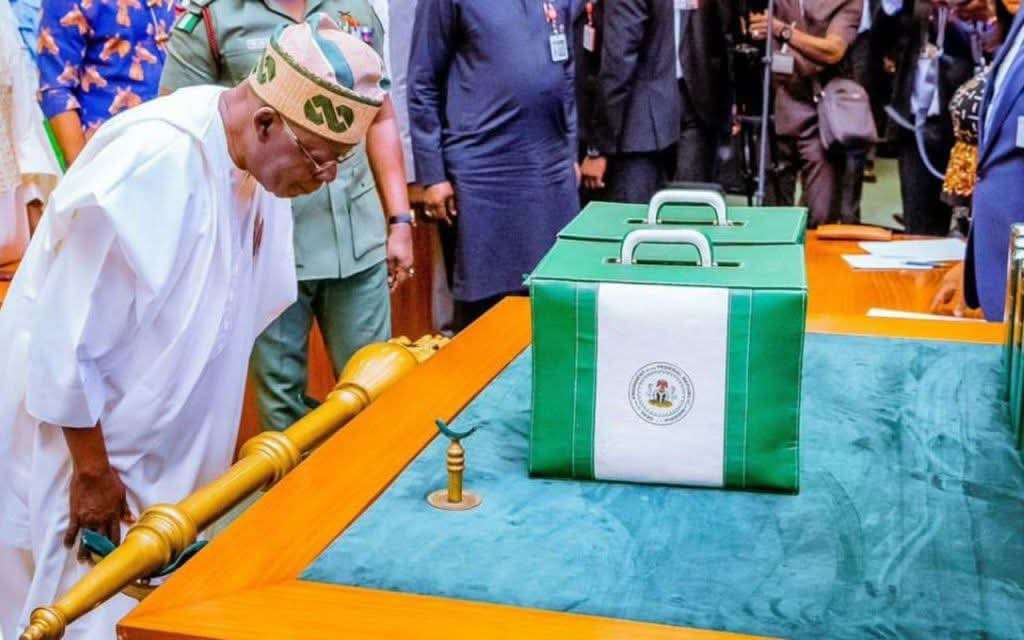
Tongues are wagging as Nigerians begin to question the rationale behind the over N135 billion the Federal Government appropriated for legal matters concerning the 2027 general elections in the 2026 budget, within the total allocation of N3.70 trillion for the Service-Wide Vote.
The allocation, which many believe is unnecessary, has been interpreted by critics as an indication that the present administration of President Bola Ahmed Tinubu is anticipating a high level of electoral irregularities and is preparing to deploy the funds accordingly.
Although post-election litigations in Nigeria are widely seen as inevitable, critics argue that such a huge sum could have been better channelled into education, healthcare, and infrastructure, including hospitals, health centres, and maternity homes. They contend that the allocation raises concerns about the government’s true intentions.
Some critics further described the expenditure as unprecedented in Nigeria’s electoral history, warning that it could become a “slush fund” used to influence judicial outcomes and pay legal fees without proper accountability.
The development has also fueled concerns that the judiciary may ultimately determine the winners of the 2027 elections, rather than the ballot, thereby undermining public confidence in the electoral process.
Judges at play
Since the advent of the APC government, the courts—especially the Court of Appeal—have played increasingly significant roles in determining election outcomes.
Before the formation of the APC, Justice Ayo Salami, then President of the Court of Appeal, was linked to landmark rulings that favoured politicians such as Rauf Aregbesola in Osun State and Adams Oshiomhole in Edo State.
These developments prompted the National Assembly to amend the Constitution, transferring final authority over governorship election disputes to the Supreme Court, although subsequent adjustments have altered that balance.
There have also been allegations over the years regarding judicial influence in electoral matters. For instance, Justice Mary Odili was widely believed to have played a role in the legal processes that led to Rotimi Amaechi emerging as governor despite not being on the ballot.
Similarly, the Supreme Court’s ruling that declared Hope Uzodimma governor of Imo State—despite initially placing fourth—remains one of the most controversial judgments in Nigeria’s electoral history.
Senator’s open confession
During the 2019 elections, a senator reportedly admitted on the floor of the National Assembly to influencing judicial outcomes through personal connections.
Recent elections have also witnessed conflicting rulings from appellate courts, particularly in states like Nasarawa and Plateau, further intensifying debates about judicial consistency and credibility.
Opposition reacts
Opposition figures, including Rauf Aregbesola, have criticised the allocation, describing it as excessive and lacking transparency. He argued that the government should focus on ensuring free, fair, and credible elections rather than preparing for widespread litigation.
However, Ambassador Adejare Bello, a chieftain of the APC and legal practitioner, defended the proposal, noting that litigation costs in Nigeria are high and that a budget remains a proposal subject to approval or adjustment.
“It is not out of place,” he said, adding that election-related cases often involve Senior Advocates of Nigeria, whose services come at significant cost.
Records show that the Independent National Electoral Commission (INEC) has proposed N873.78 billion for the conduct of the 2027 elections, citing rising operational expenses.
Political analyst Moses Olorode argued that the allocation reflects a system overly reliant on the judiciary rather than electoral integrity. He warned that it could encourage politicians to focus more on legal loopholes than on winning votes.
Similarly, Tunde Aromire criticised the proposal as wasteful, especially at a time when Nigerians are grappling with economic hardship and inadequate infrastructure.
The Country Director of ActionAid Nigeria, Andrew Mamedu, also expressed concern, describing the allocation as excessive and indicative of a system preparing for disputes rather than credible elections.
He noted that litigation costs stood at approximately N2.104 billion in 2022 and N3.087 billion in 2023, making the jump to N135 billion a matter of serious concern regarding transparency, planning, and accountability.