Politics
Nnamdi Kanu: Backlash against push for IPOB leader’s pardon

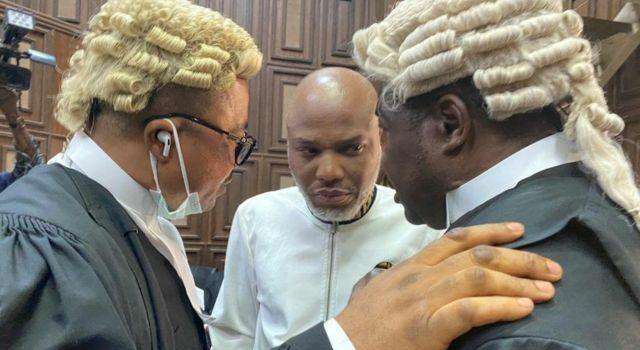
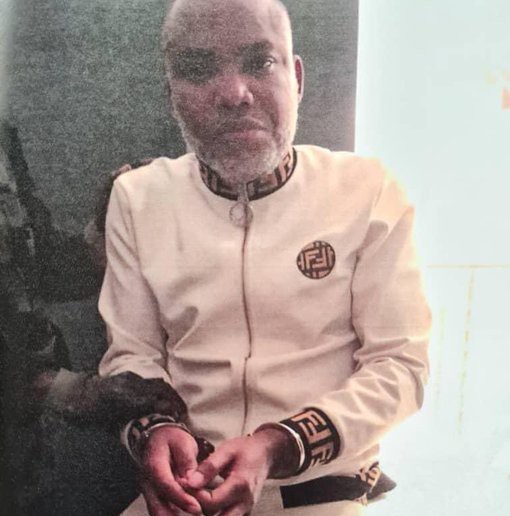
Mazi Nnamdi Kanu, leader of the Indigenous People of Biafra (IPOB), who was sentenced to life imprisonment a fortnight ago after being convicted on all seven counts of terrorism by an Abuja Federal High Court presided over by Justice James Omotosho, was once a figure with widespread sympathy across the South East. Today, that sentiment is fading gradually, even as a campaign for his pardon and release, championed by Governor Alex Otti of his home state, Abia, continues to gather steam.
Kanu’s journey into separatist activism began under Ralph Uwazuruike, founder of the Movement for the Actualisation of the Sovereign State of Biafra (MASSOB), where he served as a director and broadcaster of Radio Biafra. Since the end of the civil war in 1970, from which the Igbo continue to suffer some form of political exclusion and marginalization, Uwazurike in 1999 became the first person to lead another quest for Biafra with the formation of MASSOB, a quest that easily resonated with the populace. Many Igbo diaspora and residents of the South East backed Uwazurike and apparently made cash donations, but waited helplessly as the hope of Biafra he promised faded.
Kanu soon broke away to form his own movement. Though relatively unknown at the time, he gained traction from 2009 when he revived Radio Biafra in London, pushing the message of Biafra independence to audiences back home. By 2012, he had become a familiar voice in the region.
Fame and Violence
Things changed dramatically after his September 2015 appearance at the World Igbo Congress in Los Angeles, where he declared that “we need guns and we need bullets.” And a month later, on 18 October 2015, Kanu was arrested in Lagos by operatives of the Department of State Services (DSS) under then president Muhammadu Buhari. His detention generated massive protests across the South East. Buhari responded with disproportionate force, ordering security agents to clamp down on unarmed demonstrators. By the time Kanu was released in 2017, his fame had grown exponentially, fuelled in no small part by the government’s heavy-handed approach. He became a cult figure, receiving thousands of admirers daily.
But with this adoration came an escalation of inflammatory rhetoric. In Orlu, Imo State, Kanu vowed before a cheering crowd to “go to Abuja and return with Buhari’s head.” He launched a paramilitary outfit known as the Biafra Security Service (BSS), whose members he reviewed in a quasi-military parade. The Buhari government responded with Operation Python Dance, culminating in the September 2017 military raid on his Afaraukwu home. Kanu fled and disappeared, resurfacing in Israel in October 2018.
He resumed his broadcasts from abroad, often with heightened violent rhetoric. In December 2020, he launched the Eastern Security Network (ESN), ostensibly to counter herdsmen attacks. But the outfit quickly morphed into a violent armed group accused of kidnapping, murder, and attacks on security agents. The enforcement of IPOB’s sit-at-home directives – declared after Kanu’s 2021 arrest but later cancelled by the group’s leadership – became a tool of terror. Armed cells in the South East, emboldened by Simon Ekpa, the Finland-based self-acclaimed disciple of Kanu now jailed for terrorism in Finland, continued to violently enforce these orders.
“I was coming to Orlu from Akwa Ibom,” a victim recounted in a widely circulated video. “Gunmen opened fire on the Hilux escorting me and killed the four policemen instantly. They tied me, beat me and took me to their camp. I was there for four days. My wife had already sent them the N13 million ransom they demanded, but they never planned to release me. Each time I asked for water, one of them would urinate in my mouth.”
On Facebook, Chidinma Akpamgbo told the story of her 70-year-old father, abducted and killed in 2023 for speaking against the atrocities in his community. His body was never recovered. “He survived the civil war, lived as a civil servant in Abuja, returned home to retire peacefully, yet he was killed by the same people, who claimed they were fighting for us.”
A region living under fear
The South East was plunged into terror as armed groups loyal to Kanu (or claiming allegiance) targeted civilians, community leaders and security agents. Traditional rulers were assaulted and murdered. Houses of prominent Igbo leaders, including those of former Ohanaeze presidents Nnia Nwodo and the late Professor George Obiozor, were attacked and burnt.
However, some of these atrocities were allegedly perpetrated by the infamous “unknown gunmen,” who were foreign people sponsored by security agencies to terrorize the region in order to cause panic and demonize IPOB. Gov. Hope Uzodimma had insisted that the violent assault on Owerri Correctional center were not from the zone as they did not speak Ibo language.
Communities in Orlu, Okigwe, Ihiala and parts of Ebonyi became no-go areas. Markets and schools shut down for years. Many fled their ancestral homes
Lawyer Chidi Anthony points out that the South East was “the most peaceful geopolitical zone in Nigeria” in 2016 while Kanu was still in custody. “The escalation coincided with his release and his violent rhetoric. Jailing him won’t solve everything, but it is, at least, justice for the thousands whose lives were destroyed.”
All About Money
Another analyst argued that Operation Python Dance – though excessive – was triggered by Kanu’s formation of BSS and increasingly militant posture. “Kanu didn’t latch on to poverty or marginalization. He broke from Uwazuruike because he wanted control, and donations. The Biafra movement is a million-dollar enterprise.”
Journalist Simon Kolawole, in a recent article, argued that Kanu made two fatal mistakes: attacking other regions with his rhetoric, and unleashing or encouraging violence within Igbo communities. “In the end, he lost sympathy both within and outside the region.”
U.S-based academic Maazi Ogbonnaya Okoro argues that part of the South East’s political setbacks stem from poor strategic decisions encouraged by separatist movements. He cites the 2006 census boycott championed by MASSOB, which led to the South East being classified as a minority region with only 18% of the national population, affecting budget allocations and political visibility.
“When we blame the Nigerian state for marginalization, we must also interrogate the ways we sabotage ourselves,” he said. “The sit-at-home madness crippled our economy, not Abuja’s.”
He argued that post-war Igbo leaders like Ojukwu advocated integration into Nigeria’s political framework, not self-isolating actions that weaken the region’s bargaining power. “What IPOB offered was not a strategy but a cycle of violence, fear and emotional blackmail.”
As the region reassesses the heavy cost of the last decade – lost lives, destroyed communities, crippled businesses, and a battered regional image – more voices are beginning to challenge the narrative that once portrayed Kanu as a freedom fighter.
His supporters still exist, and in large numbers too, and the campaign for his pardon continues. But for many, especially those who lost loved ones, livelihoods and homes, the scars are too deep. A region that once prided itself on republicanism, debate and democratic dissent is now reckoning with the consequences of a movement that preached liberation but delivered terror.
Gov. Otti’s push for release
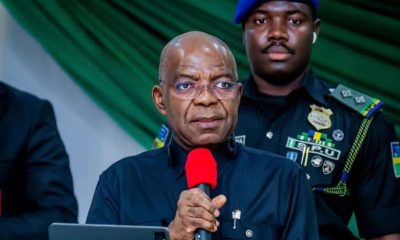
Meanwhile, amid the growing debate over Kanu’s conviction and life sentence, Abia State governor, Dr. Alex Otti, has emerged as the most determined political figure pushing for a negotiated settlement and the IPOB leader’s release. Business Hallmark gathered he is already making a headway. Otti, who has maintained since 2023 that the crisis requires dialogue rather than force, renewed his efforts in recent weeks with a series of high-level engagements.
On November 30, 2025, the governor visited Kanu at the Sokoto Correctional Centre, assuring him that discussions with the Federal Government were ongoing and that agreed pathways toward a political solution remained active despite the court judgment. Days after the visit, Otti met President Bola Tinubu at the Presidential Villa, a meeting he later described as “positive and fruitful,” insisting it was solely focused on securing Kanu’s release.
Otti had earlier issued a statement expressing shock over the life sentence and reiterating that the “avoidable” mishandling of IPOB in its early stages helped fuel the current crisis. He stressed that leadership demands restraint, emotional intelligence and constructive engagement.
“We will continue on the agreed strategy until his freedom is secured,” the governor said, urging Ndi Igbo to remain calm and resist political manipulation as he pursues a diplomatic, non-violent resolution to the long-running conflict.