Opinion
Nigeria’s missteps in Benin coup attempt
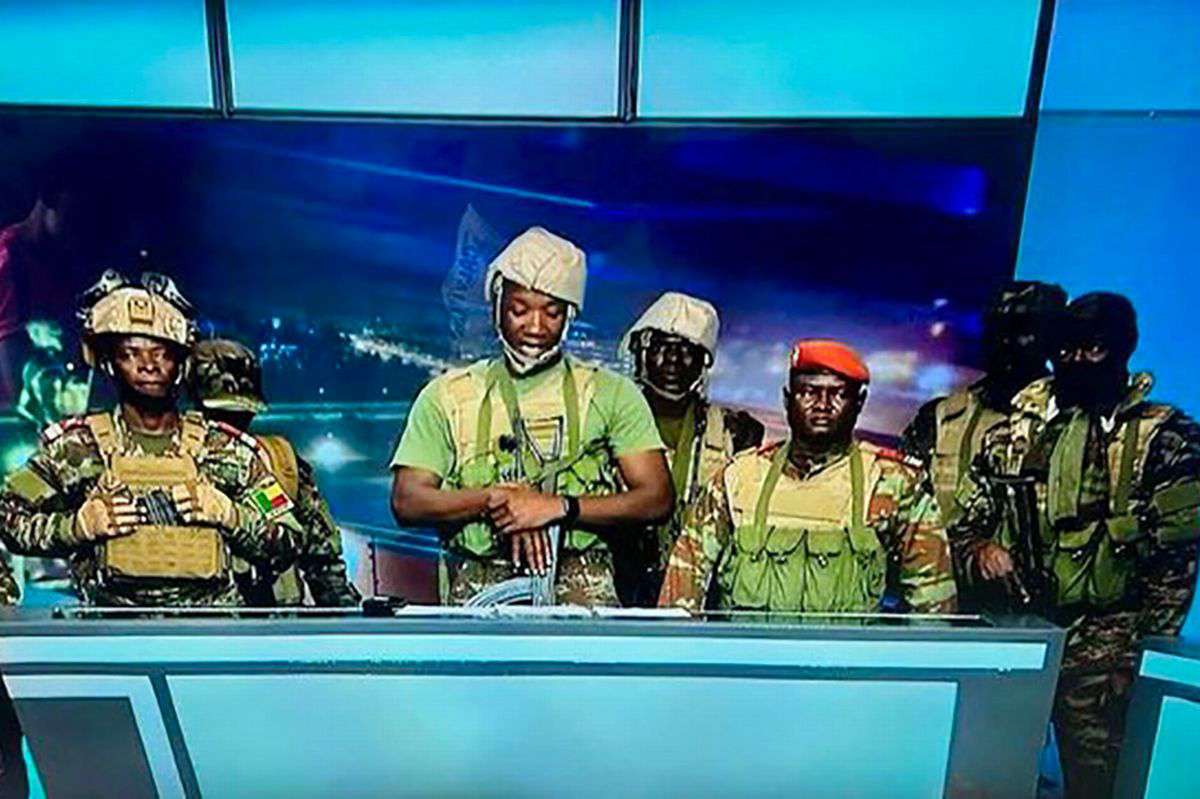
Nigeria’s intervention to quell the December 7, 2025, coup attempt in Benin Republic may have saved the unpopular regime from joining the class of infamous political leaders, but it has also created a moral burden for Nigeria and our pretension in democratic practice. On that faithful day, a group of soldiers in Benin briefly attempted a military takeover under the banner of the so-called “Military Committee for Refoundation.”
The mutineers seized the national TV station and declared the dissolution of state institutions, suspending the constitution. They named Lt.-Col. Pascal Tigri as head of a new military regime. But Nigeria’s action to save President Patrice Talon has denied the people to determined who governs them. Although military rule is undemocratic, but democracy loses its relevance and appeal when the people can no longer change their leaders.
The spontaneous demonstration of public support and jubilation by the people clearly suggests that the action had popular approval. What is the moral high ground of President Tinubu to stop the coup by their soldiers against the interest of the people? Does a leader, who stole the mandate of the people have any justification to quell attempt to remove another president who brazenly tramples on the constitution and the people’s right to elect their leaders?
So, the question is, why should Nigeria intervene to crush the coup when the people supported it? This is the contradiction President Tinubu’s involvement has created. By his action, Tinubu has presented himself as a hypocrite, who only sees the speck in others eyes when there’s a log in his eyes. As a leader of the largest democracy in Africa, Tinubu didn’t see it fit to repent of his own fault and also condemn other leaders desecrating democracy across Africa.
What is striking is that Benin, widely considered among West Africa’s more stable democracies since the 1990s, suddenly experienced a coup attempt. The event shattered complacency and exposed the fragile underbelly of institutional democracy, especially in a pre-election context where political tensions were already high due to controversial constitutional reforms (including the establishment of a Senate and extension of presidential term limits).
Beyond the domestic shock, the coup attempt triggered a broader regional alarm — underscoring how one country’s instability can rapidly threaten sub-regional order in West Africa.
Nigeria’s Swift Intervention
Within hours of the coup attempt, Nigeria, acting on two requests from the the embattled Talon, according to Mr. Bayo Onanuga, presidential spokesman dispatched fighter jets and mobilized troops to assist the Beninois government, under the aegis of ECOWAS’s standby force. However, there was insinuation that Nigeria acted at the behest of France, whose fortunes in West Africa have diminished in recent time.
According to the Nigerian military, the air intervention included precision air-strikes against mutinous positions and armored assets — yet reportedly avoided catastrophic civilian casualties. The actions helped to immobilize rebel elements and secure key locations (TV station, military camp). However, Nigeria’s action is at variance with the tentatively indecisive fight against insecurity in the country.
Analysts suggest Nigeria’s rapid response was driven less by solidarity with Benin than by existential security concerns: a military regime under a fragile junta in Benin could have opened a backdoor for extremist spillover from the Sahel or allowed criminal networks to exploit porous borders, especially coming after a rumored coup attempt in Nigeria itself. For Nigeria — Africa’s most populous nation and democracy — instability next door is never benign.
But what about Niger Republic? It shows such a contradiction and policy inconsistency, as the move by President Tinubu against the coup in Niger in 2023, was effectively aborted by a strong Fulani lobby because of its cultural affinity across the borders, whom late president Buhari had referred to as “our relatives across the borders.” It is a case of two similar situations and different policy outcomes.
Symbolically and politically, Nigeria may have used the moment to assert regional primacy by reaffirming its capacity and willingness to act. At the same time, the intervention revived questions about sub-regional sovereignty, overreach, and the long-term efficacy of such interventions in an environment where coups are proliferating.
Crisis of governance and inevitability of coups
The Benin affair cannot be seen in isolation. Rather, it fits into a broader pattern of governance crises across West and Sahel Africa. In recent years, five countries have experienced coups or attempted takeovers, often justified by military elites citing poor governance, insecurity, or alleged corruption.
In many of these cases, democratic institutions suffer from chronic weakness: compromised judiciary, compromised electoral rules, hyper-personalized politics, and elitist political deals. Constitutional tweaks – term-extension, shifting election rules, creation of new institutions – have further deepened mistrust and widened the gap between elite politics and popular legitimacy.
That institutional fragility creates openings for military opportunism, especially when combined with security vacuums, economic hardship, and popular disillusionment. In Benin’s case, critics have pointed out that the reforms ahead of the 2026 election were viewed by many as a power-grab by the incumbent ruling coalition — a perception that likely fuelled the coup attempt.
Furthermore, the recurring coups — in this broader regional context — have eroded confidence in governance. As one commentator put it: these are seldom genuine popular uprisings; rather, they are elite-driven attempts to recalibrate institutional arrangements under military dominance.
Left unchecked, this pattern not only weakens democracy; it risks normalizing military intervention as a default mechanism for regime change, undermining long-term stability and the social contract between states and citizens. But the cause of such instability lies with the political class who foreclose democratic norms and practices in pursuit of self perpetuation by leaders.
Enter Burkina Faso
What can explain the current debacle Nigeria finds itself with Burkina Faso, one of the estranged former ECOWAS members but nemesis? Just as the smoke began to clear in Benin, a new flashpoint emerged. On 8 December 2025, a NAF C-130 transport aircraft carrying 11 Nigerian military personnel was forced to land in Bobo-Dioulasso, Burkina Faso for straying into itself airspace — reportedly after a technical issue en route to Portugal.
However, the ruling military authorities of Burkina Faso — part of the breakaway bloc Alliance of Sahel States (AES), alongside Mali and Niger — immediately declared the landing unauthorized and a violation of their airspace sovereignty. The AES described it as an “unfriendly act,” detaining the 11 Nigerian personnel and seizing the aircraft.
The bloc placed its air-defense and anti-air systems on maximum alert, warning that future violations would be “neutralized.” In trying to save another leader in power, Nigeria has suddenly found itself in a political quagmire, which resolution is uncertain given the animosity existing between it and the AES.
From a diplomatic and security standpoint, the incident significantly raises the stakes. Not only does it strain already tense relations between Nigeria and the AES member states, but it also marks a formal repudiation of Nigeria’s regional role — especially at a time when Nigeria is playing hardball in Benin.
For Burkina Faso and its AES partners, the seizure conveys a clear message: Nigeria’s interventionist stance will no longer go unchallenged. It suggests a shift in the regional balance — from ECOWAS-led cooperative security frameworks to bloc rivalry underpinned by competing security doctrines and sovereignty claims.
With France, which used to have considerably leverage over these countries, now out of favor with them, Nigeria has found itself holding the short end of the stick, and would have to eat the humble pie to retain its strong position in the subregion. Nigeria has become the enemy of their friend, and therefore, their enemy.