Business
Nigeria’s economic rebound gains traction amid reforms, but questions remain – Uche Orji

By Okey Onyenweaku
By all visible macroeconomic signals, Nigeria is staging one of its most consequential economic turnarounds in decades ,a verdict delivered with authority by one of the country’s foremost investment strategists.
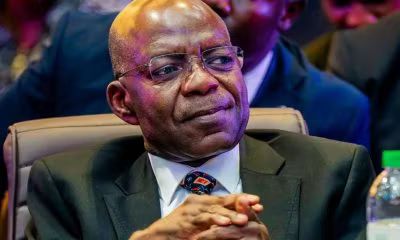
Uche Orji, former Managing Director and Chief Executive Officer of the Nigeria Sovereign Investment Authority (NSIA), made this assessment at the Abia State Think Tank Conference 2026, held at Bola Memorial Hall, Mobolaji Bank Anthony Way, Ikeja, Lagos.
In his keynote address titled “The Place of Abia State in Nigeria’s Economic Resurgence,” Orji explained that after years defined by structural imbalances, fiscal strain, and policy inconsistencies, the country was now charting a new trajectory , one shaped by sweeping reforms under President Bola Ahmed Tinubu and reinforced by improving investor sentiment.
Yet beneath the headline numbers lies a more nuanced story: one of recovery, yes, but also of uneven impact, fragile gains, and critical execution risks.
Strong Numbers, Stronger Caveats
Nigeria’s recent economic performance is impressive.
Real GDP growth has accelerated steadily, reaching 3.84 per cent in 2024 and climbing further to over 4 per cent in 2025 — the strongest expansion outside post-pandemic rebound years, and a signal of renewed momentum in Africa’s largest economy.
Equally notable is the turnaround in external metrics. Foreign reserves have climbed to over $50 billion, the highest level in more than a decade, while foreign direct investment has surged sharply. In one striking quarter — between Q2 and Q3 of 2025 — FDI inflows jumped eightfold, reflecting renewed global confidence in Nigeria’s policy direction.
The capital markets have echoed this optimism. The Nigerian Stock Exchange delivered returns exceeding 48 per cent in 2025, outperforming most African peers and placing Nigeria firmly back on the radar of frontier and emerging-market investors.
The Reform Dividend — and Its Cost
At the core of this resurgence are reforms long considered politically untouchable. The removal of the fuel subsidy, once a perennial drain on public finances ,freed up hundreds of billions in fiscal space. Equally transformative was the unification of Nigeria’s multiple exchange rate windows, which had previously distorted markets and discouraged investment.
Together, these measures signalled a decisive shift toward market-oriented policy, something international investors had long demanded.
But reform comes at a cost.
The immediate aftermath of these policy changes triggered significant hardship for ordinary Nigerians. Inflation surged sharply in the early phases, driven by higher fuel costs and currency adjustments. While inflation has since moderated to below 15 per cent, price pressures remain elevated in real terms, particularly for food and transport.
For households, the lived experience of the reforms has been far more complex than the macroeconomic narrative suggests.
“This is a classic case of short-term pain for long-term gain,” Orji told the conference. “The fundamentals are improving, but the transmission to everyday Nigerians will take time, and that gap is where the real policy challenge lies.”
This tension , between macro-level progress and micro-level strain, defines Nigeria’s current economic moment.
Fiscal and Monetary Stabilisation
Fiscal indicators, meanwhile, are beginning to show signs of stabilisation. Nigeria’s debt-service-to-revenue ratio, which had approached a perilous 98 per cent, is gradually easing as revenues improve and subsidy burdens decline. Public debt has also recorded its first meaningful reduction in over a decade, suggesting that fiscal consolidation efforts are gaining traction.
Still, analysts caution that sustainability will depend on continued discipline, particularly in revenue generation and expenditure management.
Another bright spot is monetary policy. The Central Bank’s return to more orthodox frameworks , focused on price stability and transparency ,has helped restore a measure of credibility. The alignment between fiscal and monetary authorities, often lacking in the past, appears stronger, providing a more coherent policy environment.
Risks on the Horizon
Yet risks remain.
Nigeria’s economy continues to be highly sensitive to external shocks, particularly oil price volatility. While efforts to diversify the economy are ongoing, oil revenues still play a central role in fiscal stability and foreign exchange earnings.
Moreover, structural challenges ,ranging from infrastructure deficits to security concerns, continue to weigh on productivity and investment across key sectors.
Inclusion Remains the Unfinished Business
Perhaps the most critical test lies ahead: translating macroeconomic gains into broad-based, inclusive growth.
So far, the benefits of the rebound have been unevenly distributed. Urban financial markets and large corporates have responded swiftly to improved conditions, but small and medium-sized enterprises, arguably the backbone of Nigeria’s economy , are still grappling with high borrowing costs, limited access to credit, and persistent operational challenges.
Unemployment and underemployment remain pressing concerns, particularly among Nigeria’s youth population. Without significant job creation, the political and social sustainability of the reforms could come under pressure.
The Subnational Imperative
This is where subnational performance becomes crucial.
States that align with the federal reform agenda — by improving governance, investing in infrastructure, and creating enabling environments for business — are likely to emerge as key drivers of Nigeria’s next growth phase. Increasingly, investors are looking beyond Abuja to identify regional growth hubs with credible leadership and clear economic strategies.
In this context, the evolving role of states such as Abia, Lagos, and others is becoming central to the broader economic narrative.
Cautiously Optimistic
President Tinubu has declared 2026 as the beginning of a more robust phase of Nigeria’s economic expansion. The data suggests this optimism is not unfounded. Key indicators are trending in the right direction, and the structural reforms , while painful , have begun to yield tangible results.
“Investors are no longer asking whether Nigeria is reforming,” Orji said. “They are asking how fast and how deep those reforms will go. That shift in perception is critical, because capital ultimately follows credibility.”
But the path forward is far from guaranteed.
Execution will be everything. Maintaining policy consistency, deepening reforms, strengthening institutions, and ensuring that growth translates into real improvements in living standards will determine whether Nigeria’s current resurgence becomes a sustained transformation ,or merely another cyclical upswing.
For now, the verdict is cautiously optimistic.
Nigeria is no longer standing still. It is movin, deliberately, if unevenly , toward a more stable and competitive economic future.