Politics
Nigeria has “virtually destroyed” ECOWAS, lost regional influence – Obasanjo
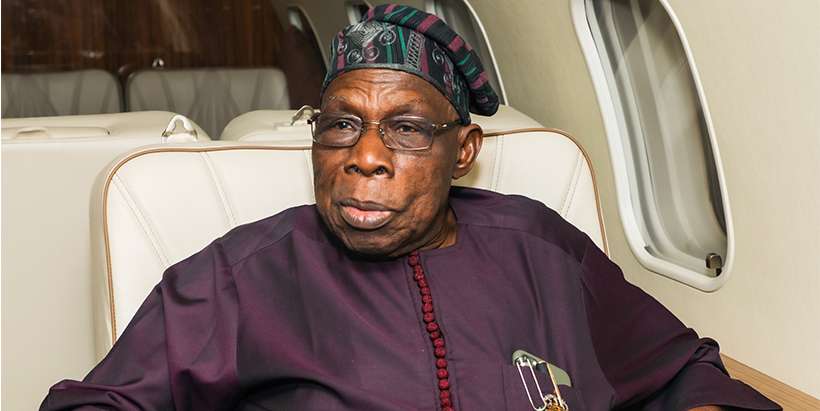
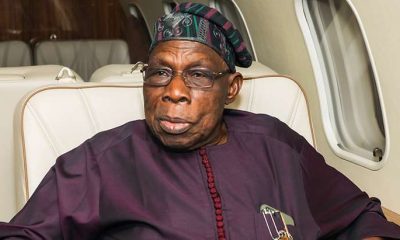
Former President Olusegun Obasanjo has issued a stark warning about Nigeria’s diminishing leadership in West Africa, declaring that the country has “virtually destroyed” the Economic Community of West African States (ECOWAS), a regional body he said took half a century to build.
Speaking during a televised interview on Sony Irabor Live, Obasanjo said Nigeria is no longer playing a decisive role in shaping events within the sub-region, a sharp contrast to its historic position as ECOWAS’ driving force.

“Today Nigeria is not at the table. What is happening that Nigeria is impacting or influencing?” he asked. “Look at the way we have handled ECOWAS. Something that took us 50 years to build, overnight we mishandled it. And we have virtually destroyed it.”
His comments reflect growing concern over internal divisions within ECOWAS and the bloc’s struggle to assert authority amid political and security crises across West Africa.
Niger, alongside Mali and Burkina Faso, officially completed its withdrawal from ECOWAS on January 29, 2025, following a year-long tension initiated by military coups.
Obasanjo linked Nigeria’s weakening regional influence to what he described as persistent governance failures, particularly in the management of critical national assets. He reiterated his long-standing criticism of the country’s state-owned refineries under the Nigerian National Petroleum Company Limited, insisting they are unlikely to become functional despite repeated rehabilitation efforts.
“One of the lessons that I learnt is that PPP works,” he said, citing the success of the Nigeria Liquefied Natural Gas as a model where private sector participation has delivered results. “The NNPC has refineries, and I said to people that it will never work.”
He revealed that during his presidency, he made efforts to bring in Shell plc to manage Nigeria’s refineries, but the multinational firm declined. According to him, Shell cited low profitability in downstream operations, inadequate maintenance, and widespread corruption as key deterrents.
“They said our refineries are too small… not well maintained… and there’s too much corruption around them,” Obasanjo said.
The former president also revisited the controversial reversal of a refinery sale deal by his successor, Umaru Musa Yar’Adua, involving a consortium led by Aliko Dangote.
“Aliko came and offered $750 million to take two of the refineries… they paid,” he said. “But after I left, NNPC persuaded my successor to reverse it. I warned that eventually, those refineries would be worth scrap.”
He noted that billions of dollars have since been spent on the refineries with minimal results, arguing that the funds could have been better invested in building modern facilities.
Reflecting on Nigeria’s past, Obasanjo highlighted the country’s once-strong role in supporting African nations during liberation struggles. He recalled assistance provided under the regime of Murtala Mohammed.
“During Murtala’s regime, we gave Angola $20 million… Nigerian Airways helped them have access to the outside world. We did the same with South Africa,” he said.
He also spoke on the 1976 assassination of Mohammed, suggesting that inadequate security contributed to the tragedy.
“Murtala would not have been killed the way he was killed, if not for our naivety. He was driving himself around Lagos as Head of State. We believed we were doing what is right,” he added.
On regional security, Obasanjo warned of the long-term fallout from the collapse of Libya following the death of Muammar Gaddafi.
“Gaddafi recruited mercenaries from everywhere, including from Nigeria. When he was killed, many of them returned home with their weapons,” he said.