Politics
NDC: Strongmen take over ownership of political parties
…as APC disorganize existing parties, leaving opposition leaders scampering for viable platform
There are strong indications, that Nigeria’s political landscape is now turning to the colonial, and independence eras, when powerful men, communities and ethnic nationalities, controlled their political parties, according to the dictates of their environments, needs and ethnics considerations.
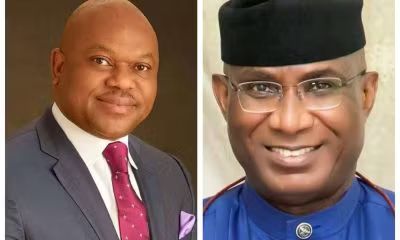
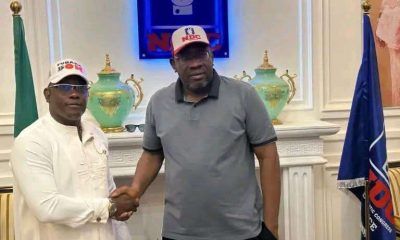
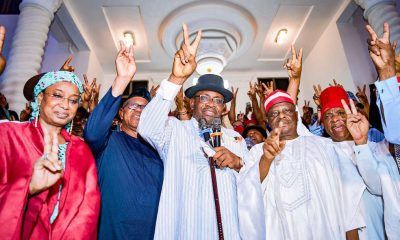
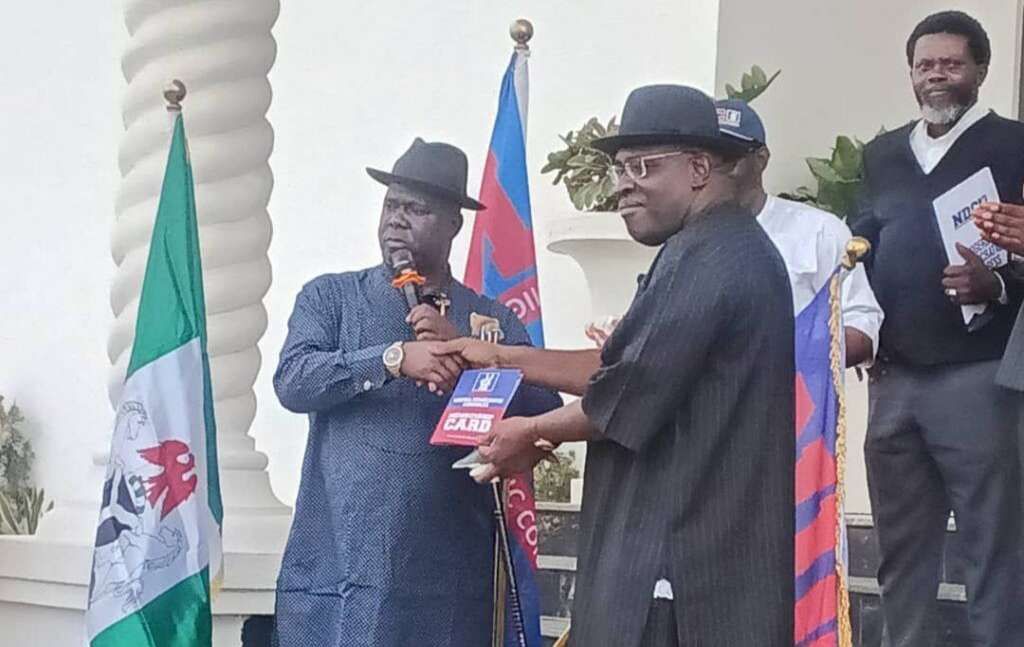
The recent formations of the new political parties especially, the African Democratic Congress (ADC) and the just registered two political parties, Nigeria Democratic Congress (NDC,) which the former Bayelsa State governor, Senator Henry Seriake Dickson, just joined, where he intend to be the Lord, and the Democratic Leadership Alliance (NDLA), have shown that with time, winning elections in a broad based political parties, with national outlooks, may not count anymore.
Nigeria is gradually moving backwards to the beginning of democratic process and procedures, when elections are won, not only through the platform of a particular party, but through personalities.
That is why some people are now still clamouring, for Nigeria, to adopt independent candidacy in our constitution and the electoral Act, as it was the practice in the first Republic, when people won elections as independent candidates based on their personalities in their localities.
Retreat of National Parties
The Independent candidacy could have neutralized the dominance and excesses of the National parties, which Nigerians are either through crook or foul means, are compelled to join had failed several times in the National Assembly in recent times, due to selfishness and ability of the majority to dominate others by the powerful people and the money bags in them.
Those, who controls Nigeria’s present day politics in the name of national parties, are money bags and that is why they no longer believe in ideology or party supremacy.
The only period when their backs would have been broken, was during the Presidency of the late Dr. Umaru Yar’Adua, when he set up the Electoral Reform Committee in 2007, led by Justice Muhammed Uwais, who was charged with the goal of identifying solutions for Nigeria’s history of electoral crisis.
When the panel eventually released its report, it recommended the need for independent candidates in “all future elections”.
Also before then, a similar commission, the National Political Reform Conference, inaugurated by former President Olusegun Obasanjo in 2005 also proposed independent candidates for those popular in their respective areas, who could contest elections independently, as councillors, local government chairmen, the state Assemblies and the National Assembly.
The two bodies, also believed that this would curb the activities of money bags, who may want to use their influence over persons, love and popular amongst their people, but do not have money to induce the people, who would have naturally and genuinely wanted to vote for them.
The proponents further argued that such concept is an important universal democratic identity, which further promotes freedom and broad participation.
Even former military head of state, Abdulsalam Abubakar, strongly believed that Nigeria needs to include the clause of Independent candidacy in the constitution.
According to him, “watching our political evolution and my observation of what obtains elsewhere, convinced me that we need independent candidates for all political positions.”
Failed Reform
To Justice Uwais, the panel consulted widely, including papers from experts in Britain and America. “Those comments are not unexpected, given Nigeria’s penchant for emulating any scheme with U.S colorations and the panel pointed out that independent party concept was good for Nigeria in view of many new laws being introduced to the politics of Nigeria, which on many occasions, always prevent credible and those who wants to genuinely swerve their people from contesting.
What is a major concern now in Nigeria, is that those who could have gone solo to contest elections, despite the fact that we had political parties back then as we had it in 1923, 1959,and 1966, are now ganging up, with a National political parties, which are not doing any good for the progress and development of Democracy in Nigeria.
Despite the fact that Nigeria is currently operating multiparty system, the ways Nigerian politicians especially, those bigwigs, always flock to the party in power, indicates that they are doing it for their selfish interests, and not primarily or majorly to serve the people.
Even when you look at the political scenarios, over the years, people elected to serve under a particular party, would abandon that party, when they realised that it may not be viable to win the tickets of that party, they would eventually move to a lesser popular ones, to finance them and become lords, just to fulfill their aspirations.
The Strong man Politics
Such is the present case of of the governor of Osun State, Senator Ademola Adeleke, who has now left the troubled Peoples Democratic Party (PDP), for the Accord Party, for his second term ambition.
Those known to have done the same in the past to become lords in lesser political parties are, Oba Rashidi Adewolu Ladoja, the present Olubadan of Ibadan, who when he was deprived of collecting the ticket of the PDP in Oyo State, moved to the Accord party, to contest then.
Though he did not win the governorship election, he was able to garner majority in the State House of Assembly and won many seats at the National Assembly, which gave him the audacity to dictate the pace politically in Oyo State as the then Governor, late Senator Abiola Ajimobi, had no choice, but to bow to him, because his party controlled the house.
The same with the present Minister of Power, Chief Adebayo Adelabu, who left the APC for the same Accord party and became a lord during the 2023 elections.
One should not also forget the situation in 2023 Labour Party presidential candidate, Mr. Peter Obi, who left the PDP for the Labour Party, where he was lord and made waves in that election, which he almost won.
People like Omoyele Sowore too, is a lord and leader in his political party of the African Action Congress (AAC), which he formed since 2015 and he is still calling the shots there, despite the fact that his party never won a single seat in all the elections, it has participated in since formation, but he has been using the party to leverage on his popularity, activism, and criticisms of any government in power at the Federal level. His party has even now become a means of advocacy for the less privileged and the down trodden.
There are so many instances of the same scenarios, across the country and that is why some political analysts are saying that there should be room for regional parties to strive.
It was argued that but for the quest for the rush to belong to a National Party, especially, the ones in government, APGA by now should have been a foremost party in the South Eastern region, if the politicians there had allowed it to stay and stay patiently with it as a platform for national politics. Action Congress of Nigeria at a point had only Lagos State before it joined the merger of national party
Failure of Igbo, APGA
At the time the party was formed by the late Ikemba of Nnewi, Chief Emeka Odumegwu Ojukwu, it was solid in the East, but rather than allow it to be a dominant and formidable political party in this current political dispensation, which started in 1999, greed and the quest to be at the mainstream, killed that initiative.
Former Abia state governor, senator Orji Uzor Kalu, in 2007 after a falling out with the PDP under which he ruled for two term over succession, he formed the Progressive People Party, PPP and won two states, Abia and Imo. But rather than consolidate on it, he decamped back to PDP and lost a golden opportunity.
The same happened to the CPC of late President Muhammadu Buhari, before the merger won governor of Nasarawa with several assembly members at the National Assembly the AC, later the ACN in the South West, before they all fused into one, to form the APC.
It was also argued that what is happening in Kano State, where the NNPP led by Engineer Rabiu Kwankanso as the leader and in control, with the Governor who he installed now in APC, is a pointer to the fact that the governor no longer wants to be under the control of a leader, but to be a lord on his own and to become the leader of the APC in Kano State, based on the constitution of the party.
Multiparty Truly Indeed
Some of those who reacted to the formation of new political parties in Nigeria believed that multiparty system is the best for democracy but frowned at the ways those who constitute the leadership of the parties are parading themselves, as demi-gods, wanting to undermine the party at the centre, which was not what was experienced in the first and second Republics, when parties that lost elections would wait for the next election to ensure either through self or coalition to win the next election.
They pointed out that rather than engaging in campaigns of calumny, they should engage in constructive criticisms to help the government in power and the country. They as well, always used that opportunity to sell themselves to the electorate for the next election.
A prominent legal luminary, Chief Niyi Akintola, during an interview with Business Hallmark, posited that there was nothing wrong with parties springing up any where even in a community, but must be formed in a way to foster unity, and for the development of democracy and Nigeria at large.
He also referred to the period of the Action Group AG, led by Chief Obafemi Awolowo, the NCNC, led by Dr. Nnamdi Azikiwe and Sir Ahmadu Bello of the NPC, when they based what they do on ideology and engaged in constructive activities to help the country.
He said that despite the fact that their political parties are regional based, they did not see themselves as lords but as leaders who were there to serve their people.
He said party supremacy was key in their time, as no individual was bigger than the party, unlike now when money dictates who controls the parties.
In his own comment, a governorship aspirant, with the APC in Oyo State, Prince Asatola Asanike, said it is now time to bring back party supremacy in the affairs of political parties, if democracy must move forward in Nigeria. He also frowned at the ways political office holders see themselves as lords above others, in their respective political parties.
It will be recalled that the first election in Nigeria in 1923 involved political parties of many ethnic Nationalities