Politics
Gowon reopens anti-Igbo story about January 15 coup, contradicting IBB, Obasanjo for political purpose
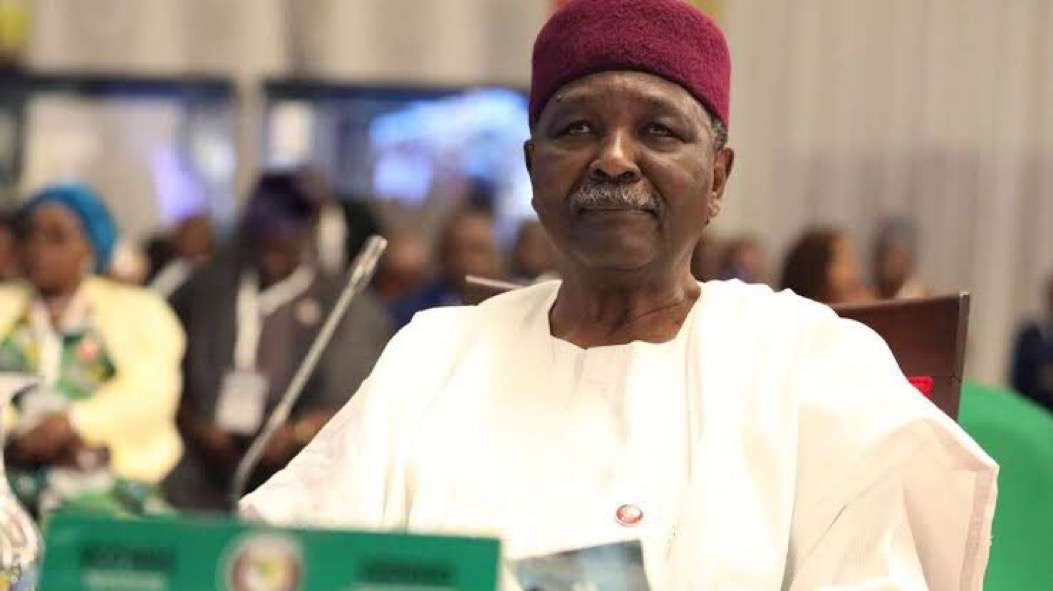
By Adebayo Obajemu
General Yakubu Gowon, Nigeria’s former military head of state from 1966 to 1975, who presided over the then young nation at her most turbulent period, has finally released his long awaited memoir – autobiography.

The memoir’s account of the January 15, 1966 coup, and the tragic counter coup as well as the civil war have run counter to the accounts of other significant participants in the tragic events, especially the accounts of Generals Yakubu Theophilus Danjuma and Ibrahim Babangida.
The primary contradictions are built around the true motive of the January 15 coup, who masterminded the July 1966 “revenge” coup, and the blame for the civil war.
The prevailing narrative around January 15, 1966 coup, which has become an orthodoxy is that the military uprising was an Igbo coup..
Only recently, General Danjuma in an interview conducted by podcaster Edmund Obilo, noted that “Remember, Igbos did the killings that took place in January (1966).
“They killed non-Igbo senior Army officers. Only one Igbo officer was killed but Igbo wiped out almost all the senior non–Igbo officers. We rounded up all the people, who did the killings because we all helped Ironsi to abort the January coup. They were rounded up and put in jail, where they were being paid their full salary.
They had television, they had everything there despite being detained and nobody was talking about court marshalling them. Instead, the newspapers including the Daily Times wrote to the effect that the boys being detained were national heroes. National heroes because they killed corrupt politicians! He didn’t say anything about Army officers…”they killed corrupt politicians and replaced them with lronsi whom we would call Iron-side”.
Unending Controversy
Very insulting and, in my own opinion, provocative! They were saying that those boys should be freed. Tension started building. Riots broke out in the North and it was because of the riots that broke out in the North that Ironsi started going round to talk to traditional rulers and the Army leaders. I was in his convoy.
The ethnic conspiracy vs. national interest theory has been prevalent. But General Babangida differs from the position held by Gowon and Danjuma.
In his memoir, A Journey in Service, and in Dan Agbese’s biography of IBB , Babangida debunked the long-standing narrative that the January 1966 coup was simply an “Igbo coup” aimed at ethnic dominance. He asserted that the coup plotters actually intended to bring Chief Obafemi Awolowo to power. Former president Obasanjo, a personal friend of Nzegwu, insists also the several officers from different ethnic groups participated in the coup. They were as diverse as Nigeria, he once said. Perhaps, it was Ironsi’s delay in taking action against them that created the perception.
Some scholars, who spoke to Business Hallmark supported this view. Professor Amina Angulu told BH that “blaming the Igbo for the 1966 coup is a lazy intellectual dishonesty. Though the majority of the coupists were of eastern extraction there were other tribes. What of Major Adewale Ademiyega and Gen Tom Kpera, and others. And then the motive? If it was actually an Igbo coup why were they planning to install Awolowo and not Azikiwe as President?
Dr. Bamidele Samuel, a military historian told this medium “contrary to popular conception, the coup of January 15 1966 was meant to bring Obafemi Awolowo to power. Gowon knew, that was why he quickly released the sage when he came to power and made him vice chairman of executive council, a very powerful position just to win popular support, especially the support of the Yoruba.
But Gowon always insists it was Igbo coup. His administration and doctored historical stance have generally characterized the January 1966 events as an ethnically lopsided mutiny that wiped out Northern and Western leaders, leaving Igbo leadership largely untouched. This served as the primary justification for the Northern counter-coup. This position was supported by Danjuma, who killed Gen Ironsi, but opposed by Babangida and some top military officers of that era.
Fifth Columnist
General Theophilus Danjuma is widely documented as the field commander, who led the mutinous Northern soldiers in Ibadan, arresting and ultimately assassinating the then Head of State, Major General Aguiyi Ironsi. In numerous interviews, Danjuma said he received an order from Gowon to protect Ironsi, which is a tacit admission that he might have had prior knowledge of the counter coup.
But Gowon has consistently maintained that he was not the mastermind behind the July counter-coup and had no prior knowledge of it. Although he ultimately became the Head of State in the resulting power vacuum, he claims he was not physically involved in the bloodbath and even tried to warn Ironsi before it was too late.
On the question of responsibility for the Civil War:
In his memoir, IBB laid partial blame for the Nigerian Civil War at Gowon’s doorstep. He asserted that the war escalated because Gowon’s government failed to secure and protect the lives of Igbo people living in Northern Nigeria, which consequently led to the brutal pogroms and Ojukwu’s declaration of Biafra.
But Gowon has historically defended his administration’s actions, emphasizing his policy of “no victor, no vanquished” and arguing that the secession of the Eastern Region was an unconstitutional act that threatened national disintegration.
The consensus of analysts and critics is that “My Life of Duty and Allegiance” is a major but highly polarizing addition to Nigerian political history. While the 881-page book offers a rare firsthand perspective on the turbulent Civil War era, critics have condemned it as self-serving revisionism that avoids accountability for the devastating humanitarian crises of the 1960s.At the Oputa Reconciliation Panel, Gowon had said he knew nothing about the October massacre of over 700 men in Asaba Nzegwu’s village, while Gen. Mohammed Haruna dismissed his apology as self-serving and personal.
Many like Dr. Samuel see the work as revisionist history on the Aburi Accord. They argue the memoir simplifies the collapse of peace in 1967 as an inevitable tragedy. Critics point out that Gowon glosses over his administration’s failure to implement the Aburi Accord—an agreement that could have created a loose confederation and prevented the war.
Observers note that this crucial compromise was allegedly sabotaged by unelected Lagos civil servants rather than military necessity.
Unanswered Questions
“Gowon should be blamed for the collapse of the Aburi; Ojukwu defeated Yakubu at the Ghana meeting. It was Gowon’s refusal that led to the Civil War.
Although Gowon emphasized national unity and post-war reconciliation in the autobiography, critics note that the book appears cautious in addressing the scale of suffering experienced by noncombatants during the conflict. Historians have long argued that the war left deep emotional and social scars across the country, with the blockade, which made hunger a weapon of war and indiscriminate bombings, particularly in the former Biafra territory where memories of loss and displacement remain strong decades later.
“In a saner clime, Gowon should have been tried for war crime “, noted Adejare Amodu, a history student.
The memoir has also stirred renewed debate over starvation and humanitarian conditions in the defunct Biafra during the war. Critics say the book did not extensively examine allegations that blockade policies worsened famine conditions in the secessionist region, despite the international outrage generated at the time by images of starving children.
The memoir is heavily scrutinized by survivors of the Biafra conflict for failing to address allegations of war crimes. Most prominent is Gowon’s refusal to fully confront the devastating starvation blockade and the massacres of civilians (such as in Asaba), which occurred under his watch as Commander-in-Chief. Child-soldier survivors and human rights advocates have labeled the book a late-life attempt to launder his legacy.
Political Undertones
Also, critics argue the timing of the memoir severely limits its credibility. Gowon delayed publishing his account for decades, releasing it long after key adversaries—most notably Chukwuemeka Odumegwu Ojukwu—had passed away.
“Why did Gowon waited for key actors like Generals Ojukwu, Gibson Jalo, Benjamin Adekunle to pass away before releasing his work? Many view this delay as an intentional strategy to ensure his version of events goes unchallenged by those with firsthand knowledge of the frontline.
Many critics such as Dr. Samuel faulted the book for being scanty on military rule and the corruption of the era, as well as military politics. Though Gowon acknowledges the broader shortcomings of military dictatorships, some pundits argue the memoir falls short of detailing the corruption and institutional rot that defined Nigeria’s first oil boom era. It is viewed as an incomplete reflection on the systemic fractures military rule introduced to Nigerian federalism.
Gowon has historically defended his administration’s actions, emphasizing his policy of “no victor, no vanquished” and arguing that the secession of the Eastern Region was an unconstitutional act that threatened national disintegration.
But critics say the policy of “No victor no vanquished” was in paper only as there has been systematic discrimination against the Igbo. What relevance is constitutionalism as the reason against, when the constitution had already been suspended and decrees were being issued
They speak of the abandoned properties in Lagos, Port Harcourt and other places that were not fully returned, the discrimination in government service, the armed forces, police, politics and other spheres of life.
Unrepentant Attitude
Some analysts insist that the publication is unlikely to end longstanding debates surrounding the civil war and the legacy of military rule in Nigeria.
They argue that the book may have reopened difficult national conversations about accountability, reconciliation and the unresolved historical questions that continue to shape public memory decades after the conflict ended.
In an interview recently prominent Abuja-based human rights lawyer and activist, Dr. Maxwell Opara, argued that the former Head of State showed no genuine remorse over the Nigerian civil war despite previously claiming to have repented. The book is a hatchet job for the government.
Dr. Opara said the memoir reflected what he described as Gowon’s “unrepentant mind,” questioning why the former ruler failed to publish the account while the former Biafra leader, Chukwuemeka Odumegwu Ojukwu, was still alive.
According to him, the book should have contained a direct apology to victims of the war and families devastated by the conflict, as IBB apologized for the June 12 annulment.
“The war was avoidable. It was somebody’s inability to follow agreement,” Opara said, adding that Gowon owed apologies to orphans, widows, parents and others who lost loved ones during the 30-month civil war. He maintained that many Nigerians still carry deep emotional scars from the conflict decades after it ended.
The lawyer further argued that if Gowon truly desired reconciliation, he should have appealed to the Federal Government to release detained Indigenous People of Biafra (IPOB) leader, Nnamdi Kanu, as a symbolic gesture.
He added that the continued agitation for Biafra and perceived marginalization of the Igbo people showed that issues arising from the war remained unresolved.
“For the fact that Biafra agitation is still on, marginalization of Igbos is still persisting and injustice is still persisting against the Igbos, no Igbo person will forgive Gowon,” Opara stated.
The book is seen not as a final, objective truth, but rather as an essential window into how Gowon wishes to be remembered.
Despite the backlash, some critics like Ahmed Walata, broadly acknowledge the memoir’s importance as a crucial primary source. “The autobiography sheds light on internal military dynamics, secret diplomatic maneuvers, and his decision to create the 12-state structure”, Walata noted.
Proponents, including current government officials, argue his “no victor, no vanquished” policy remains a cornerstone of the country’s national healing.