Opinion
For the Record: Opportunities, partnerships and prosperity, By Alex Otti
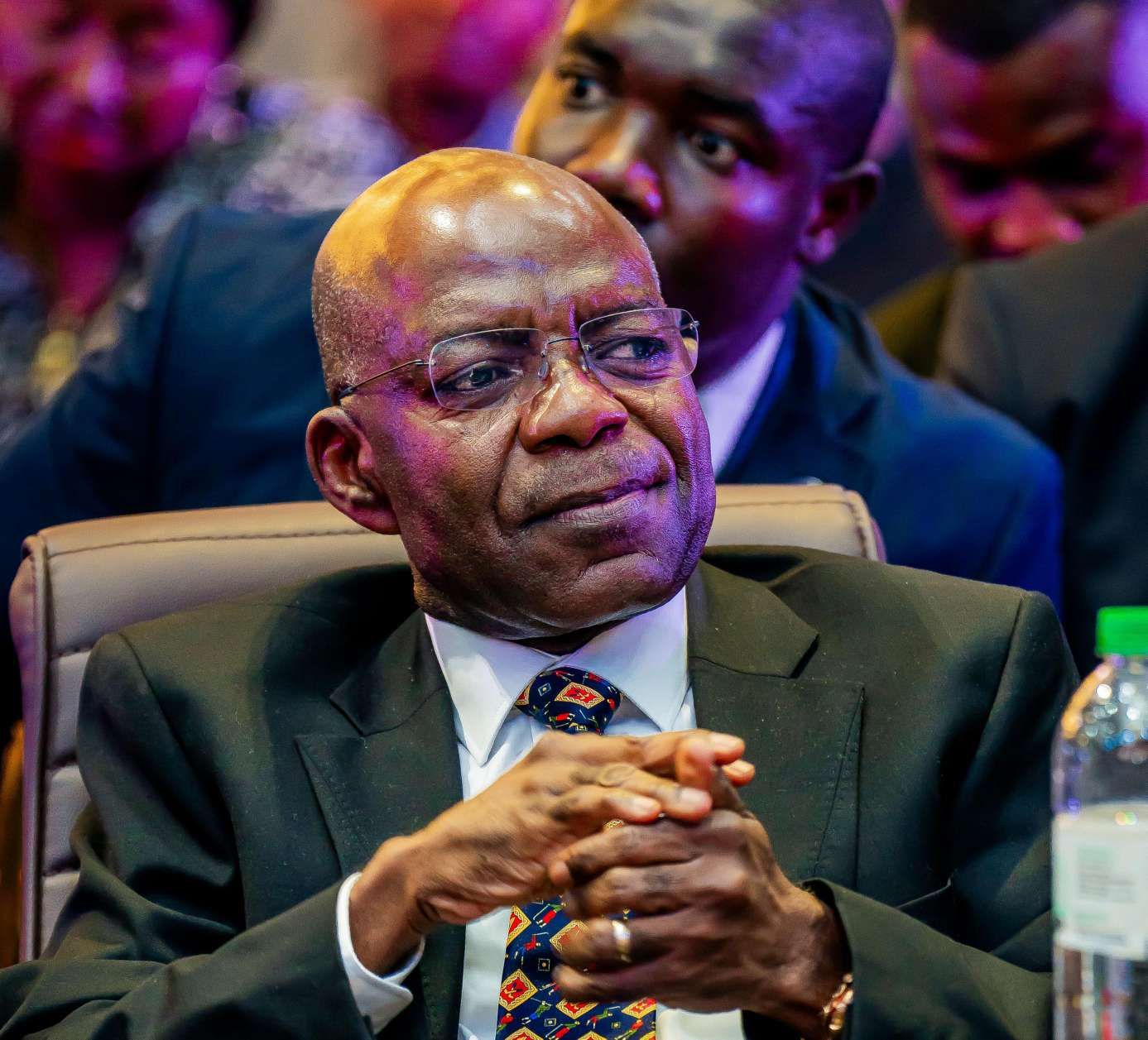
Being the Text of an Address Presented by Governor Alex C. Otti, OFR, at the Conclusion of the Abia Business Roundtable on Thursday, March 5, 2026 at the International Conference Centre, Umuahia
Protocol
1. The debate on the role of government in economic management is as old as it is evergreen. While one group of scholars, drawing from the views of 18th century Scottish philosopher and economist, Adam Smith, favours the laissez-faire, free market orientation wherein the government sits back to let the metaphorical invisible hand set price and output levels, another group lean more favourably to the views of 20th century English mathematician and economist, John Maynard Keynes, who insisted that government’s deliberate involvement in economic matters of the State is the only way to guarantee long term macroeconomic stability. For those who belong to free market school of thought, policy instruments like price control, taxes or direct investment only create distortions and promote inefficiency; the Keynesians on their part argue that the most effective way of keeping aggregate demand predictable is to get the government involved in driving economic outcomes through the deft application of strategic policy instruments, the very ones their ideological opponents reject. The classical economic view is that economic efficiency is best determined by competition and market forces; the interventionists on the other hand insist that the only way to mitigate market failures and the attendant challenges is to get the government directly involved in creating patterns of incentives and deterrents.
2. We may not be able to close the argument today but these dominant philosophies offer us a peek into the nuances of the debates around the role of government in business. What we can, however, do is to agree that like in all subjects of social sciences, there are no absolutes considering the unpredictability of human behaviour and events. At any rate, we hold strongly to the view that there is a clear role for government in business but we are also reluctant to agree that it is the obligation of government to directly run businesses. Our position is that since business decisions are driven by clear economic considerations, the express role of the government is to create a system of incentives that sends definite signal to investors that their legitimate interests can be protected over the long haul within the territory. The logic here is that for the invisible hand to become an effective driver of economic efficiency, the government must first show its hands through direct investments in critical public infrastructure, institution building, maintenance of law and order and the adoption of policy initiatives that reward enterprise, incentivises innovation and enables the attainment of pre-determined socioeconomic goals.
3. Our conviction is that for an economy to develop and thrive in the present global economic order underpinned by innovation and cross border competition, a holistic assessment must be undertaken to situate its place on the development ladder; this will in turn determine the level of government involvement required to achieve certain volume of aggregate production before competition and innovation take centre stage. In an environment like ours, the private sector can only thrive when the government plays a definite but measured role in the management of the economy; in the advanced economies of the West however, the public sector may just focus on regulations and occasional policy interventions while the private businesses focus on deepening their competitive advantage through innovation. The blind adoption of the views of either the free-market proponents or that of their intellectual adversaries across the aisle, without an awareness of their limitations under certain circumstances, would inevitably lead to disruptions and in some instances, systemwide collapse as we saw with the Great Depression of the late 1920s to 1930s and most recently, the subprime mortgage crisis of 2008 – 2009. It is comforting to observe that lessons from those unfortunate historical events have progressively shaped the economic policy disposition of governments around the world. This is partly why private enterprises are flourishing in economies with strong communist orientation like China and then in places like the USA with a long history of free market outlook, you still see the hand of the government on every critical economic node. Evidently, the two biggest global economies appreciate that the visible and invisible hands have dynamic but distinct roles to play in guaranteeing long term economic stability and prosperity for the population.
4. As a government, we appreciate the peculiar development reality of the State so it was clear from day one that we must set the pace, build the framework for long term stability and then invite the private sector to step in while we pull back to focus on systemwide support and structured interventions. Our decision to invest heavily in the development of critical infrastructure, even as we announced a 6-month tax holiday for small businesses, was driven in the main by the conviction that the only way to incentivise private sector players to open their wallets is to cut down the barriers to productivity. Across the State, especially in the urban centres of Aba and Umuahia, it was established that the number one limitation to full private sector participation in the economy was poor road infrastructure, followed closely by security challenges, unreliable power supply and then multiple taxation by agencies of government. Upon noting the concerns of our private sector partners, we quickly went to work by launching an unprecedented road infrastructure restoration campaign, starting with the most economically-viable parts of the State. The scale of our road infrastructure investment had a massive opportunity cost but we kept at it, confident that it was the most realistic way to get the attention of thousands of entrepreneurs and business owners who had either left the State, or simply closed shop. We observed from a simple study that the only way to restore hope to the business ecosystem, especially in Aba, was to rebuild the collapsed road network to reopen the path to the factories, reconnect communities and return customers to the markets. In our worldview, people did not pack their bags to leave because the roads were bad, they shut down their factories and sold their homes to start afresh in other places for the simple reason that hope disappeared from the horizon. Our principal task on assumption of office was therefore to restore hope — rebuild the confidence of the business community and give our people a reason to believe again. It was for these reasons that we went above and beyond to commit more than 80% of our annual budgets in 2024, 2025 and 2026 to capital projects. It was not an easy decision but then, there were also no easy paths to get the job done.
5. Distinguished ladies and gentlemen, we are here today because we made a decision to play a lead role in mapping the economic trajectory of the State. Let me on this note express my profound gratitude to every business group represented at this programme. Thank you for believing in the sincerity and long-term benefits of our modest efforts at transforming Abia into a major investment frontier. We are honoured by your presence and active participation at various stages of this event. Thank you for your strong interest in our State as expressed in the quality of questions and observations you raised, many of which I am sure had been satisfactorily dealt with. May I, however, assure that the door of learning through questions are never closed. We would be glad to take additional inquiries from anyone seeking to get further insights that could guide business decisions. I would like to specially appreciate the Director-General, Abia Public-Private Partnership and Investment Promotion Office, Mr Chinedum Chijioke, and his entire team for the brilliance of this initiative. The Abia Business Roundtable is only the first layer in the channels of engagement the State is setting up to accelerate information flow in ways that support business growth and prosperity. As the Director General said in his remarks earlier, the contributions and insights pooled from the breakout sessions and the panel discussions have been captured for evaluation and possible incorporation into our policy design and execution outline. The overarching goal is to create a body of public sector policies that are aligned to the genuine expectations of the private sector stakeholders. As you already know, we set this up to cut down the drawbacks that are inevitable when bureaucrats exclusively design public sector policies with implications for the business community. What we have simply done is to bring everyone to the room to share our thoughts, study international best practices and identify what we need to tweak to achieve win-win outcomes. May I also use this opportunity to thank the heads and representatives of the different ministries, departments and agencies who anchored the panel and breakout sessions for their excellent insights and the generosity in sharing.
6. We have not opened this channel to merely stimulate the environment for extreme profit-making by capitalist business owners; while we align completely with the philosophy of profit through value creation, we are also aware that resentment sets in when the gains of enterprise are exclusive. Our long-term commitment is to open up the private sector ecosystem through strategic infrastructure development. This will in turn make the space attractive for entrepreneurs and corporations to move in and create jobs for our teeming youth population, resuscitate dormant economic assets and improve our stock of aggregate output. The expectation is that this sequence of events will further enlarge the space for widespread prosperity through the expansion of economic and social opportunities. The private sector for us is the vehicle through which the gains of our investments in economic infrastructure trickles down to the general population.
7. May I also inform us that beyond the gains made in the restoration of physical infrastructure such as roads and electricity as we have in Aba, through a private sector initiative, we are also getting the workforce ready for the opportunities the entry of new businesses would provide. Over the last 2 years, the State Government has actively sponsored the training of thousands of young people, upgrading their skills to align with the demands of the 21st century work environment. Another heartwarming development is that our liberal economic policies have seen to the continuous growth of individual and household income. While poverty remains a major challenge like in several other parts of the country, the interesting thing is that our policy of prompt payment of the recurrent entitlements of workers, contractors and others has not only increased the velocity of money, it has also sent a clear message that this is one place where hard work pays. The summary of my presentation is that investing in Abia offers an extensive bouquet of benefits. As a matter of fact, when you evaluate our litany of advantages from favourable tax policies to a robust security network, a large market, predictable income for majority of urban households and a high concentration of skilled and unskilled labour, you would realise that our State offers certain unique opportunities you don’t find elsewhere.
8. The central message from this event is that Abia is open for business. We are continuing to invest in infrastructure and human capital development but the trajectory of the State is no longer up for speculation; our goal is to grow the economy by incentivising investments on multiple frontlines. At the close of the State Executive Council Retreat on Sunday, we identified real estate, solid minerals development, hospitality and ICT as the next growth frontiers; I am glad to see that several well-known players in these areas are represented here. We are also keen on manufacturing and the agriculture value chain, from crop cultivation to storage, processing and export. Our interest is extensively on value addition so we are open to engage further with anyone who has what it takes to support our development vision from the standpoint of value creation. The Abia Public-Private Partnership and Investment Promotion Office has been set up to facilitate conversations between the business community and the State Government, please feel free to engage with them as often as may be necessary for inquiries and guidance.
9. Thank you for listening and may God bless you as you return to your destinations.