Business
Dangote refinery supplies 92% of petrol as Nigeria suspends imports
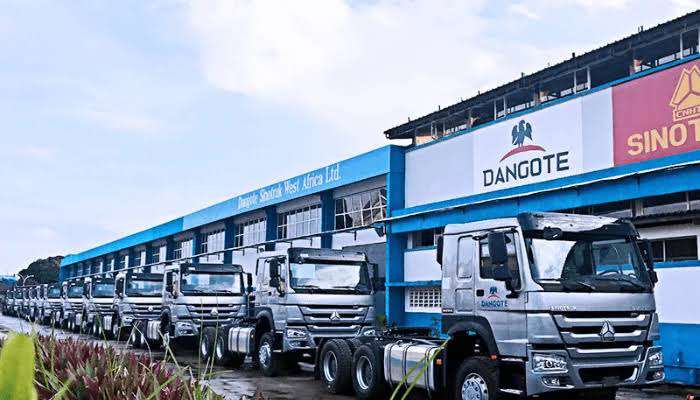
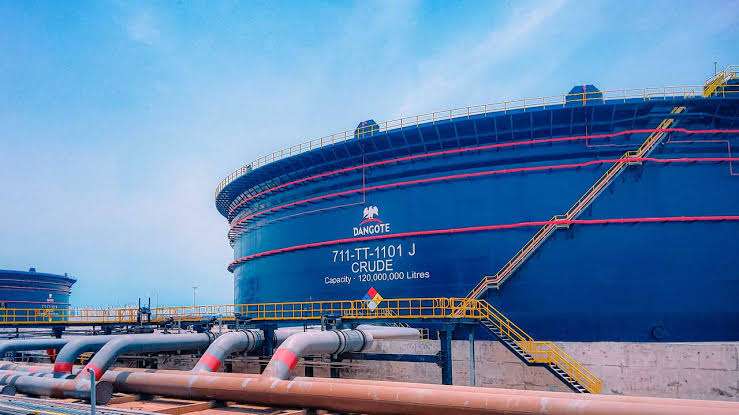
Nigeria’s fuel supply structure is undergoing a major shift as the Dangote Petroleum Refinery now provides about 92 per cent of the country’s petrol, following the Federal Government’s decision to halt the issuance of import licences for Premium Motor Spirit (PMS).
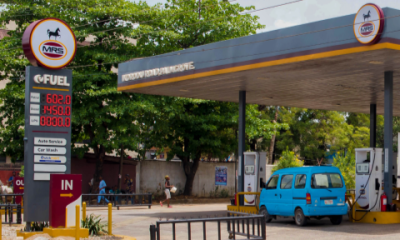
Despite a recent reduction in the refinery’s ex-depot price, petrol continued to sell above ₦1,200 per litre at filling stations across several parts of the country on Tuesday.
Punch Newspaper in a report quoted sources within the Nigerian Midstream and Downstream Petroleum Regulatory Authority (NMDPRA) and among oil marketing companies to have confirmed that the regulator has not issued any permit for petrol imports since the beginning of the year.
According to officials familiar with the development, the move reflects the increasing ability of domestic refineries to meet national demand.
“It is correct that no import licences have been issued this year. Local production has significantly improved and is currently sufficient to meet the country’s needs,” a senior official of the regulator said.
Figures contained in the NMDPRA’s February 2026 fact sheet show that domestic refineries supplied about 36.5 million litres of petrol daily during the month, while imports accounted for only three million litres per day.
The figures put Nigeria’s average daily petrol supply in February at about 39.5 million litres, with local refining contributing roughly 92 per cent of the total.
Industry data show that the Dangote refinery remains the only facility currently producing petrol in the country, while most modular refineries focus largely on diesel production.
The development represents a dramatic shift from Nigeria’s historical dependence on imported petrol.
In January 2026, for example, petrol imports averaged about 24.8 million litres per day, while domestic refineries produced roughly 40.1 million litres daily, bringing total supply to about 64.9 million litres per day.
However, imports fell sharply in February, resulting in a noticeable drop in total supply.
The NMDPRA reported that the country’s petrol supply declined by about 25.4 million litres per day compared with January, mainly due to the steep reduction in imports.
The regulator described the drop as the result of a “significant decline in imports” amid rising domestic production.
Historical supply data illustrate the magnitude of the transition.
In December 2025, petrol imports averaged about 42.2 million litres per day, compared with roughly 32 million litres supplied locally, bringing total daily supply to about 74.2 million litres.
Imports also surged to about 52.1 million litres per day in November 2025 when market demand rose sharply.
But the steady expansion of local refining capacity, particularly by the Dangote refinery, began to reverse that trend toward the end of the year.
Analysts say the shift could reshape Nigeria’s downstream petroleum sector by reducing the country’s reliance on foreign exchange for fuel imports while strengthening domestic refining.
However, some industry stakeholders have expressed concern that the growing dominance of a single refinery could weaken market competition.
An industry operator, who declined to be named due to the sensitivity of the issue, warned that a monopoly could eventually affect consumers.
“With no import licences issued this year, Dangote is gradually becoming the dominant supplier in the downstream sector. Excessive market concentration is not healthy for any industry,” the operator said.
He noted that previous industry reports had shown that imported petrol was at times cheaper than locally refined products.
“The risk is that without competition, the market may become less favourable for consumers in the long run,” he added.
Meanwhile, the Dangote refinery on Tuesday reduced its petrol gantry price by ₦100, cutting it from ₦1,175 to ₦1,075 per litre.
Despite the reduction, retail prices at filling stations remained largely unchanged.
A price survey conducted in Lagos, Ogun State and the Federal Capital Territory showed that petrol continued to sell between ₦1,200 and ₦1,330 per litre, as many marketers had yet to adjust their pump prices.
The refinery attributed the price cut to a decline in global crude oil prices after Brent crude dropped below $90 per barrel, having earlier exceeded $100 earlier in the week.
According to market reports, crude prices initially surged due to tensions linked to the conflict involving the United States and Iran but later eased amid expectations of a diplomatic resolution.
The refinery said its revised pricing reflects global market realities and demonstrates its commitment to fair pricing.
It also explained that its products are priced based on international crude oil benchmarks and prevailing foreign exchange rates.
Despite ongoing volatility in global oil markets, the company assured Nigerians that fuel supply would remain stable.
The refinery also highlighted that it reduced its petrol price several times in 2025 while increasing it only twice, describing the policy as part of its broader effort to support economic stability and strengthen Nigeria’s energy security.