

Nation
Borno airstrike fallout deepens as military defends ‘terror hub’ target amid rising civilian death toll
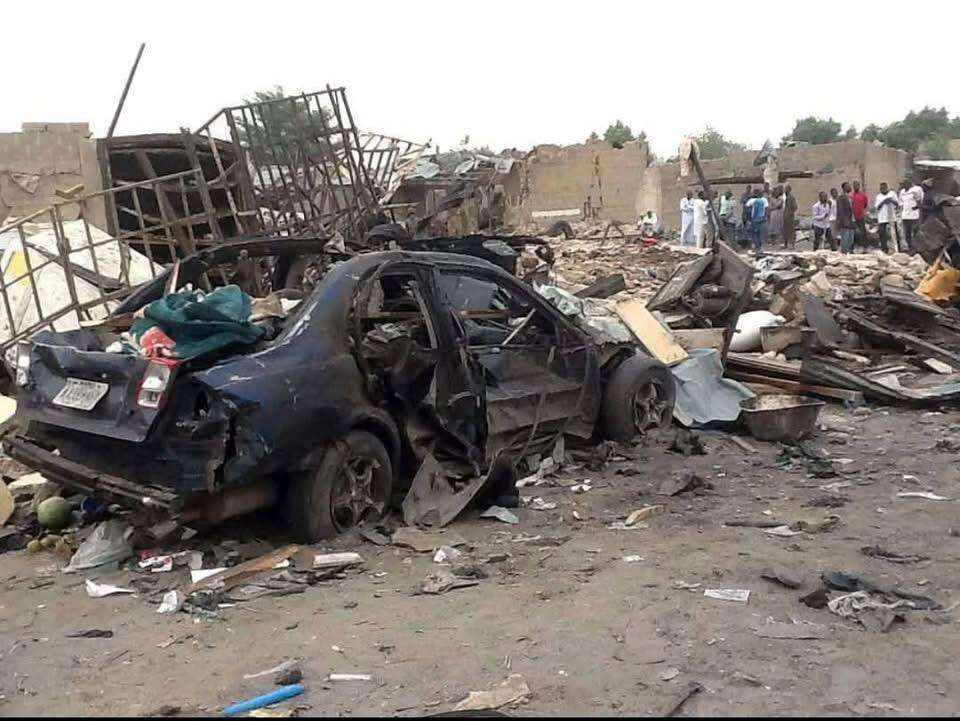
The Nigerian military is facing intensifying scrutiny following a deadly airstrike on Jilli village market near the Borno–Yobe border, as conflicting casualty figures and eyewitness accounts fuel public outrage over alleged civilian deaths.
The strike, carried out on Saturday under Operation Hadin Kai, has drawn condemnation from local authorities, political leaders, and rights groups, with reports suggesting that dozens – and possibly over 200 – civilians may have been killed. While local sources initially put the toll above 40, a community official claimed as many as 200 fatalities, underscoring the uncertainty surrounding the incident.
Despite the backlash, the military has insisted the target was a legitimate terror enclave. In a statement on Sunday, Lt. Col. Sanni Uba, spokesperson for the Northeast Joint Task Force, said the operation was based on sustained intelligence, surveillance, and reconnaissance indicating that the area served as a logistics hub for fighters of the Islamic State West Africa Province (ISWAP).
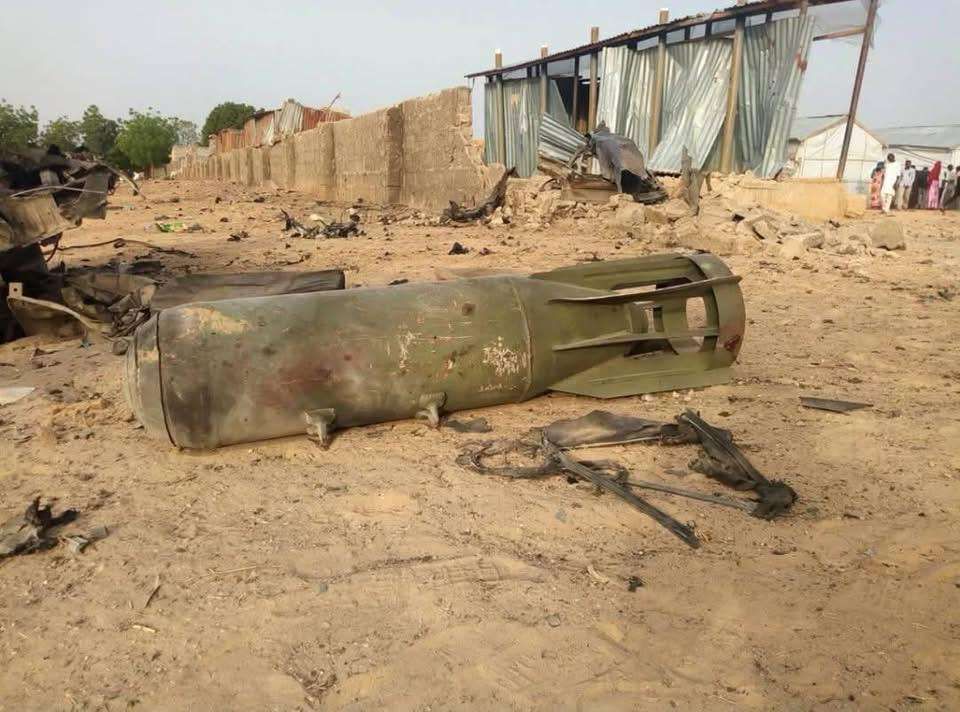
Explosive found at the scene
According to him, aerial surveillance tracked the movement of motorcycles and gun trucks converging on the location, corroborated by human intelligence sources identifying the gathering as terrorist elements and their collaborators.
“The operation was carefully planned, intelligence-driven, and executed with precision,” Uba said, adding that the strike successfully neutralised “scores of terrorists,” destroyed vehicles, and disrupted imminent attack on military positions in the Gubio axis.
He linked the operation to recent insurgent activities, including an improvised explosive device attack in January that killed eight soldiers, and coordinated assaults in Ngamdu and Benisheik earlier this month.
However, the Yobe State Emergency Management Agency confirmed that civilians, including traders from Geidam, were caught in the strike, describing it as an accidental bombing at a busy market.
Emergency response teams have since been deployed, while injured victims have been evacuated to nearby medical facilities.
Borno State Governor Babagana Zulum acknowledged the strike but reiterated that the Jilli market had long been designated a terrorist hub and was officially closed five years ago due to its alleged use by insurgents and their supply networks.
“I am in close consultation with the military hierarchy and the Yobe State Government on this matter,” Zulum said, urging residents to avoid aiding insurgents and to cooperate with security agencies.
Similarly, Yobe State authorities said the strike targeted a Boko Haram stronghold but admitted that civilians were inadvertently affected. Officials confirmed that those injured are receiving treatment.
Rights group Amnesty International condemned the attack as “reckless,” calling for an independent investigation and alleging that over 100 people may have died based on witness testimony.
Former Vice-President Atiku Abubakar also criticised the incident, describing it as a “devastating failure” and questioning the government’s commitment to protecting civilian lives.
“How long will citizens remain unsafe both from terrorists and from the very operations meant to protect them?” he asked.
In response to mounting concerns, the Nigerian Air Force announced it had launched a formal probe through its Civilian Harm Accident and Investigation Cell to determine the circumstances surrounding the strike.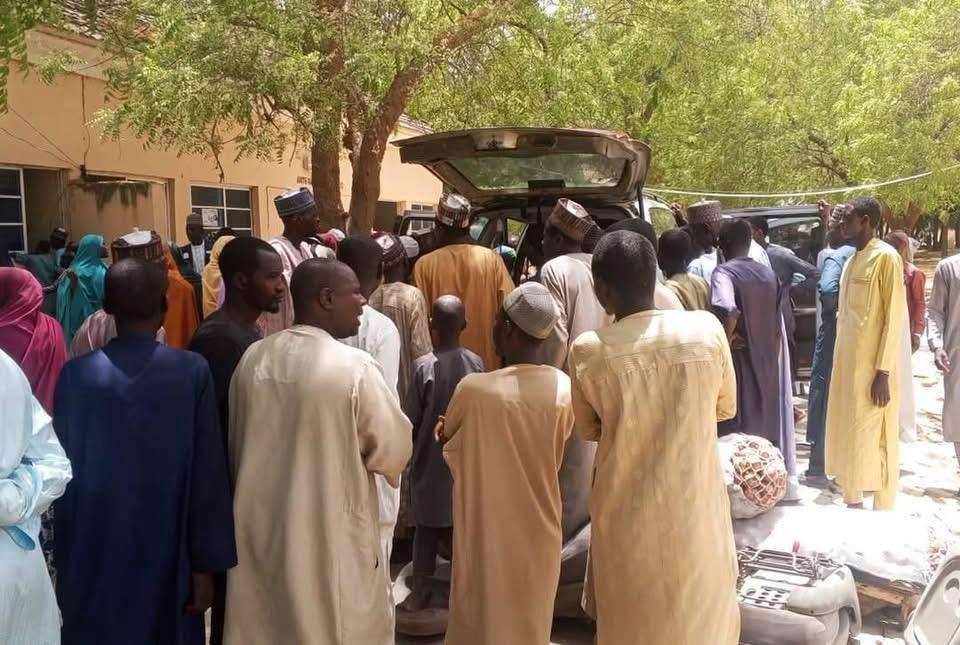
“The protection of innocent lives remains central to all operations,” the Air Force said, pledging transparency and accountability.
Security experts say the incident highlights persistent gaps in intelligence verification and targeting procedures. Analyst Kabir Adamu called for a “systemic overhaul” of airstrike protocols, including multi-layered intelligence validation, improved surveillance capabilities, and institutionalised civilian protection frameworks.
Another analyst, Chidi Omeje, described the tragedy as a reflection of the dangers of asymmetric warfare, where insurgents often operate within civilian populations, making target identification difficult.
Still, concerns over accountability persist. Security expert Jackson Ojo warned that repeated incidents risk eroding public confidence in military operations, stressing that precision must remain paramount in aerial strikes.
Adding to the defence of the military, former Chief of Army Staff Lt. Gen. Tukur Buratai (retd.) maintained that the market had long functioned as a terrorist logistics base despite previous crackdowns.
“Any loss of innocent life is deeply unfortunate, but the responsibility lies with terrorists who embed themselves among civilians,” he said.
The latest strike comes barely a month after a similar incident in Borno State, where airstrikes hit civilian area, killing at least 23 people and injuring over 100 – a pattern that continues to raise serious concerns about civilian safety in Nigeria’s counter-insurgency operations.
As investigations begin, pressure is mounting on authorities to establish the truth, ensure accountability, and prevent further civilian casualties in the region.
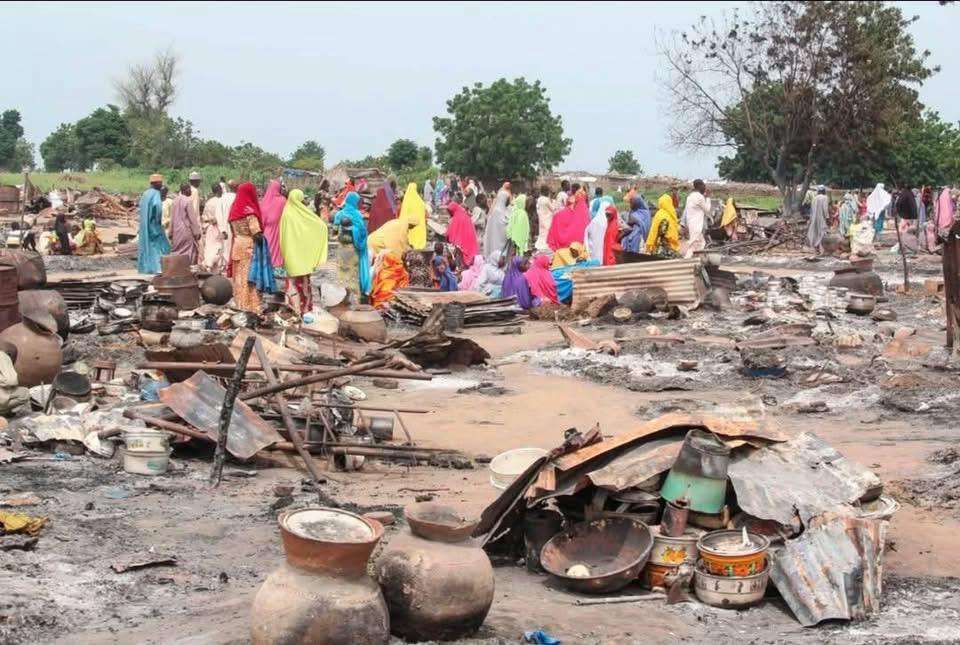
Scene of the attack
