Business
A Fragile Calm Returns: US–Iran Ceasefire Reopens Hormuz After 107 Days of War

After more than three months of escalating conflict that rattled global energy markets and deepened geopolitical fault lines, the United States and Iran have agreed to end their 107-day war, announcing a ceasefire deal that reopens the Strait of Hormuz and pauses one of the most consequential confrontations in recent years.
The agreement, mediated by Pakistan and expected to be formally signed on Friday in Switzerland, marks a dramatic shift from sustained military escalation to uneasy diplomacy. Both sides have declared an immediate and permanent halt to military operations, including in linked theatres such as Lebanon, where fighting had intensified during the conflict.
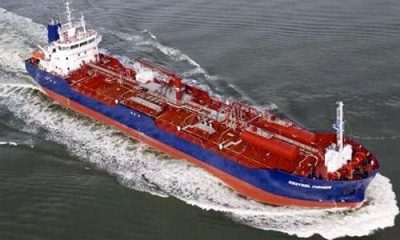
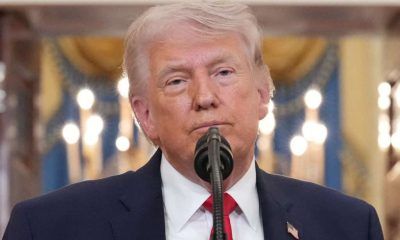
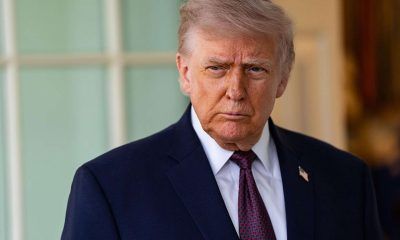
For US President Donald Trump, the deal came with an immediate policy reversal. He announced the lifting of the American naval blockade and authorised the reopening of the Strait of Hormuz, the narrow waterway through which a significant share of the world’s oil and gas flows.
“I hereby fully authorise the toll free opening of the Strait of Hormuz, and, simultaneously herewith, authorise the immediate removal of the United States Naval blockade,” Trump wrote on Truth Social.
The decision is expected to ease pressure on global energy markets that had been strained since the war began in February, pushing oil prices higher and disrupting shipping routes. Within hours of the announcement, crude benchmarks fell sharply as traders reacted to the prospect of restored supply flows.
Pakistan, which played a central mediating role alongside Qatar, confirmed that both parties had agreed to cease hostilities and begin a structured diplomatic process. Pakistani Prime Minister Shehbaz Sharif described the breakthrough as the result of extensive negotiations aimed at stabilising a conflict that had threatened wider regional collapse.
Iran’s Deputy Foreign Minister, Kazem Gharibabadi, confirmed the agreement on state television after marathon talks in Tehran. However, he stressed that implementation would only begin after the formal signing ceremony, adding that the deal represents the start, not the end, of a longer diplomatic process.
Behind the announcement lies a region deeply scarred by war. The conflict, which began on February 28 with strikes that reportedly killed Iran’s Supreme Leader Ayatollah Ali Khamenei, rapidly expanded into a multi-front confrontation involving proxy forces, missile exchanges, and strikes across the Middle East.
Although Iran has agreed to a cessation of hostilities, major questions remain unresolved. Its missile programme, support for regional allies such as Hezbollah, and stockpile of highly enriched uranium continue to be points of tension. According to the International Atomic Energy Agency (IAEA), Iran retains more than 440 kilograms of uranium enriched close to weapons-grade levels.
Tehran has maintained that its nuclear programme is peaceful and has resisted calls for immediate concessions, insisting instead that such issues be handled in subsequent negotiations expected to stretch over 60 days.
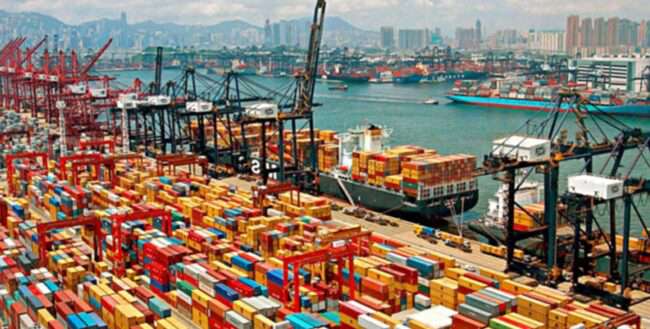
For residents across the region, the ceasefire offers relief – but not certainty. The war disrupted trade routes, displaced communities, and reshaped security calculations from the Gulf to the Levant. The reopening of the Strait of Hormuz, in particular, is seen as critical not only to oil-exporting economies but also to global inflation trends that had been pushed upward by supply disruptions.
Markets responded quickly. Brent crude fell nearly 4 per cent to about $84 per barrel, while US crude slid to around $81, reflecting renewed optimism over energy stability. Analysts, however, caution that full recovery will depend on more than diplomacy, including the removal of maritime threats, repair of infrastructure, and restoration of production capacity across affected regions.
Despite the optimism, uncertainty persists. Israel and several political actors in Washington have reportedly criticised aspects of the agreement, arguing that it leaves core security issues unresolved. Others view it as a necessary pause after months of escalating confrontation.
What emerges from the ceasefire is less a definitive peace than a recalibration of pressure points between two long-standing adversaries. The guns may be silent for now, but the underlying tensions – nuclear ambitions, regional influence, and contested security architecture – remain firmly in place.
As diplomats prepare for Friday’s signing ceremony, the world watches closely, aware that the reopening of Hormuz may mark not the end of a war, but the beginning of a more complex phase of negotiation.