Politics
Solution 2.0: Inside Soludo’s quiet transformation of Anambra
There is a peculiar rhythm to Anambra these days. It hums in the newly tarred arteries cutting through old towns and forgotten suburbs, echoes in the laughter of schoolchildren, who no longer pay fees in public schools and glistens in the evening lights now stretching into communities once swallowed by darkness and neglect. From Awka to Onitsha, from Ekwulobia to Okpoko, something profound appears to be unfolding quietly beneath the familiar chaos of commerce and restless ambition that define Nigeria’s most entrepreneurial state.
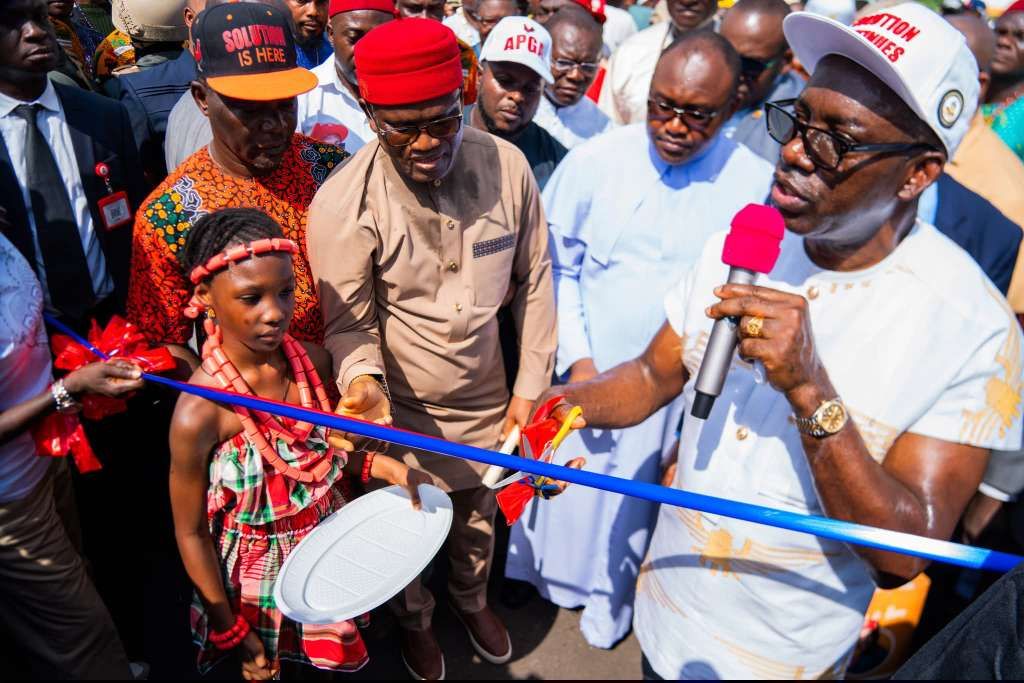
On March 17, Governor Charles Chukwuma Soludo took the oath for a second term in office, formally ushering in what his administration has christened “Solution 2.0.” The ceremony symbolised a transition from experimentation to consolidation; from what aides describe as “foundation laying” to “cruising stage.”

Few came into office with the kind of intellectual aura and expectation that accompanied Soludo in 2022. Former governor of the Central Bank of Nigeria (CBN), globally respected economist, policy reformer and public intellectual, he arrived Awka draped in the prestige of technocracy and the promise of transformative governance.
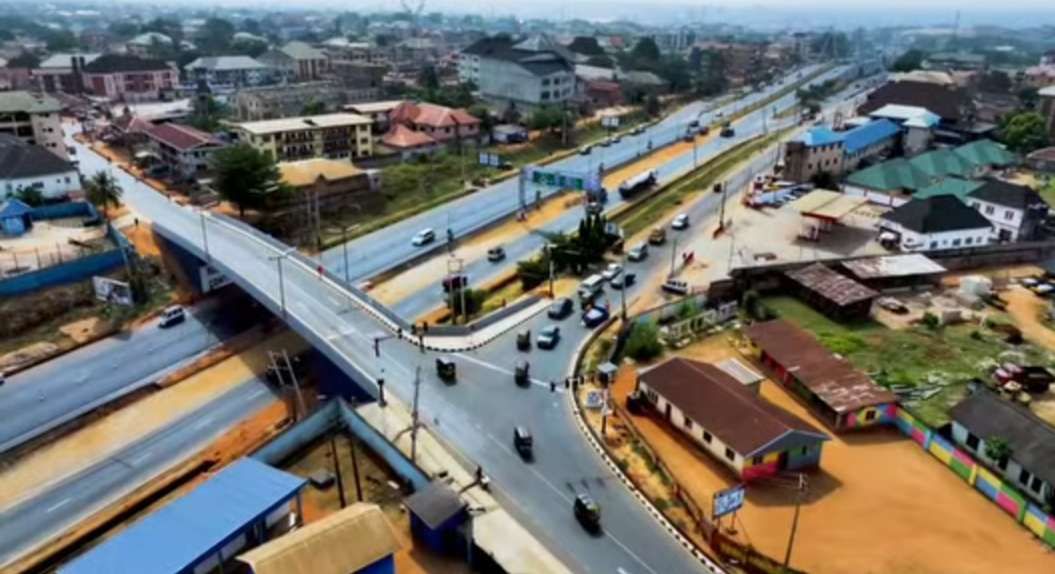
Ekwulobia flyover
Four years on, the verdict across Anambra is nuanced, yet impossible to dismiss. Soludo may not dominate social media conversations in the manner of some contemporaries, nor does he command the cult followership enjoyed by former governor Peter Obi.
A drive through Awka immediately reveals the changing texture of the state capital. Roads once narrow and battered have widened into dual carriageways. Entire districts are being remodelled.
“Governor Soludo has done a lot,” Christian Aburime, his Chief Press Secretary told Business Hallmark. “He’s built 756km of roads, introduced free education across primary and secondary schools, and made antenatal care and delivery, including caesarean sections, completely free. Thousands of youths have been empowered through the One Youth 2Skills programme, with thousands more currently undergoing training.”
For many residents, the most symbolic transformation lies in Okpoko, the sprawling suburb once described as the largest urban slum east of the Niger.
From Slum to Urbanity
“Five years ago, Okpoko was a place people avoided,” said Law Mefor, Commissioner for Information and Value Reorientation, during an interview with Business Hallmark. “It had no roads, no proper healthcare, no social infrastructure. Today, it has a brand new general hospital, new roads, streetlights, water and electricity. The place has been dramatically transformed.”
Indeed, driving through Okpoko today feels almost surreal for those familiar with its grim past. Children now play along paved streets where floodwater and refuse once reigned supreme. Small businesses have emerged around newly opened roads. Property values have surged quietly. The transformation speaks to Soludo’s broader philosophy of urban renewal as economic strategy.
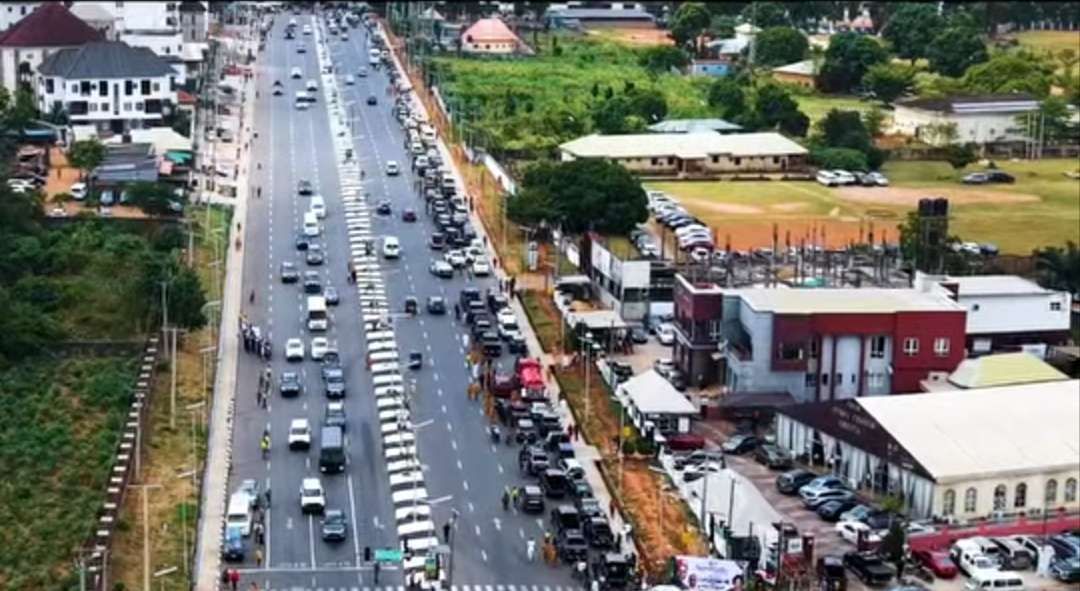
Roads
“Soludo is on track, and the dream of transforming Anambra is being realised,” Mefor declared confidently. “He has gone beyond what he promised in his manifesto.”
Across the state, five major dual carriageways now form what officials describe as the “Anambra Beltway,” connecting communities in ways previously unimaginable.
For traders and transporters, these roads are more than political trophies; they are economic lifelines.
In a state where trade is virtually a religion, infrastructure carries existential significance. Every smoother road means faster movement of goods, reduced transportation costs and expanded commercial opportunity. Soludo appears to understand this intimately.
New Onitsha
Perhaps nowhere is this more visible than around the Onitsha axis. The ancient commercial city, long suffocated by congestion and poor planning, is slowly acquiring a new face. Drainages are being reconstructed. Roads expanded. Suburbs incorporated into a broader urban vision.
“The Onitsha axis is wearing a new look,” Mefor observed. “The suburbs are being transformed into liveable and prosperous urban communities.”
Yet infrastructure under Soludo extends beyond roads. One of the most striking symbols of his administration is the sprawling new Government House complex in Awka, a project many supporters describe almost with reverence.
Anambra was created in 1991, yet remarkably, successive administrations operated from makeshift structures for more than three decades. Soludo chose to end that anomaly dramatically.
“We now have a Government House made up of 57 buildings,” Mefor said. “Each attends to one specific aspect of executive action. It has been peer-reviewed as the most beautiful Government House in Nigeria.”
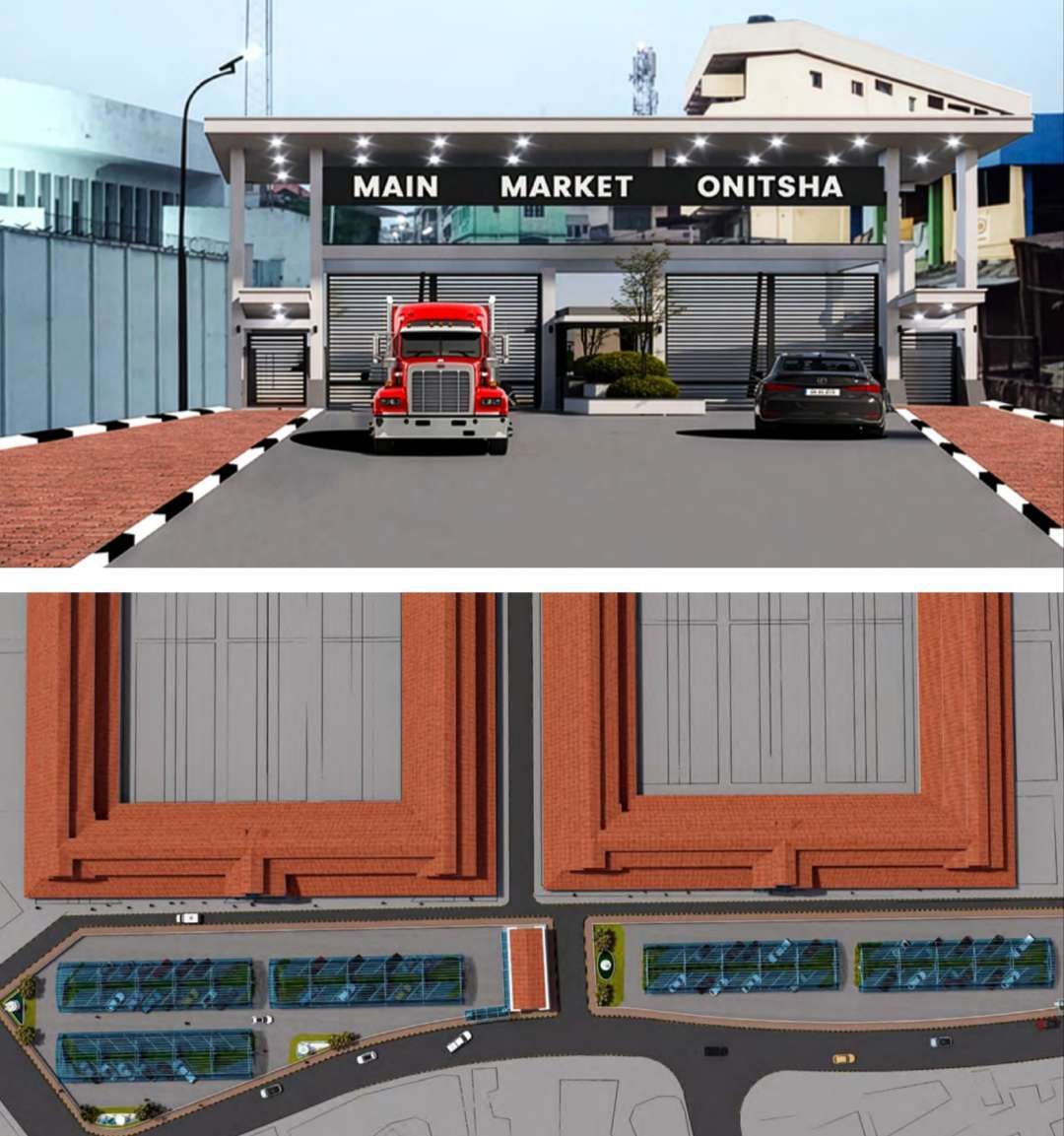
Proposed Main market, Onitsha
To critics, it is extravagant symbolism in an era of economic hardship. To admirers, it is a statement of institutional dignity befitting one of Nigeria’s wealthiest and most commercially vibrant states. Either way, the project captures Soludo’s ambitious, unapologetically grand and deeply conscious of legacy style of governance.
The same ambition defines the sprawling Solution Fun City project, which the government describes as the largest leisure complex in West Africa. Comprising a water park, amusement park, family fun centre and international country club, it represents Soludo’s attempt to redefine Awka not merely as an administrative town, but as a tourism and hospitality destination.
Education and Human capital development.
Soludo’s introduction of free education from kindergarten to senior secondary school marked a radical policy shift.
“He didn’t promise free education during campaigns,” Mefor pointed out. “But he introduced it because he believes education is foundational to transforming Anambra into a technology hub.”
The numbers are staggering. More than 8,000 teachers have reportedly been recruited into public schools, many drawn from different parts of the country. For Soludo, education is economic engineering.
“We are pushing towards what Soludo calls the ‘One Million Digital Tribe,’” Mefor explained. “The vision is that one out of every ten Anambra people will become a tech expert.”
At the heart of that ambition lies the Solution Innovation District, a technology hub built around the old Government House complex. Thousands of young people are currently being trained in coding, software development, robotics, artificial intelligence and other digital skills.
“Our youths are being made employable globally,” Mefor said. “Some are already working for companies like Google, Microsoft and Oracle.”
“Soludo believes the future of Anambra is not trading and commerce alone,” Mefor noted. “He believes the future is technology and innovation.”
The same thinking underpins the “One Youth, Two Skills” programme, through which thousands of young people receive vocational training, mentorship and startup support.
“We have identified about sixty skill areas,” Mefor explained. “From agriculture to tech. Beneficiaries are trained free of charge and given starter packs worth over N500,000.”
The programme also incorporates mentorship to help beneficiaries survive what economists call the “J-Curve” – the difficult early phase before businesses stabilise and grow.
Rebranding and Reorientation
The Ministry of Information itself has been rebranded into the Ministry of Information and Value Reorientation, reflecting the governor’s emphasis on behavioural reform and ethical rebirth.

Light House Awka
“We are about to launch an ethical and moral revolution,” Mefor disclosed. “We want to recover our youths from cultism, Yahoo Yahoo, drug abuse and the dangerous belief in magical wealth.”
There is also security, perhaps the issue that most threatened Anambra’s stability when Soludo assumed office. At the peak of insecurity, kidnappings, cult killings and criminal violence had become frighteningly routine. Entire communities lived under siege.
Today, while insecurity has not disappeared, many residents acknowledge significant improvement.
“Security wise, he has done very well,” Nwafor observed. “It was tough initially, but things are much better now. Anambra is calm now.”
Central to this turnaround is the security architecture introduced under the Anambra Homeland Security Law 2025, which created Operation Udo Ga-Achi and the Agunechemba security outfit.
From a central command-and-control centre in Awka, security activities across the state are monitored electronically. Native doctors accused of aiding criminality have been arrested. Kidnapping syndicates disrupted.
Alex Steven, a clothes dealer in Onitsha, acknowledged the improvements but warned about growing abuses.
“The security personnel are becoming a problem too,” he lamented. “Different outfits now mount checkpoints and extort Keke drivers and residents. If the governor can stop that, it would be great.”
For transport operators already struggling under soaring fuel prices and economic hardship, such extortion compounds public frustration. Steven also pointed to controversial demolitions of shops and properties which left many traders traumatised. Still, even critics often concede the administration’s infrastructural accomplishments
But therein lies the paradox of Soludo’s governorship. Admiration for his performance often coexists with discomfort over aspects of his politics and governance style.
Perhaps no issue has complicated public perception of the governor more than his recurring political skirmishes with Peter Obi. Across the South East, many view Obi not merely as a former governor but as a symbolic political figure whose popularity transcends party lines and represents “a new Nigeria that is possible.”

Solution Fun City, Awka
The Obi Factor
Soludo’s repeated critiques of Obi -sometimes subtle, sometimes direct – have alienated segments of the socially active youth population, who otherwise admire his technocratic brilliance. For critics, the governor’s tendency to diminish Obi’s legacy reflects the age old tragedy of Igbo elite politics – brilliant men trapped in cycles of rivalry rather than coalition building.
Beyond politics and personality clashes, there remains the stubborn reality of governance on the ground. In many respects, Soludo’s administration has become a study in contrasts – a government capable of visionary planning and sweeping execution, yet frequently distracted by needless political sparring that sometimes obscures the substance of its achievements.
Still, among ordinary residents, daily experience often speaks louder than elite political quarrels.
In Awka, civil servants speak of a city finally beginning to resemble a proper state capital. In Onitsha, traders grudgingly acknowledge improvements in mobility and sanitation despite complaints over taxes and enforcement excesses. Across rural communities, the expansion of healthcare and education infrastructure is gradually altering perceptions of what government can accomplish.
“People now move freely in Onitsha without the fear of being harassed,” said Stephen. “That’s a big plus.”
The healthcare sector, though less publicly celebrated than roads and urban renewal, has quietly witnessed one of the administration’s most consequential interventions.
Five new general hospitals have been established across the state, while thousands of healthcare professionals have reportedly been recruited to strengthen public health delivery.
Soludo’s vision of transforming Anambra into what he calls an African Dubai-Taiwan-Silicon Valley hybrid may sound grandiose, even utopian, but beneath the rhetoric lies a coherent economic logic built on the fact that infrastructure, human capital, technology and security must evolve simultaneously if the state is to sustain prosperity in a rapidly changing world.
“These are the foundations being laid for the transformation of Anambra into African African Dubai-Taiwan-Silicon Valley,” said Mefor.
That philosophy, perhaps explains the administration’s unusual fixation on digital education and innovation. While many sub-national governments in Nigeria remain trapped in the politics of immediate consumption, Soludo appears preoccupied with the future economy – one in which knowledge and technology may matter more than oil allocations or traditional commerce.