Politics
2027: South East political leaders gang up against Peter Obi
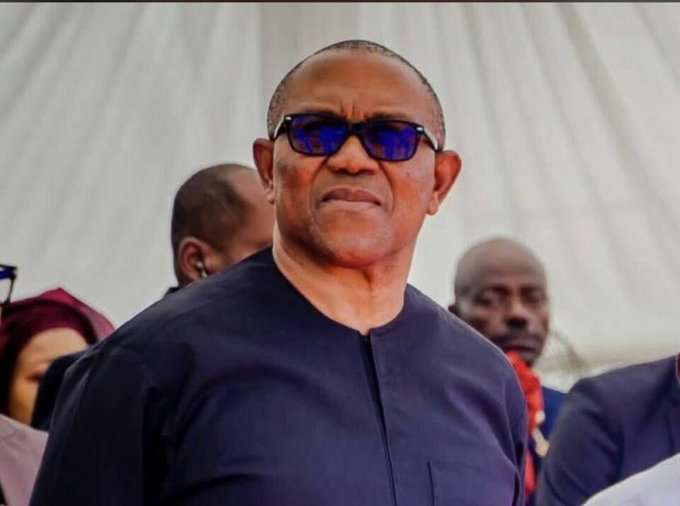
As preparations for the 2027 presidential election gather momentum, an unusual political reality appears to be unfolding in Nigeria’s South-East region.
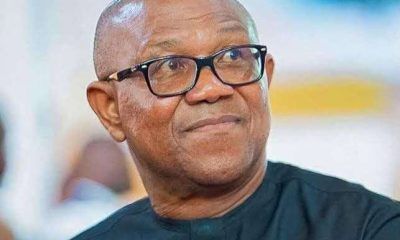
On one hand stands Peter Obi, the presidential candidate of the Nigeria Democratic Congress (NDC), whose popularity among ordinary people across the region remains remarkably strong, perhaps even more than three years after the 2023 election.

On the other hand are many of the region’s most influential political leaders, several of whom have openly aligned themselves with President Bola Tinubu’s reelection project, and cajoling the business leaders to join forces with on the basis of threat to their businesses, and appear increasingly determined to ensure that Obi does not emerge as a viable challenger.
The contrast has become one of the most intriguing political developments ahead of 2027. For a region that has consistently complained about marginalisation and exclusion from the highest levels of political power, many observers find it surprising that the first South-Easterner in decades to mount a serious presidential challenge is facing opposition not primarily from outside the zone, but from within.
Political watchers say the growing divide highlights a longstanding contradiction in Igbo politics. While the masses often rally around causes they perceive as advancing collective interests, elite political actors frequently pursue competing calculations shaped by personal ambitions, party affiliations and individual survival.
Recent developments appear to lend credence to that argument. The South East Governors’ Forum became the first regional bloc of governors to collectively endorse President Tinubu for a second term. Shortly afterwards, a forum of former South East governors also threw its weight behind the president.
While the endorsements were couched in terms of supporting continuity and rewarding what supporters describe as Tinubu’s developmental efforts in the region, many analysts believe they carry a deeper political message.
According to some observers, the endorsements amount to a coordinated effort to weaken Obi’s prospects before the 2027 race fully begins.
Chief Campaigners
The symbolism is difficult to ignore. Among those actively campaigning for Tinubu are Governor Charles Chukwuma Soludo of Anambra State, Obi’s home state; Minister of Works David Umahi, the immediate past governor of Ebonyi State; Ebonyi Governor Francis Nwifuru; Enugu Governor Peter Mbah; and Imo Governor Hope Uzodinma, who is chairman of APC Progressive Governors Forum.
While their reasons may differ, the outcome is largely the same. The political establishment in the South East appears to be lining up behind Tinubu while Obi continues to derive his strength primarily from grassroots support.
For many Nigerians of South East extraction, the situation raises uncomfortable questions.
Historically, the South East has argued that equity and fairness demand that the region should eventually produce a democratically elected president. Following the administrations of former President Olusegun Obasanjo from the South-West, President Umaru Musa Yar’Adua from the North-West, President Goodluck Jonathan from the South-South, and President Muhammadu Buhari from the North-West, many in the region believed that 2023 presented the best opportunity yet for the South East to make a compelling claim for the presidency.
Instead, power returned to the South-West through Tinubu’s victory. Now, as another election cycle approaches, several leading South East politicians are among the most enthusiastic supporters of Tinubu’s reelection bid.
Perhaps, no South East politician has been more vocal in that regard than Soludo. In March this year, during his second-term inauguration, the Anambra governor urged Ndigbo not to “waste” their votes in 2027.
While acknowledging that he would like to see an Igbo president someday, Soludo argued that the time was not now and urged the region to support Tinubu.
“Ndigbo are comfortable with him and trust his administration,” he said, while encouraging support for the president.
His position became even more explicit last week when he attended a pro-Tinubu rally in Abakaliki, Ebonyi State.
“There is time for everything. We must move from the alliance of protest to the alliance for progress and prosperity,” Soludo declared.
“We must unite. We must not waste our votes again.”
Essentially, the promise for the campaigners is vice president in 2031 as power moves North after Tinubu.
To Obi’s supporters, such comments amount to a direct attack on the former Anambra governor’s presidential aspiration. Some commentators argue that Soludo’s repeated interventions go beyond routine political endorsements and reflect a deeper political rivalry.
Nnameka Obiaraeri, an investment banker and public affairs commentator, is among those who hold that view.
According to him, Soludo has consistently discouraged the South East from aggressively pursuing the presidency while simultaneously presenting closer alignment with the centre as the region’s preferred strategy.
“Of all the governors in the South East, he is the only one that has been very consistent in attacking his brother Peter Obi, vilifying him,” Obiaraeri said.
He argued that many people interpret Soludo’s position as part of a longer-term political calculation.
“All he is trying to do. He thinks that by playing this kind of politics, he will deceive those in Abuja, so that by 2031, he will present himself as vice presidential candidate. He thinks he’s the only cock that can crow in Alaigbo.”
Whether such interpretations are accurate remains a matter of debate. Soludo himself has never publicly declared any vice-presidential ambition. Yet political watchers say perceptions often matter as much as reality in politics, and among many Obi supporters, suspicion of Soludo’s motives continues to grow.
Two of a Kind
Similar questions have also been raised about Umahi. The Minister of Works has emerged as one of Tinubu’s most energetic defenders in the South East and has repeatedly contrasted support for the president with support for Obi.
During a media interaction in Abakaliki, Umahi declared that Ebonyi would adopt Tinubu as its sole presidential candidate ahead of 2027.
He went further, insisting that Ebonyi was not an “Obidient” state.
“Ebonyi State is not Obidient because we want to catch up with the rest of the country and we will never be Obidient,” Umahi said.
“What happened before was an accident of history. It will not repeat itself.”
The comments generated considerable controversy, particularly because Obi recorded strong support across the South-East during the 2023 election.
Some analysts argue that Umahi’s position is rooted in his conviction that Tinubu has delivered tangible infrastructure projects to the region. Others believe broader political calculations may also be at play.
There is also the question of Governor Peter Mbah of Enugu State. Although elected on the platform of the Peoples Democratic Party (PDP), Mbah has since joined the ruling APC and has become one of the prominent South East leaders supporting Tinubu.
Political observers suggest that Mbah’s calculations may be influenced by the realities of state politics. The 2023 governorship contest demonstrated the strength of the Obi movement in Enugu, where Labour Party candidate Chijioke Edeoga mounted a serious challenge.
Some analysts believe Mbah may be keen to avoid a repeat scenario in 2027 should Obi decide to throw his weight behind opposition forces in the state.
Governor Hope Uzodinma of Imo presents a slightly different picture. While he remains firmly aligned with Tinubu and the APC, observers note that he has generally avoided the direct criticisms of Obi that have characterised the interventions of some other political figures in the region.
Yet his support for Tinubu contributes to the broader impression that the South East political establishment has largely chosen its side. For many ordinary people in the region, that choice has been difficult to understand.
The implications are dire. Against the popular grassroots support base of Obi in the regio, and give the performance in 2023, the results of 2027 will largely be written by the governor to prove their positions and not reflect the people’s will.
Lawyer and public affairs commentator, Franc Ezugwu, argues that Soludo’s opposition to Obi reflects personal ambition rather than commitment to regional interests.
“Soludo is governed solely by ambitions not principles,” Ezugwu said. “What’s killing Soludo is primarily Peter Obi’s towering national and global influence.”
The language may be harsh, but it reflects sentiments increasingly expressed across sections of social media and political discussion platforms in the South East.
Perception and Pushback
Many Obi supporters believe regional leaders are undermining an opportunity that may not come again soon. Edith Igede, another public affairs commentator, believes such actions could carry political consequences in the future.
“If Soludo thinks we will support him when he comes out to run for vice president or president tomorrow, he’s the biggest joker in history,” she said. “The only person I see who can attract the kind of support Obi has in the future is Alex Otti.”
Despite the growing elite opposition, Obi himself appears remarkably unfazed.
In a recent interview with journalist, Rufai Oseni, he downplayed suggestions that endorsements of Tinubu by South East governors would significantly affect his prospects.
“All these people were not with me in the last election, so nothing has changed,” Obi said. “There was no single governor with me in the last election. In fact, there was no councillor. I didn’t have one elected councillor with me in the last election.”
Obi pointed out that his political position is actually stronger today than it was in 2023.
“At least, I have two senators, eleven House of Representatives members. So things are better now,” he added.
His confidence is not without basis. In 2023, Obi swept the South East by overwhelming margins despite lacking the support of virtually all governors and political structures in the region.
That outcome demonstrated the extraordinary strength of his grassroots appeal. However, some political analysts caution against assuming that history will automatically repeat itself.
The 2023 election was conducted under circumstances that generated unprecedented public optimism. The introduction of the Bimodal Voter Accreditation System (BVAS) convinced many Nigerians that technology would significantly reduce electoral manipulation and ensure that votes counted.
That belief contributed to high voter enthusiasm, especially among young people, only 27 million of the 92 registered voters voted. With the despondency in the country and the mismanagement of the 2023 result there is likely to be less turnout, although many people believe the hardship in the country is enough incentive for voters.
Although controversies surrounding
Since then, however, several off-cycle elections have led some observers to conclude that Nigeria may be sliding back towards an era where incumbency, state power and political structures play a more decisive role.
Importance of Turnout
Should that perception prove accurate, the role of governors and established political actors may become significantly more important in 2027 than it was in 2023.
That possibility explains why the growing alignment of South East leaders behind Tinubu is attracting so much attention.
The central question is whether elite opposition can overcome grassroots popularity. History suggests the answer is not always straightforward. Peter Obi’s political journey has repeatedly challenged conventional assumptions about the limits of people-powered politics in Nigeria. Yet, Nigerian elections have also shown that political structures, state resources and elite alliances remain formidable forces.
As 2027 approaches, the South East may once again become the stage for a contest between those two realities. On one side stands a politician whose appeal among ordinary citizens remains remarkably resilient. On the other stands a formidable coalition of governors, ministers and political heavyweights who appear convinced that their future lies with the incumbent president.