
Politics
Land mines in new Electoral Act against opposition, as uncertainty trail 2027 polls
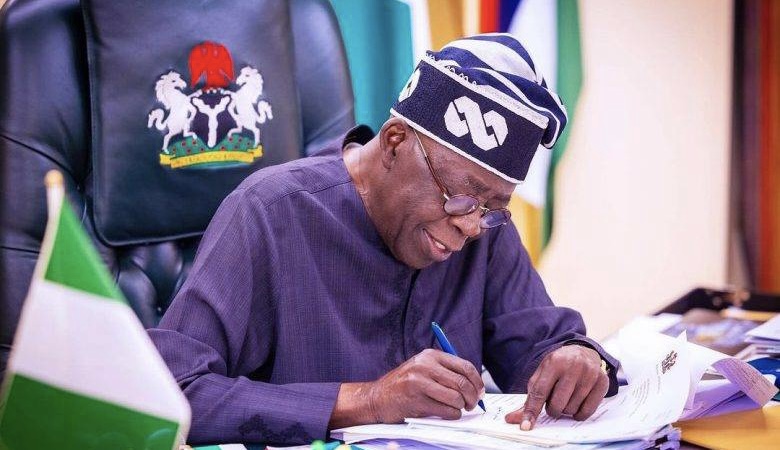
Nigeria’s fragile electoral system has once again been thrown into the centre of a national controversy following the enactment of the Electoral Act (Amendment) 2026, with opposition parties, civil society groups and political analysts restating that some provisions of the new law were made to undermine the credibility of the 2027 general elections by favouring the incumbent .
Weeks after President Bola Tinubu signed the legislation into law, opposition political leaders have continued to mount a coordinated campaign demanding fresh amendments to what they describe as “obnoxious provisions” capable of weakening Nigeria’s democracy.
The concerns, which have ignited heated political debate across the country, range from the retention of manual collation of results through Form EC8A, the removal of key sanctions against vote buying, controversial rules governing party primaries, the decriminalization of certificate forgery as ground for disqualification to contest elections, and new administrative requirements that critics say favour the ruling All Progressives Congress (APC).
While the presidency and ruling party insist the amendments will strengthen Nigeria’s electoral system and prevent voter disenfranchisement, opponents argue that the law opens the door to manipulation reminiscent of the country’s most disputed elections. The controversy is particularly significant because the 2027 general elections will be the first nationwide test of the amended law.
Opposition coalition rejects new law
The first major pushback against the Electoral Act 2026 came from a coalition of opposition parties that gathered in Abuja recently under the theme “Urgent Call to Save Nigeria’s Democracy.”
At the meeting held at the Transcorp Hilton Hotel, opposition leaders warned that unless controversial provisions were removed, Nigeria’s democratic process could suffer serious damage. Among the prominent figures present were former Vice President Atiku Abubakar, former Senate President David Mark, former Anambra State governor Peter Obi, former Rivers State governor Rotimi Amaechi, and former Osun State governor Rauf Aregbesola, all now associated with the African Democratic Congress (ADC) coalition.
The National Chairman of the New Nigeria Peoples Party (NNPP), Ahmed Ajuji, who read the communiqué on behalf of the coalition, said the law contains provisions capable of undermining transparency in elections.
“We demand that the National Assembly immediately commence a fresh amendment to the Electoral Act 2026 to remove all obnoxious provisions and ensure that the Act reflects only the will and aspiration of Nigerians for free, fair, transparent and credible electoral process,” Ajuji declared.
According to the coalition, anything short of that would be unacceptable to Nigerians. Their position reflects a growing consensus among opposition parties that the law, rather than strengthening electoral reforms, may have introduced new vulnerabilities into the system.
Controversy over result transmission
Perhaps the most contentious provision in the new law is the amendment to Section 60(3), which allows presiding officers to rely on manual transmission of election results, where electronic transmission fails. Under the revised provision, election results must be electronically transmitted to the Independent National Electoral Commission’s (INEC) results portal after Form EC8A is signed at the polling unit.
However, the law introduces a critical caveat: if electronic transmission fails due to communication problems, the manually completed Form EC8A becomes the primary source for collation and declaration of results.
For many electoral experts and political stakeholders, this clause effectively restores the dominance of manual collation, an aspect of Nigeria’s electoral process long criticised for enabling manipulation.
Legal analysts say the provision creates a hierarchy in which paper results may override electronic records whenever a presiding officer claims there is network failure.
The implication, critics argue, is that as witnessed in the recently held FCT Council polls, presiding officers can leave polling units with signed result sheets and transmit them electronically hours – or even days – later. Such delays, observers warn, could create opportunities for coercion, bribery or outright alteration of results before they are eventually uploaded.
“The most critical provision remains the option for manual collation of results. It is almost inevitable that on election day there will be technical glitches, and once that happens, manual collation will take over,” said Anthony Chidi, Abuja based lawyer and public affairs commentator. “Essentially, with the provisions of this new Act, anyone expecting a truly credible election in 2027 may be living in a fool’s paradise. In comparison, the 2023 election could even appear far better.”
Beyond the ban on indirect primaries and mandatory keeping of membership register, the new law also restricts the courts from halting electoral processes. Section 88(4) stipulates that nothing in the Act empowers the courts to stop party primaries or general elections from holding pending the determination of a suit.
The act also now makes last minute defections between political parties more difficult as it requires parties to submit membership registers 21 days before primaries, politicians, who defect shortly before primaries may not be eligible to contest for tickets in their new parties.
The law also clarifies the legal status of political parties in Nigeria. Section 77(1) states that every political party registered under the Act shall be a corporate body with perpetual succession and a common seal and may sue or be sued in its corporate name.
Former electoral officials and democracy advocates say the removal of the phrase “in real time” from the law is, particularly troubling. Without a mandatory timeline for uploading results, they argue, the transparency that electronic transmission was meant to guarantee could be compromised.
Return to “Incident form” poll
For critics of the new law, the most disturbing implication is the potential return of what Nigerians once described as the “incident form era.” Before the introduction of technological innovations like the Bimodal Voter Accreditation System (BVAS), elections were frequently marred by the use of incident forms to bypass accreditation procedures.
Electoral observers say the new manual fall-back clause creates similar loopholes in the collation process.
Former INEC National Commissioner, Oluwole Osaze-Uzzi, has warned that such provisions risk taking Nigeria backwards.
“It makes nonsense of the whole thing because we’re back to the dark days of the incident forms,” he said during a television interview. “They do all manner of manipulation in the incident forms.”
His concerns are shared by former Resident Electoral Commissioner, Mike Igini, who warned that allowing presiding officers to claim network failure could expose election officials to physical danger.
According to him, Nigerians, who witness a presiding officer refusing to upload results despite visible network coverage may react angrily. “At the polling units, presiding officers’ lives are going to be in danger,” Igini warned. “Because where Nigerians are gathered and results have been announced, and everyone can see network on their phones, if the officer says there is no network, that officer’s life could be at risk.”
Technology versus political will
Ironically, the debate over electronic transmission comes despite evidence that Nigeria’s telecommunications infrastructure can support such a system. Officials from the Nigerian Communications Commission, NCC, have previously stated that over 95 percent of the country has, at least 2G network coverage, sufficient for transmitting election results.
Former INEC chairman, Mahmud Yakubu, had also indicated that the BVAS technology used during elections could operate offline and transmit results automatically once network connectivity becomes available.
These explanations have strengthened the argument among critics that technological limitations are not the real problem. Instead, they say the issue is political unwillingness to enforce transparent processes.
Some observers believe the failure to mandate real-time electronic transmission played a role in the controversies surrounding the 2023 presidential election, in which delayed uploads to the IReV portal generated widespread suspicion. With the new law retaining manual fallback provisions, analysts warn that similar disputes could resurface during the 2027 elections.
Allegations of political advantage
Beyond the debate over result transmission, opposition leaders argue that several other provisions in the Electoral Act 2026 appear designed to give the ruling party an advantage.
One controversial rule requires political parties to submit digital membership registers containing National Identification Numbers ahead of primaries.
Opposition parties claim they were given barely six weeks to compile such registers, an administrative task that could take months for parties without extensive structures.
The allegation is that the APC had prior knowledge of the requirement and began compiling its membership database months earlier, giving it a head start. For smaller parties with limited resources, the new rule could prove crippling.
Political observers say the requirement could lead to the disqualification of parties unable to meet the deadline, thereby narrowing the field ahead of the 2027 election.
“What is clear from the new Electoral Act is that the ruling party appears determined to stifle the opposition. The law now bans delegate voting during party primaries. But what happens to parties that cannot afford the enormous logistics required for nationwide direct primaries? That provision clearly amounts to undue interference in the internal affairs of political parties,” said Chidi.
“Furthermore, the requirement for parties to maintain digital membership registers raises serious concerns. When a ruling party controls government structures, there is the risk of civil servants being pressured to register as members of that party, which is illegal and creates an uneven political playing field.
Internal democracy under scrutiny
Another contentious amendment concerns the removal of indirect primaries as an option for selecting candidates. Under the revised law, political parties are restricted to direct primaries or consensus arrangements.
The Inter-Party Advisory Council (IPAC), which represents registered political parties in Nigeria, argues that this provision amounts to interference in the internal affairs of parties. IPAC chairman Yusuf Dantalle said political parties have the constitutional right to determine how their candidates emerge.
According to him, forcing parties to adopt only two methods of candidate selection undermines internal democracy and contradicts previous Supreme Court rulings affirming party autonomy.
“This exclusion constitutes a violation of the constitutional right of political parties to regulate their internal affairs,” Dantalle said. He warned that the council could mobilize parties nationwide to resist the provisions if they are not amended.
Threat of election boycott
The dispute over the new law escalated dramatically when IPAC warned that political parties might boycott the 2027 general elections if the contentious provisions remain. Such a scenario, analysts say, could trigger an unprecedented political crisis in Nigeria.
If opposition parties refuse to participate, the legitimacy of the election could be severely questioned both domestically and internationally. Dantalle suggested that political parties may even escalate their concerns to the international community if the National Assembly fails to address them.
“Should the National Assembly fail to address these anomalies through urgent amendments, political parties under IPAC will be compelled to boycott the 2027 general elections,” he warned.
Certificate forgery controversy
Another clause in the amended law has sparked intense criticism from opposition parties, particularly the provision removing certificate forgery as grounds for challenging election results. The African Democratic Congress (ADC) has described the change as a dangerous precedent that could lower ethical standards in Nigerian politics.
Reacting to comments by Senate President Godswill Akpabio dismissing opposition concerns, the party accused the National Assembly of promoting a system that rewards dishonesty.
In a statement signed by its National Publicity Secretary, Bolaji Abdullahi, the ADC argued that the provision contradicts sections of the Nigerian Constitution that disqualify candidates, who submit forged certificates.
“How can any self-respecting person be happy presiding over the making of a law that now says election results can no longer be challenged on the grounds of certificate forgery?” the party asked.
According to the ADC, the amendment sends a damaging message to young Nigerians about accountability in public office. The party also accused the ruling APC of manipulating the legislative process to create legal protections for political allies.
Growing fears ahead of 2027
Taken together, critics say the various provisions in the Electoral Act 2026 paint a troubling picture for Nigeria’s electoral future. From manual result collation to restrictions on party primaries and administrative hurdles for political parties, opposition figures believe the law could reshape the political landscape ahead of the next presidential election.
Former Anambra State governor, Peter Obi, who has declared interest in the 2027 presidential race, has already vowed to challenge the law in court. He alleged that the legislation was deliberately crafted to enable electoral manipulation.
“All the laws being hurriedly churned out now are aimed at enabling them to snatch the 2027 presidential election and run away with it,” Obi said.
Despite the rising criticism, however, the presidency and the ruling APC maintain that the new law represents a pragmatic approach to electoral reform.
President Tinubu, who signed the amendment into law on February 18, has repeatedly defended the legislation, arguing that democracy thrives when political actors respect the rule of law and decisions taken through constitutional processes.
Speaking during an interfaith breaking of fast with leaders of political parties and members of the Inter-Party Advisory Council (IPAC) at the Presidential Villa in Abuja last week, Tinubu described himself as a committed democrat whose political life had been shaped by years of struggle for democratic governance.
“I’m a die-hard democrat,” the president said. “That principle and that philosophy will live and die with me.”
Tinubu traced his democratic credentials to his involvement in the pro-democracy movement during the military era, particularly the National Democratic Coalition (NADECO), which opposed the dictatorship of the late military ruler Sani Abacha.
According to him, politicians, who fought for democracy endured detention, persecution and exile, and therefore have a responsibility to protect democratic institutions rather than undermine them.
Tinubu’s defence of the Electoral Act
Responding to criticisms over the controversial provisions of the Electoral Act which he signed barely hours after passage, the president maintained that he merely respected the legislative process.
He explained that the bill had received overwhelming support from the National Assembly and that refusing to sign it could have triggered unnecessary political tension.
“That I signed the Electoral Act, I have no choice,” Tinubu said.
“There is an overwhelming majority by the National Assembly that passed the law. If I had serious reservations about it, I would have raised them.”
For the president, the debate
surrounding the law reflects the natural tensions that accompany democratic politics.
He urged political actors to engage in constructive debate rather than political confrontation, stressing that democracy allows both majority and minority voices to be heard.
“Majority will have their say and their way, and minority will have their say and might not have their way,” he noted.
“That is the sweetness, the essence of democracy.”
Why APC backs manual fallback option
Supporters of the amendment argue that retaining a manual fallback option in the event of electronic transmission failure is a necessary safeguard in a country with uneven technological infrastructure.
According to them, placing absolute reliance on digital systems without alternative mechanisms could expose the electoral process to technical glitches or cyber-attacks.
Tinubu himself has questioned whether Nigeria is fully prepared for a completely technology-driven electoral system.
While acknowledging the importance of innovation in election management, the president emphasized that Nigerian elections remain largely manual in practice.
“As long as you appear personally as a manual voter in any polling booth, a ballot paper is given to you manually,” he explained.
“You decide in a corner and fingerprint the person you choose. You cast your vote without hindrance or interference.”
He added that ballots are counted manually before results are entered into the electoral system.
“It is still manual, essentially,” the president said.
For that reason, Tinubu argued that electronic transmission should be seen as a supportive mechanism rather than the sole determinant of election results. “The transmission of that manual result is what we’re looking at,” he said. “And we need to avoid glitches, interference and unnecessary hacking in this age of computer inquisitiveness. Nigeria will get there.”
Vote buying and weakened sanctions
Despite the government’s defence of the law, critics argue that the Electoral Act 2026 may have inadvertently weakened safeguards against electoral malpractice.
One of the contentious aspects of the amendment is the removal of certain provisions that strengthened penalties against vote buying.
For years, vote buying has been identified by election observers as one of the most serious threats to Nigeria’s democratic process.
Analysts say that without stronger legal consequences, politicians may feel emboldened to continue using financial inducements to influence voters.
Some civil society organizations warn that the combination of weakened sanctions, manual collation provisions and administrative hurdles for political parties could significantly distort the playing field ahead of the 2027 elections.
Lessons from the FCT council elections
The debate over the Electoral Act
intensified after the February 2026 Federal Capital Territory (FCT) Area Council elections, which were the first major polls conducted after the amendment became law.
Although the elections were largely peaceful, several incidents raised questions about the country’s readiness for the next general elections.
Election observers reported late arrival of materials at polling units, malfunctioning BVAS devices, delays in uploading results to the INEC Results Viewing Portal (IReV) and allegations of vote buying.
In some areas, accreditation reportedly began hours after the official start time, while confusion over relocated polling units caused delays for voters trying to locate where to vote.
Perhaps the most controversial development was the delayed upload of polling unit results to the IReV portal. In many cases, voting had concluded by mid-afternoon, yet results were not uploaded until late evening.
For critics of the Electoral Act, the delay illustrated exactly why real-time electronic transmission should have been mandatory.
Activist Randy Peter Akah argued that the insistence on manual collation reflects a deeper structural problem in Nigeria’s electoral system.
“That’s why they are insisting on manual collation,” he said. “Because the collation centre is the centre of rigging.”
Others also warned that delayed electronic uploads could erode public confidence in the electoral process, especially in a politically charged environment where suspicion of manipulation remains high.