Politics
President Tinubu’s Ambassadorial postings face fresh challenges
….as host countries reject envoys, politicians get more strategic stations
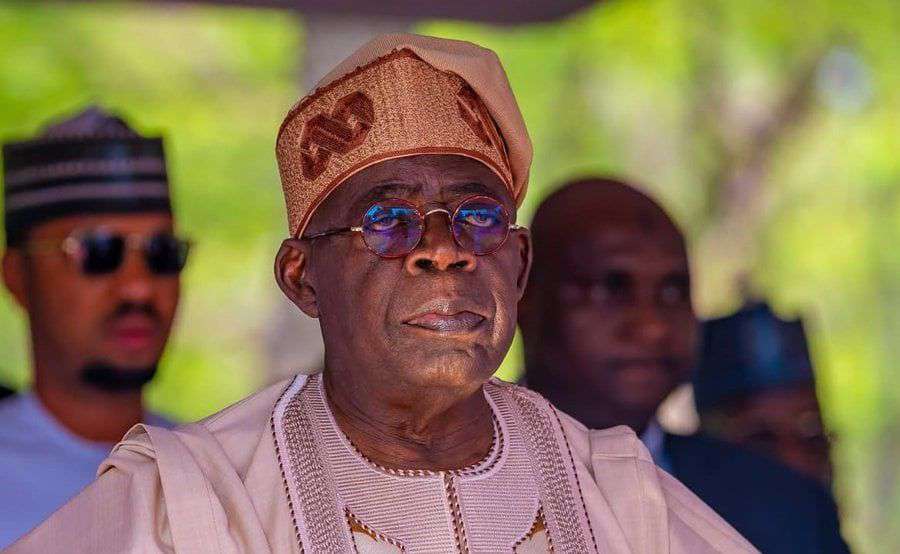
President Bola Tinubu’s recent approval of the posting of 65 ambassadors-designate to various foreign missions and the United Nations in March 2026, is facing fresh challenge which seems to be the fate of these set of envoys, some of whom may never get the opportunity to present their Letters of Credence before 2027.

For three years after coming to power, Presidential recalled all our ambassadors but refused to appoint their replacements which left Nigeria’s foreign missions without official representatives further reducing the international profile of the country, such as the disconnection of electricity to the High Commission office in South Africa over unpaid utility bills.
Confusion and controversy had followed even the attempt to appoint them as some of the names raised national uproar because of the dented character and infamy among Nigeria. Then came the posting of a nominee to Turkey, who didn’t attend the constitutionally mandated Senate screenings. However, after all the flip flop and wobbling, the entire exercise may be in futility as some countries have declined to accept the ambassador designate, citing a convention the for ideas new envoys being accepted when the appointing government has less than two years office. President Tinubu has less than one year in office before the next election although he may be sure to win, but the humiliation is national. The ambassadors comprising a panoply of 31 career diplomats and 34 non-career ambassadors have drawn criticism and severe backlash from the public over perceived politicization of the otherwise revered process that prices experience, diplomatic heft and understanding of international order above political consideration and party loyalty.
Misposting of non career envoy
The opposition African Democratic Congress (ADC) and other commentators have argued that career diplomats have been largely marginalized in favour of political appointees, noting that the process has turned into a macabre drama of settling party loyalty and rewarding boys, who played a role in Tinubu’s election.
The President has been heavily criticized for prioritizing political patronage over competence, featuring controversial figures. Critics, Including activists, describe the list of 65 ambassadors- designate as “scandalous,” citing the inclusion of individuals with integrity issues.
Dr. Lawal Oye, a political scientist, told BH that “The list is scandalous, it bastardized the essence of sending envoys abroad as representatives of the President. When you send political appointees with no experience in diplomatic relations and international politics to such important missions, such as Spain, Germany or Canada, you can imagine what it means.
Accusations have been rife that appointments were politicallly designed to reward allies, such as former Aviation Minister Femi Fani-Kayode and Reno Omokri, rather than seasoned diplomats.
More importantly, significant backlash followed the inclusion of former INEC Chairman, Prof. Mahmood Yakubu, who was criticized for his role in the 2023 election.
“Jobs for the Boys”:
Rights groups, such as HURIWA, accused the administration of assigning diplomatic roles as compensation for political loyalty rather than national representation.
Other analysts like Otunba Kingsley Adejumo Adeyemi, coordinator of Yoruba Youth Agenda, noted that “Ethically challenged individuals given ambassadorial position to represent Nigeria hurts the country’s global image.
Despite these criticisms, some APC members and defenders argue the list of ambassadors – designate constitutes a valid exercise of presidential discretion and that appointees are qualified to serve Nigeria.
But the preponderance of politicians on the list did not come as a surprise. Earlier, the recently elected National Chairman of the All Progressives Congress (APC), Professor Nentawe Goshwe Yilwatda, had declared that political appointments in an APC-led government—specifically following the 2027 general elections—will be strictly based on party loyalty and active involvement in party activities.
Prof. Yilwatda stated that “non-party individuals will not be considered unless they formally join the APC”. He emphasized that those appointed into government positions must be visible at the grassroots level and active in party mobilization.
“No More Technocrats”
The APC chairman argued against the reliance on technocrats, who operate outside the party structure, stating that such an approach is unsustainable. He noted, “There is nothing like technocrats when it comes to political appointments,” emphasizing that political visibility is not optional for appointees.
His comments have drawn mixed reactions, with supporters welcoming the reward for loyalty, while critics express concern over the potential exclusion of non-party professionals. The final list and the posting itself may have given fillip to the rejection of traditional method where important foreign missions are normally reserved for career ambassadors.
Reacting to the comments and the subsequent favour extended to politicians in the list, Dr. Ezekiel Obaniyi , a political sociologist, told this medium that ” This administration has thoroughly embarrassed the country. What gravitas do they have, I mean politicians on the list to warrant Tinubu posting them to sensitive Western capitals?
How much global understanding do they have? So, the overriding consideration was political settlement! This is a new low for the country, more embarrassing is the growing notion that many of them will not be accepted given that this administration doesn’t understand how this thing works. India, I understand, is not accepting.
But some government apologists noted that Tinubu has the right to appoint non career ambassadors to sensitive foreign missions as the United States, saying it’s The in-thing globally now. But this perception is not supported by current reality in international relations.
Dying phenomenon of career ambassadors
The phenomenon of career ambassadors is not entirely “dying” globally, as some are wont to believe; but it is facing significant, sustained pressure from the rise of political appointees (non-career ambassadors), particularly in countries like the United States and now Nigeria. While professional diplomats remain essential for the daily functioning of foreign service, the trend shows an increase in leaders using ambassadorial positions as rewards for political loyalty or to boost trade relations, often referred to as a “politicization” of diplomacy.
Declining Influence of Careerists?
A 2024 analysis of US diplomacy showed that while roughly 30% of US chiefs of mission are non-career appointees, the influence of career diplomats is in sharper decline, as they are increasingly bypassed for key, high-importance missions.
This observation is only pervasive in Trump and Biden administrations, in Europe, the influence of careerists is still strong.
Supporters of non-career ambassadors argue they can act with higher authority or bring new perspectives, particularly in trade, while critics argue that relying on them over career officials compromises professionalism, reduces foreign service morale, and damages diplomatic effectiveness
Posting Convention
Officials familiar with the matter revealed that India has already signalled reluctance to grant approval for Nigeria’s ambassador-designate to New Delhi, Ambassador Muhammad Dahiru.
According to diplomatic sources, the rejection is linked to a policy practiced by some countries which discourages accepting ambassadors from governments that have less than two years remaining in office.
Under international diplomatic practice, a receiving country must grant agrément —formal approval — before an ambassador can assume duty.
The source added that several countries are already sending signals that they may refuse some of the nominees, not because of the individuals involved but because of the limited time they would be able to serve.
“Some countries are reluctant to accept some people, not because of the individuals but because of time. They see the government as having a short period left.”
The source added that only a few countries have granted agrément so far, including the United Kingdom and France, leaving the fate of many other envoys uncertain.
Recall without Replacement
In September 2023, the Nigerian government recalled ambassadors from more than 100 foreign missions, leaving many diplomatic posts vacant for over two years before new nominees were eventually submitted.
Meanwhile, officials in the Ministry of Foreign Affairs are hoping Nigeria’s strong diplomatic ties with some countries could help convince them to make exceptions to their policies.
The source said: “I know India has that policy. If you are less than two years to the end of the tenure, there will be difficulties accepting an ambassador.”
The next Nigerian presidential election is scheduled for January 2027, while Tinubu’s current term ends in May 2027.
Among the key diplomatic appointments, former senator Ita Enang was posted to South Africa, while former Abia State governor Okezie Ikpeazu will serve as Nigeria’s envoy to Spain.
Also on the list is former presidential aide Reno Omokri who has been assigned to Mexico, while former Chief of Defence Intelligence Lateef Kayode Are will head Nigeria’s mission to the United States.
Only Ethiopia, Egypt and Italy secured the posting of career ambassadors.