Politics
Nigerians abandon prayers mountains, as bandits target prayer retreats
By ADEBAYO OBAJEMU
The spiritual landscape of Christians is being redesigned albeit by force of terror. For close to a century, prayer mountains that litter Southern Nigeria, especially the Southwest from Oke Oyi to Baba Akande Prayers Mountain in Ede and other prayers retreats that had in the past attracted thousands of worshippers seeking the face of God, healing, miracles, deliverance, divine encounters and spiritual renewal; have become shadow of themselves.

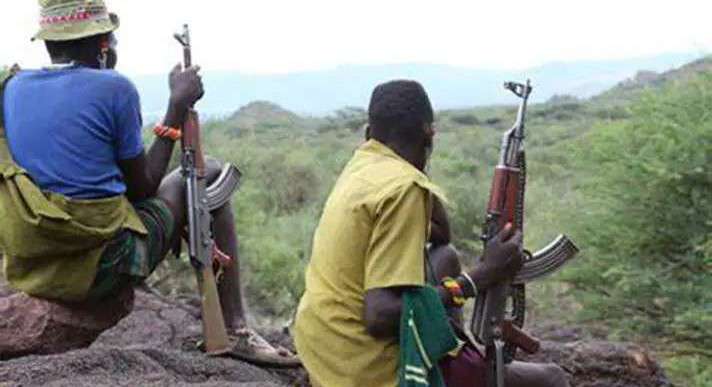
They have abandoned them in the thick of growing menace of bandit attacks , kidnappings, and rising insecurity in general across the length and breadth of country..
Worshippers have become increasingly afraid of visiting places that were once sacred sanctuaries, but now targets of terror attacks and kidnapping for ransom.
Take the case of 16- year -old Kehinde Kolapo, who left his home in convivial mood as he had longed to go to Ori Oke Ajaye to pray to God for admission to the University.
The senior secondary school student had spent days looking forward to getting admitted to the University of Ilorin having assured himself of success in the JAMB examination.
On Saturday, May 24, 2026, he was billed to join a host of other children and worshippers at the Ori-Oke Ajaiye Prayer Ground in Ikerin-Opin, Ekiti Local Government Area of Kwara State, for an overnight vigil ahead of the event.
His uncle Tanimola was too indisposed to accompany him to the mountain, so he made efforts to dissuade him from going since he would not be there and their guardian, Bukola Daramola, was too tired to accompany him.
Over Ambition
But Kehinde had already made up his mind to go and pray to God for success and fulfillment of his desire to study medicine. He was unconvinced by his uncle’s pleas.
In no time his friends got to his house to call him for the programme, and he told his uncle not to lose sleep over his going , assuring him that they would see each other again the following day at church.
Tragically, neither of them knew it would be their final conversation. As thick darkness descended on the prayer mountain that night, worshippers already steeped in labyrinth of worship and praise songs had no premonition of what was coming. Suddenly gunshots rang out.
Then, chaos ensured as armed bandits reportedly invaded the prayer ground, firing sporadically and sending terrified worshippers scrambling into nearby bushes and the surrounding darkness in search of safety.
As one of the survivor recounted the horrific night to BH, chaos spread across the mountain.When the dust settled, three worshippers lay dead. 18 worshippers, including women and children, had been abducted.
Among the dead was Kehinde and his dream, he was among those gunned down.
“My uncle did not go to Prayers
Mountain that day because he was fagged out . He told Kehinde not to go too, but his friends came to call him”, Kehinde’s cousin, Abayomi told Business Hallmark.
Reduced attendance
What were once crowded prayer retreats from Kwara to Kogi, Oyo to Ekiti and other parts of the country, have turned into places of fear and anxiety, where fervence for worship and spiritual communication with God has been replaced by uncertainty and foreboding of prospect of being kidnapped for ransom.
Reports of kidnappings, abductions and violent attacks on remote prayer grounds and worship centres are fueling this anxiety among worshippers and religious leaders. Christian Association of Nigeria, CAN, has even ban vigil by churches in the country in anticipated of the bandits’ attacks.
Places once regarded as sanctuaries for spiritual renewal are increasingly being viewed as vulnerable soft targets for criminal gangs.
Business Hallmark’s investigations show that attendance in these Mountains is shrinking. Worshippers are staying away. Night vigils are being cancelled, shortened, or subjected to tighter security measures.
Recall that in June, Mountain of Fire and Miracles Ministries, one of Nigeria’s largest Pentecostal churches with more than 300 branches nationwide, suspended all overnight vigils and directed that church programmes across the country should end by 8 pm.
This directive has seeped into other churches, who have given similar order to their branches nationwide.
A source told BH that at the popular and ever busy Oluwa Damilohun Prayer Mountain in Takete Community, Mopa Muro Local Government Area of Kogi State, the fear of possible terror and bandit attacks is impossible to ignore.
Pervasive Fear
The source said “I had one nagging problem and decided to seek the face of God for solution. I took motorbike and as we neared the place leaves rustled gently in the breeze. And I beheld empty prayer spots, which stretched across the mountain. Structures that once hosted crowds of worshippers now sat largely deserted. Only three workers, including a minister, were present’, the source said.
“This Mountain has had a lot of positive impact on the lives of people. But the issue of kidnapping and killing is the reason people no longer come as they used to. Before, there used to be a lot of crowd,” the cleric, who introduced himself as Apostle John Bankole David, told the source .
The fear is shared by Prophetess Janet Ojo, who has overseen the Prayer Mountain for more than two decades.
For years, she said, the Mountain was known for testimonies and stories of answered prayers.
According to her, a woman previously diagnosed with infertility later conceived twins, while many who came seeking healing, employment, travel opportunities and other breakthroughs returned with testimonies.
Today, however, fear appears to have replaced faith for many worshippers.
The founder said, “People are scared, so they stopped coming. Even those, who still come, and the staff members, we don’t allow them to stay for long because of the insecurity, and we also get security for special programmes.”
When this reporter visited Ori-Oke Babalola, a popular Prayer Mountain in Odo-Owa, Oke-Ero Local Government Area of Kwara State, the atmosphere was anything but what a sacred spiritual retreat ought not to be.
Virtually every department of the Mountain, which in a normal day played host to hundreds of worshippers looked exactly like a deserted location that had been abandoned for a decade.
The ringing reverberation of prayers, worship songs, and spiritual communion had given way to an eerie silence as if it was a place, where monks observed their chants in absolute silence.
Financial implications
Only a handful of workers moved around the premises carrying out routine maintenance.
The stillness across the hilltop reflected what residents described as a growing climate of fear. This situation is also having financial impact on the running of the Mountains. As the crowd dropped so also are the inflows.
One of the resident pastors at the Mountain, Joseph Olaleye, said insecurity had severely affected activities there, resulting in a drastic decline in attendance.
He said, “The insecurity challenge is glaring and has affected this place negatively. Where we were seeing 100 people before, we now see less than 10. The situation has really made many people afraid. Fear can kill faster than anything.”
At Abana Prayers Mountain in Lokoja, according to a source, who recently visited, “the place which used to attract more than 50 worshippers, who normally come to pray to God for solutions to their challenges now attract less than five people a day, and unlike before they no longer stay the night. They just pray for may be two hours in fear and go home,” the source confided in BH.
Similar attacks have been recorded at prayer mountains along the Agbaja Road axis of Lokoja, Kogi State, where worshippers attending night vigils were abducted by armed criminals.
Dr. Sina Adaruku, a sociologist told BH that “The continued attraction of Prayer Mountains is largely rooted in testimonies from worshippers who attributed life-changing experiences, divine encounters and answered prayers to their visits.”
In a testimony shared during a programme at Baba Abiye Prayer Mountain and posted on YouTube, a Lagos-based worshipper, Mrs. Bode Opeyemi, recounted how her younger sibling secured a visa on the very day she climbed the mountain to pray over the application.
She said, “I prayed that the God of Baba Abiye should make the embassy give him a visa. I was still here on the Prayer Mountain when they called me to say that he had been granted the visa.”
A 56-year-old woman, Mrs. Sola Owolabi, who spoke to this reporter about Babalola Prayer Mountain in Odo-Owa, noted that she stopped visiting because of insecurity .
“I can tell you that visiting mountain to pray has a spiritual benefits. There was a time my husband lost his job in Lagos because he refused to be part of deal making at his place of job. The people behind the deal roped him in order to get rid of him since he was standing in their way.
Someone told me about this Babalola Mountain at Odo Owa, Kwara state and I went there for three days praying to God for His intervention. And he got his job back and those that implicated him were sacked.
“If not for these security issues, I used to visit the Mountain every month-end from Lagos to pray for my children. But now I can’t go there again. My last born always tells me that we don’t have N30 million to pay as ransom,” she said.
Local economy suffers
But beyond the spiritual consequences , the rising insecurity that has prevented worshippers and those seeking the face of God for various reasons from going to the Mountains has affected economies of those that depend on the steady flow of worshippers who visit the sites throughout the year.
From traders and food vendors to commercial motorcyclists and landlords, many residents said their livelihoods have suffered as the fear of kidnappings and attacks keeps worshippers away.
A source told BH that at Babalola Prayer Mountain, a pastor’s wife, Mrs Grace Folaranmi, who operates a small shop within the premises, told him that patronage had dropped drastically in recent months.
He noted that the decline in visitors has caused financial hardship for many small business owners who rely on worshippers for daily income.
Folaranmi said, “Before, when people came in large numbers, we could make up to N20,000 daily. Now it has dropped to around N5,000 because it is mostly staff members here who buy things.”
The situation is similar in Odo-Owa, the community that serves as a gateway to the popular Prayer Mountain.
A food vendor, Mrs. Alice Tanimola, told Business Hallmark via telephone that religious programmes once attracted large crowds and boosted food sales.
“Before, I could cook a quarter bag of rice and sell everything before nightfall or, at worst, the next day. Now, the same quantity can take almost two weeks to finish,” she lamented.
Many commercial motorcycle operators who transport worshippers to and from the prayer site are reported to be calling of incomes depletion.
One of the motorcyclists, Muyideen Salaudeen, noted that the fear of bandit attacks had changed both movement patterns and business opportunities.
He said, “Before, we took people to the Mountains regularly, bought fuel, fed our families and still had savings of about N10,000. Now it is difficult to make N2,000 in a day.
“If you make N2,000 and return home without being kidnapped, you should thank God because everywhere is becoming unsafe.”
According to him, worshippers usually come from different parts of the country, including Ilorin, Lagos, Abuja, Ogun, Ondo and Ekiti states, with some arriving in the town late at night.
Mountain addicts still visit
BH’s findings reveal that in the thick of this climate of fear and rising concerns over insecurity, many Christians continue to visit Prayer Mountains across the country, convinced that the spiritual benefits outweigh the risks.
Findings show that prayer programmes are still being held regularly on several Mountains, with worshippers turning out in significant numbers.
Recently Oju Olorunkole Prayer Mountain in Akinyele, Ibadan, reportedly hosted the third day of a special programme that continued into the night.
A Facebook livestream of the event, monitored at about 8 pm, showed scores of worshippers gathered on the Mountain, singing, praying and participating in various spiritual activities despite the late hour.
Similarly, a video posted by Ori-Oke Asepe Ogo on Facebook showed worshippers engaged in praise and prayer sessions at Ori-Oke Bethel City, Iju Agada, in Ipokia Local Government Area of Ogun State, on Sunday.
Another Facebook post by Ori-Oke Oluwa advertised a forthcoming night vigil tagged “Restoration Night”, scheduled for June 26, 2026.
In Osun State, one of the country’s most prominent Prayer Mountains, Ori-Oke Baba Abiye, has scheduled a four-day special programme from August 11 to 14, 2026.
Organised by Prophet Funso Akande, the programme is expected to be held in the secluded forest environment where the mountain is located.
A Professor of Church History and Mission Studies at Kogi State University, Felix Enegho, said the enduring attraction of Prayer Mountains lies in the deep faith many believers place in them.
He noted that many worshippers view the Mountains not merely as locations but as sacred spaces where they feel closer to God and protected by divine power.
He said, “Even with the insecurity in Nigeria, people still visit physical Mountains. No matter how dangerous these places may appear, many believe that once they are there, not even kidnappers or terrorists can harm them.”
The General Overseer of Peculiar Gospel Outreach Ministry, Pastor Joseph Babatunde, said the practice of seeking God on Mountains should not be elevated above the biblical principle that God’s presence is everywhere.
He said, “Even when there was no insecurity, prayer could be offered anywhere. Now that insecurity is widespread, is it not better for people to stay away from such places rather than risk their lives?”