Politics
Leaders urge pragmatism in leadership selection as Otti, Sanusi, Achebe, Nwachukwu, others push reform agenda
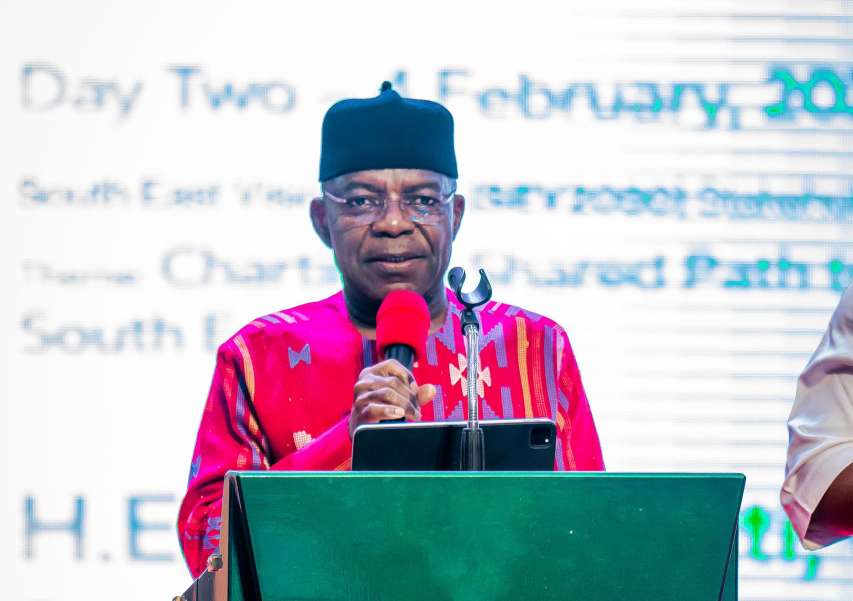
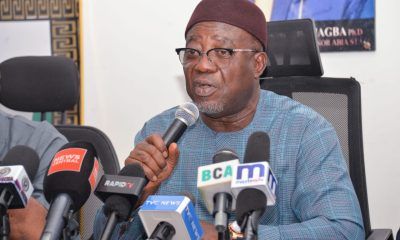
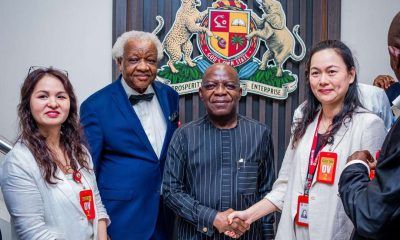
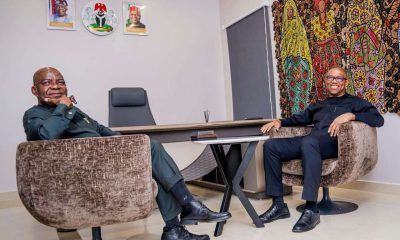
Nigeria’s political and economic challenges took centre stage in Lagos on Thursday as Governor Alex Chioma Otti, the Emir of Kano Muhammadu Sanusi II, the Obi of Onitsha Nnaemeka Achebe, and former Foreign Affairs Minister Gen. Ike Nwachukwu (retd.) called for more pragmatic leadership selection, stronger civic participation, and urgent structural reforms in governance.
The discourse formed the core of the 2026 annual lecture of The Niche, themed “Governing the Economy: Choices, Trade-offs, and National Priorities,” held at the Nigerian Institute of International Affairs, Lagos.

Otti warns on voter apathy, links governance to civic disengagement
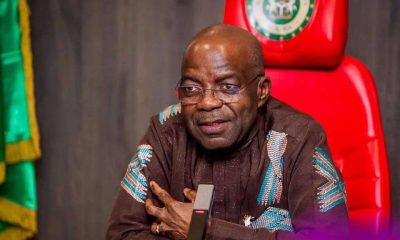
Delivering the keynote lecture, Governor Otti warned that Nigeria’s worsening economic realities are deeply tied to long-standing political decisions and poor civic engagement, particularly declining voter turnout.
He noted that voter participation has dropped significantly over the years, from 57 per cent in 2011 to less than 30 per cent in the 2023 general elections.
“What that means is that just about three out of every ten eligible voters decide who governs us,” Otti said, describing the trend as a serious threat to democracy and accountability.
According to him, the implication is that a small minority now determines leadership outcomes, with far-reaching consequences for economic performance, security, and national stability.
He cautioned that political disengagement weakens democratic accountability and allows ineffective leadership to persist.
“You cannot claim to love Nigeria and yet remain aloof in critical matters such as leadership selection,” he said.
Otti stressed that political participation must go beyond election-day voting, urging citizens to remain engaged throughout the electoral cycle.
“Political participation is about vigilance and continuous engagement to ensure elected leaders are held accountable,” he said.
He also called for deeper scrutiny of candidates, including their ideologies, competence, and governance philosophies.
“Active citizenship demands that we understand who we are voting for, their beliefs, and their economic ideas,” he added.
The Abia governor further argued that Nigeria’s economic challenges are the result of cumulative political decisions over decades, warning against both excessive pessimism and unrealistic optimism.
“There is no silver bullet. Economics is about trade-offs, not miracles,” he said.
He cautioned that while Nigeria is not beyond redemption, recovery will require discipline and sustained reforms.
“If you behave badly for over 60 years, it will take time to correct it,” Otti noted.
He linked corruption and electoral malpractice, including vote-buying, to governance failures, arguing that such practices produce leaders more focused on recovering campaign expenditures than serving citizens.
“When elections become transactional, governance becomes extractive,” he said.
Otti maintained that effective leadership is central to reversing Nigeria’s economic decline, stressing that institutional reforms and responsible citizen engagement must work together.
Achebe calls Otti “ray of hope”, demands structural reform
The Obi of Onitsha, Nnaemeka Achebe, who chaired the event, described Governor Otti as a “ray of hope” in Nigeria’s governance landscape, praising his performance in both private and public sectors.
He said Otti’s transformation of Abia State demonstrates that effective leadership is possible in Nigeria when competence and discipline are prioritised.
“His performance shows that governance can work in Nigeria,” Achebe said.
The monarch also criticised what he described as excessive politicking in Nigeria, saying governance should take precedence after elections.
“In Nigeria, there is too much politics and not enough governance,” he said.
Achebe called for constitutional reforms to allow independent candidacy, arguing that voters should be able to choose individuals based on competence rather than party affiliation.
“We should be able to vote individuals based on character and capacity,” he said.
He also alleged that entrenched interests often resist reform-minded leaders, citing past experiences where development projects were deliberately frustrated.
He warned that similar resistance may be directed at reform-driven administrations like Otti’s, urging citizens to support such leaders.
“If he succeeds, it will show how much has been wasted in the past,” he said.
Sanusi criticises politics as profit venture, fault reform sequencing
In his remarks, the Emir of Kano, Muhammadu Sanusi II, said Nigeria’s political system has become overly monetised, turning public office into a profit-driven enterprise rather than a platform for service.
He said the country’s economic hardship could have been less severe if earlier reforms, particularly fuel subsidy removal, had been implemented in 2013.
Sanusi argued that those who opposed subsidy removal under former President Goodluck Jonathan later implemented similar reforms under more difficult conditions.
“The people who blocked subsidy removal then are the same who removed it later when the impact was far worse,” he said.
He also faulted the sequencing of current reforms under President Bola Ahmed Tinubu, arguing that simultaneous liberalisation of the exchange rate and subsidy removal without tight monetary control worsened inflationary pressure.
“If you liberalise in a loose monetary environment, the currency will collapse,” he said.
Sanusi questioned the continued borrowing by government despite subsidy removal, asking why Nigerians were yet to feel the benefits.
“If subsidy has been removed, why are we still borrowing heavily?” he asked.
He further warned that Nigeria must define its governance model clearly, stating that countries either operate as developmental states or degenerate into rent-seeking or kleptocratic systems.
“If governance becomes about making money, then policy will reflect that,” he said.
Nwachukwu: Nigeria needs restructuring and pragmatic leadership
Former Foreign Affairs Minister, Gen. Ike Nwachukwu, also praised Otti’s leadership, saying he now feels proud to identify as an Abian due to the governor’s performance.
“We must commend Governor Otti. For the first time in years, I feel proud to say I’m from Abia State,” he said.
Nwachukwu, a former military governor of Imo State and senator representing Abia North, used the platform to call for restructuring, insisting that Nigeria must return to true federalism.
He said Nigeria’s current structure limits efficiency and accountability, stressing that the country’s founding fathers designed federalism to accommodate diversity.
“We need proper federalism and proper democracy,” he said.
He argued that no state in Nigeria is unviable, noting that every state possesses human and natural resources capable of driving development.
“All states are viable. What we need is leadership that understands economics and governance as service,” he added.
Panel discussion and wider reflections
The event also featured a panel discussion anchored by Prof. Anthony Kila, with contributions from Nigeria Labour Congress President Joe Ajaero, Dr. Jumoke Ogunleye of the University of Lagos, and chartered accountant Anogwi Anyanwu.
Discussions centred on governance reforms, labour issues, and Nigeria’s economic trajectory.
The lecture was attended by several prominent figures, including Prof. Pat Utomi, Dr. Olisa Agbakoba, Sam Ohuabunwa, Prof. Remi Sonaiya, and other policymakers, academics, and political stakeholders.
Across all interventions, a central theme emerged: the urgent need for Nigerians to adopt more pragmatic criteria in selecting leaders.
Speakers agreed that Nigeria’s economic and governance challenges cannot be resolved without improved voter participation, institutional reforms, and leadership grounded in competence rather than sentiment or political patronage.
The consensus among participants was that Nigeria’s future depends on informed civic engagement and a decisive break from transactional politics toward value-driven governance.