Politics
Kano’s Eid split reflects deepening divisions; Sanusi, Bayero, Kwankwaso hold separate prayers
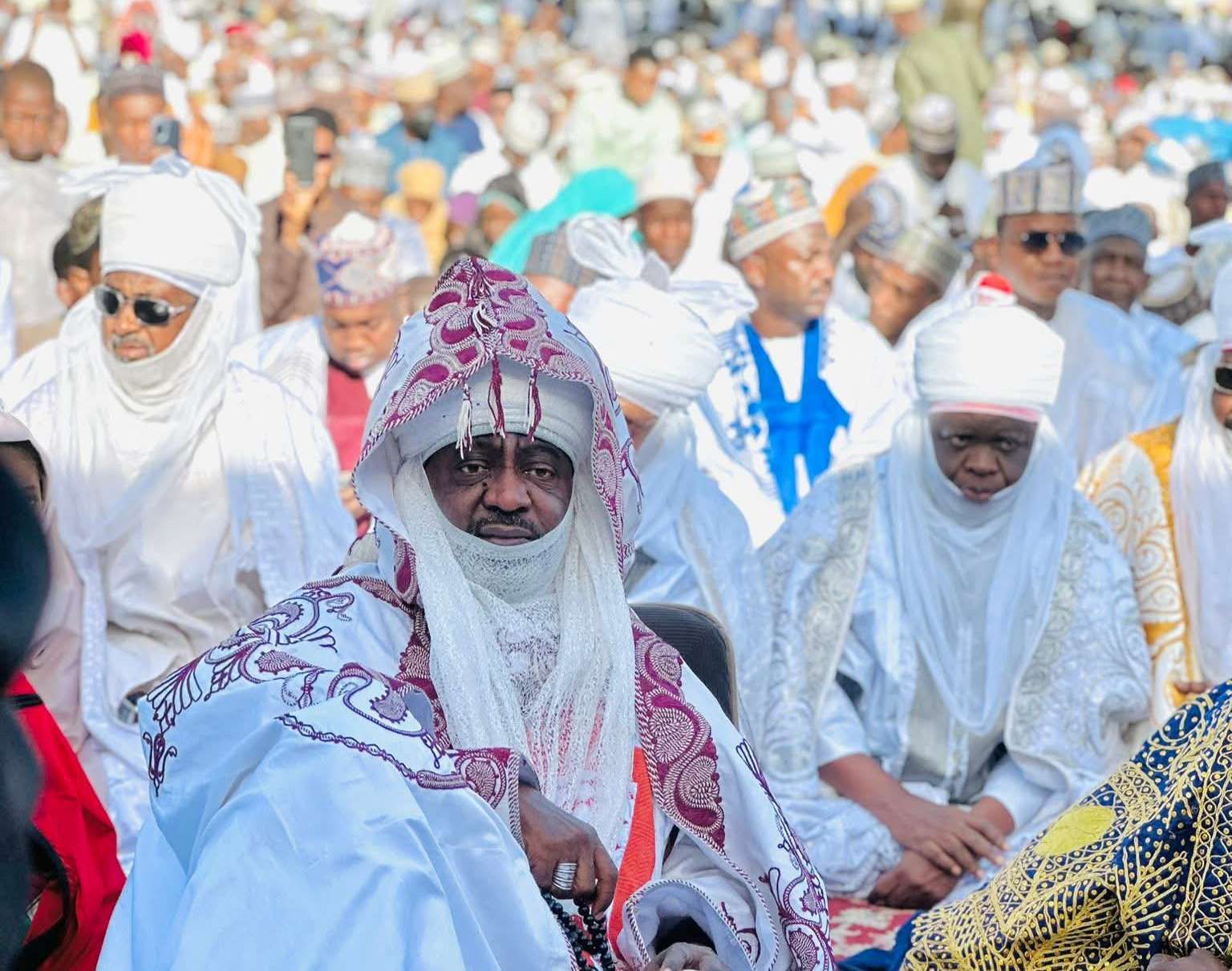
A rare and telling development unfolded in Kano State during this year’s Eid al-Fitr, as three separate prayer sessions were held by key figures, underscoring widening cracks within the state’s traditional and political leadership.
At the historic Kofar Mata Eid Ground, the reinstated 16th Emir of Kano, Muhammadu Sanusi II, led worshippers in prayers early in the morning. The gathering drew top officials, including Governor Abba Yusuf and senior security personnel. Messages delivered at the prayer ground centred on unity, tolerance, and the urgent need for peaceful coexistence among residents.

Elsewhere, the 15th Emir, Aminu Ado Bayero, held a parallel Eid prayer at the Nasarawa Palace, with clerics and attendees echoing similar calls for peace and stability. The event attracted a separate stream of dignitaries and supporters aligned with his camp, reflecting the ongoing split within the emirate system.
In a further sign of the state’s layered divisions, former governor and political heavyweight Rabiu Musa Kwankwaso convened his own Eid prayer at his residence along Miller Road. Surrounded by loyalists and political associates, the gathering was described by aides as reflective and orderly, focused on gratitude and spiritual renewal.
The triple prayer arrangement marks a sharp break from Kano’s long-standing tradition, where a single, central Eid congregation symbolised unity between the Emirate Council, government, and the people.
At the heart of the current situation is the protracted emirate dispute that began with Sanusi’s removal in 2020 and the subsequent installation of Bayero. The controversy intensified in 2024 when Sanusi was reinstated, effectively creating rival royal authorities.
Analysts note that evolving political dynamics – particularly shifting alliances within major parties such as the All Progressives Congress and the New Nigeria Peoples Party – have further complicated the crisis, intertwining governance with traditional leadership struggles.
What was once a unifying religious observance has now become a mirror of Kano’s broader divisions, raising concerns about cohesion in one of northern Nigeria’s most influential states.