Business
FG rejects allegations of revenue diversion

The Federal Government has dismissed reports alleging hidden spending and diversion of federation revenues, insisting that such claims misrepresent the findings of the latest Nigeria Development Update published by the World Bank.
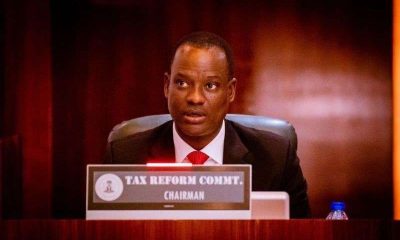
In a statement issued on Sunday by the Federal Ministry of Finance and signed by the Minister of State for Finance, Taiwo Oyedele, the government said recent media interpretations wrongly portrayed standard fiscal operations as financial leakages.

It said the attention of the ministry had been drawn to reports suggesting that a significant portion of federation earnings was either being “diverted” or classified as “hidden spending,” describing the narrative as inaccurate.
According to the ministry, such conclusions stem from a misunderstanding of Nigeria’s fiscal framework and the operations of the Federation Account Allocation Committee (FAAC).
The statement explained that deductions from the federation account are often misrepresented in public discussions, but are in fact legitimate components of government finance.
It listed statutory transfers, savings, investments, security-related expenditures, cost-of-collection charges, refunds to Ministries, Departments and Agencies (MDAs), and transfers to subnational governments as part of allowable deductions.
“These are not leakages but recognised fiscal flows within the public finance system,” the ministry stated.
It further clarified that refunds and intergovernmental transfers represent lawful financial obligations and statutory allocations rather than misappropriated funds.
The government also criticised commentators for relying on outdated data, noting that recent reforms introduced in 2026 have already begun addressing concerns around revenue deductions.
It referenced an Executive Order aimed at improving the remittance of petroleum revenues, which it said is expected to enhance transparency and increase distributable revenue by about 0.4 per cent of GDP annually.
The ministry added that the World Bank report itself acknowledged ongoing reforms in Nigeria’s fiscal management system.
It also said the overall tone of the report was positive, highlighting improved economic diversification, easing inflationary pressures, stronger external reserves, and a current account surplus.
Additionally, it pointed to a recent decline in the debt-to-GDP ratio, describing it as the first improvement recorded in over a decade.
“These indicators reflect the impact of ongoing macroeconomic reforms and public financial management improvements under the current administration,” the statement said.
The government emphasised that, contrary to negative interpretations, the World Bank did not conclude that Nigeria’s fiscal system is failing, but rather that reforms are yielding results that should be sustained.
“We urge stakeholders, media organisations, and the public to engage responsibly with fiscal data and avoid distorted interpretations that may undermine reform efforts,” the ministry added.