Politics
FCT Elections: Yiaga Africa reports late openings, vote buying, disenfranchisement
Yiaga Africa has expressed concern over logistical setbacks, administrative lapses, and incidents of vote buying that characterised Saturday’s Federal Capital Territory (FCT) Area Council elections, warning that such challenges could undermine public confidence in the electoral process if not urgently addressed.
The civic organisation, under its Watching the Vote (WTV) initiative, deployed trained and duly accredited roving observers across the 62 wards in the FCT to systematically monitor the conduct of elections into six Area Council Chairmanship positions and 62 Councillorship seats.

In a preliminary statement released on Election Day, signed by its Executive Director, Samson Itodo, and Director of Programmes, Cynthia Mbamalu, Yiaga Africa said its findings were based on reports received from observers deployed as early as 7:30 a.m. to monitor opening procedures, accreditation, voting, and counting. It clarified that it did not deploy the Parallel Vote Tabulation (PVT) methodology for the election and, therefore, its statement focused strictly on process observation rather than independent statistical verification of results.
Providing a general assessment of the exercise, Yiaga Africa stated that the election was conducted in a largely peaceful atmosphere, with voters who presented themselves at polling units given the opportunity to cast their ballots without widespread disruption.
“Overall, the election was conducted in a largely peaceful atmosphere. Voters who presented themselves at polling units were afforded the opportunity to exercise their franchise without widespread disruption,” the statement noted.
However, the group observed that voter turnout was generally low across most polling units. It also highlighted significant delays in the commencement of polling in several locations, especially within the Abuja Municipal Area Council (AMAC).
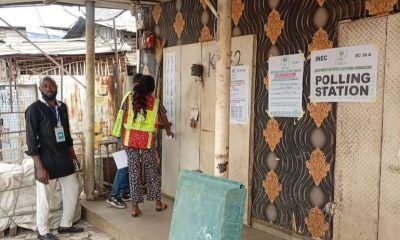
“As of 9:00 a.m., set-up activities were still ongoing in the majority of polling units observed, indicating that essential preparatory procedures had not been completed within the timeframe prescribed by electoral guidelines,” Yiaga Africa stated.
In AMAC, particularly in Wuse and Gwarinpa wards, accreditation and voting reportedly commenced only after 10:00 a.m., with polling officials still arranging materials and organising the voting environment well past the official start time.
Missing Materials, Inadequate Communication
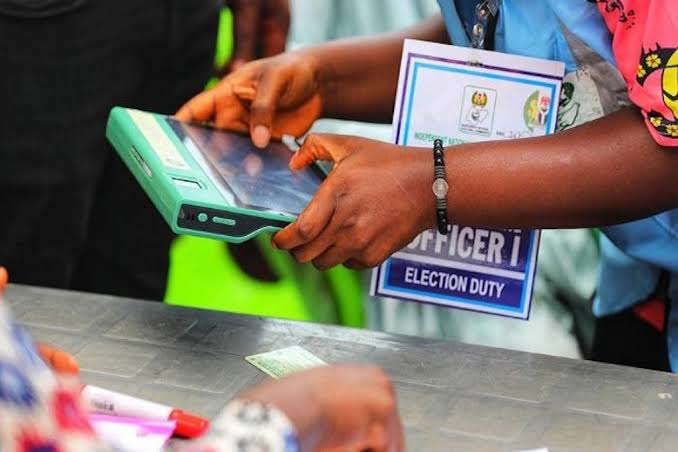
Yiaga Africa further reported isolated cases of missing or delayed deployment of critical election materials. While the Bimodal Voter Accreditation System (BVAS) devices and voter registers were generally deployed in line with guidelines, observers noted that in Polling Unit 004, Wuse Ward, Zone 2 Primary School, the voter register was not initially available and was only produced after concerns were raised.
In Abaji Area Council, voting cubicles were not observed in some polling units, while an ink pad required for the voting process was reportedly missing in one location.
Beyond logistics, the group expressed concern over the redistribution of voters to newly created polling units without adequate and timely notification. Although the Independent National Electoral Commission (INEC) reportedly sent SMS notifications to affected voters, many received the messages on Election Day, in some cases hours after polling had commenced.
“The lack of timely and effective communication generated confusion at several polling locations, as numerous voters spent over an hour attempting to ascertain their designated polling units,” the organisation said.
It added that the administrative lapse contributed to congestion and overcrowding at certain polling centres, potentially discouraging voter participation and raising concerns about voter disenfranchisement.
“Such administrative lapses have significant implications for electoral access and public confidence in the process,” the statement emphasised.
Early Closure, Heavy Security, Vote Buying
Yiaga Africa also documented instances where some polling units closed before the official 2:30 p.m. deadline, contrary to guidelines which require polling units to remain open until 2:30 p.m. or until the last voter on the queue has voted.
In addition, observers reported heavy security deployment in certain locations. While acknowledging the importance of security presence, the group noted that in some instances it impeded the movement of accredited observers and created barriers for voters seeking access to polling units.
Observers also recorded incidents of vote buying in several polling units, describing it as a persistent threat to electoral integrity.
“The persistent menace of vote buying once again manifested during the election,” Yiaga Africa stated, adding that despite prior assurances and directives by INEC to security agencies to identify and apprehend offenders, “these illicit practices reportedly continued in several locations.”
Call for Transparency in Results Collation
Looking ahead to the collation process, Yiaga Africa urged INEC officials to ensure that Form EC 60E (the People’s Results Sheet) is posted at polling units and that Form EC8A results are properly uploaded to the INEC Results Viewing (IReV) portal.
“This measure is critical to strengthening transparency, building citizens’ trust in the election management process and reducing suspicion of manipulation,” the group said.
It further called on INEC officials to conduct the collation and declaration of results “with the highest standards of integrity, transparency, and professionalism,” stressing the need for strict adherence to legal and procedural guidelines.
The organisation also recommended that INEC undertake a comprehensive nationwide public engagement campaign to clearly communicate voter redeployments to newly created polling units in future elections, including the use of accessible verification tools and collaboration with stakeholders.
Yiaga Africa urged security agencies to maintain professionalism and impartiality, particularly at collation centres, and called on political parties and their supporters to refrain from acts capable of undermining the credibility of the process.
Reaffirming its commitment to electoral accountability, the organisation said its observers would remain at ward and Area Council collation centres to monitor the results management process and track uploads on the IReV portal.
“The Watching the Vote project is Driven by Data – For All Nigerians – Beholden to None!” the statement concluded, calling on voters and stakeholders to remain patient and committed to ensuring a peaceful, credible and conclusive electoral process in the FCT.